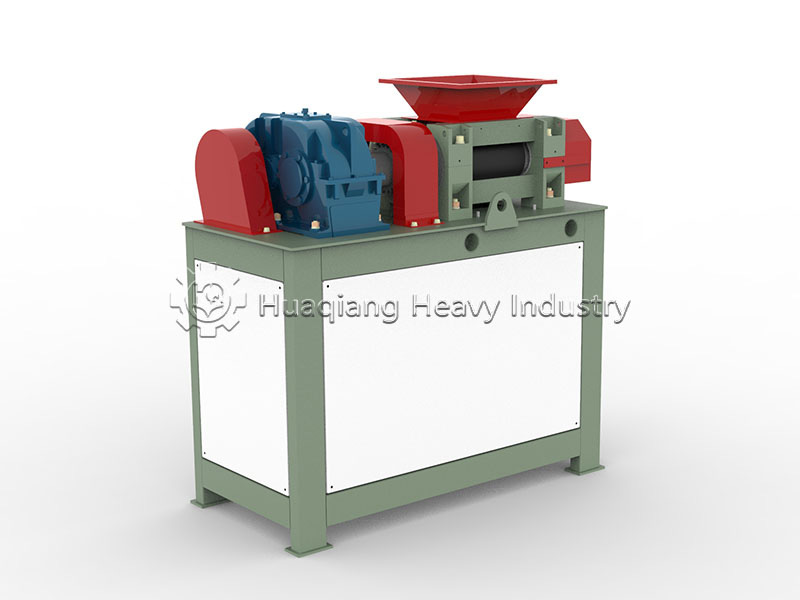
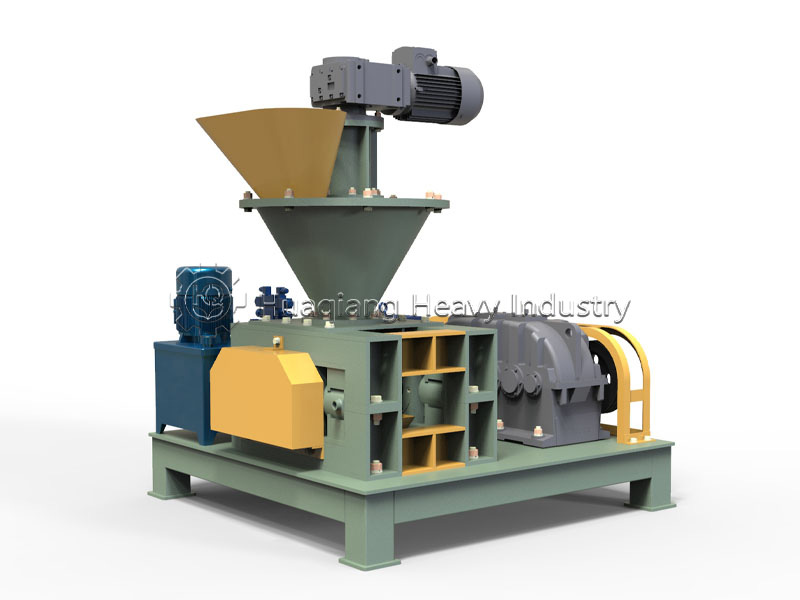
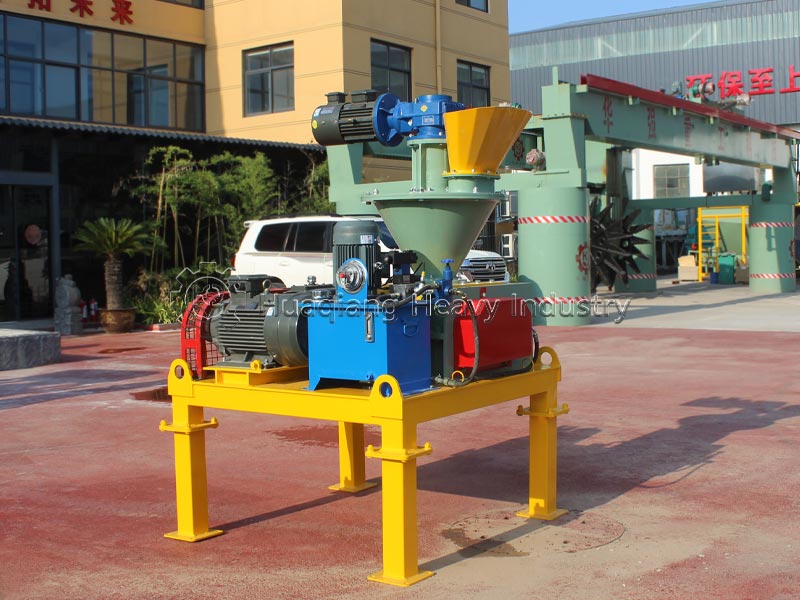
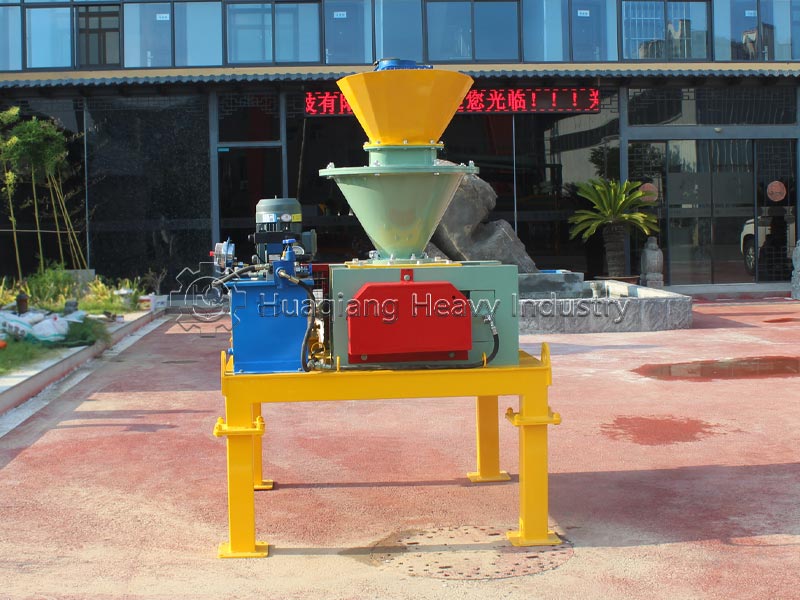
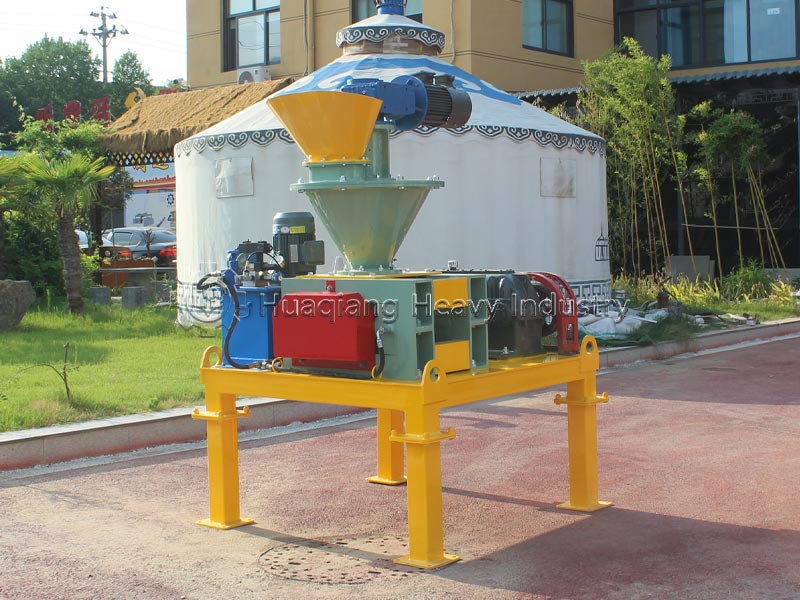
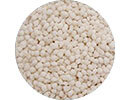
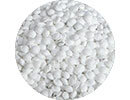
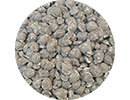
The hydraulic roller granulator is a core piece of equipment in the field of powder granulation. It utilizes two counter-rotating rollers to compress powdered materials into high-density sheets or strips, which are subsequently processed by a crushing and sizing system into uniform granules. Widely used in fertilizer production, chemical raw material processing, the pharmaceutical industry, and the preparation of metallurgical additives, this equipment is particularly well-suited for the dry granulation of moisture-sensitive and heat-sensitive materials.
Compared to standard double roller granulators, hydraulic roller granulators utilize hydraulic cylinders to provide stable, adjustable extrusion pressure and feature overload protection, effectively preventing equipment damage while ensuring granule strength.
The operating process of the hydraulic roller granulator can be divided into four sequential stages:
1. Forced Feeding: Powdered material is forcibly fed into the nip area between the two extrusion rolls using a variable-frequency screw feeder. For materials with poor flowability, a hopper with an agitator or a side-pressure feeding device may be used.
2. High-Pressure Extrusion: The material is subjected to linear pressure between the counter-rotating extrusion rolls. The hydraulic system drives the movable roll forward, creating a confined, wedge-shaped compression zone between the rolls. When the pressure exceeds the cohesive forces between the particles, the particles rearrange and undergo plastic deformation, forming a dense material cake or sheet.
3. Crushing and Granulation: The extruded material—in the form of strips or sheets—enters the crushing and granulation system. It undergoes three stages of processing—coarse, medium, and fine crushing—before finally passing through a screening process to obtain finished granules within the target size range.
4. Screening and Recycling: Granules that meet specifications after screening are sent to the finished product bin, while undersized fines and oversized particles are returned to the hopper via a material return system for re-granulation.
Leveraging dry granulation technology, hydraulic roller granulators are used across various sectors, including agricultural fertilizers, chemicals, and solid waste resource recovery:
Granulation of composted chicken and cattle manure (organic fertilizers), organic-inorganic compound fertilizers, humic acid fertilizers, NPK compound fertilizers, potassium sulfate, ammonium chloride, carbon-based fertilizers, and microbial fertilizers. Since the process operates at low temperatures throughout, it does not deactivate live bacteria, making it the preferred granulation equipment for bio-organic fertilizers.
Extrusion granulation of industrial salt, snow-melting agents, various inorganic salts, catalyst powders, zinc oxide, rare earth raw materials, and feed additive powders.
Granulation of agricultural and forestry waste—such as spent mushroom substrate, pharmaceutical residues, and straw powder—as well as the processing and shaping of certain low-pollution metallurgical powders.
Material Characteristics: Information regarding material name, moisture content (recommended ≤5%), bulk density, hardness, and corrosiveness is required.
Target Output: Calculate the hourly output based on annual production capacity; a 20% margin is recommended.
Installation Space: The total machine height is typically ≥2.8 meters; spatial integration for the feed hopper and discharge conveyor must be considered.
Auxiliary Equipment: It is recommended to configure a crusher, mixer, forklift-fed hopper, conveyor, and packaging machine to achieve automated, continuous production.
Over 20 years of R&D experience in extrusion granulation equipment
Has served more than 600 production lines worldwide
ISO 9001 and CE certified
Roller shells undergo vacuum heat treatment, ensuring uniform hardness and extending service life by 30%
| Size | DGZ-1 | DGZ-2 | DGZ-3 | |
| Capacity | 1-1.5t/h | 2-3t/h | 3-4.5t/h | |
| Granulator rate | ≧85% |
≧85% |
≧85% |
|
| Power | 15kW | 30kW | 37kW | |
| Material moisture | 2%-5% | |||
| Granulation temperature | Normal temperature | |||
| Particle | Diameter | 4-10(mm) | ||
| Strength | 6-20N(Compression crushing) |
|||
| Shape | Oblate sphere | |||