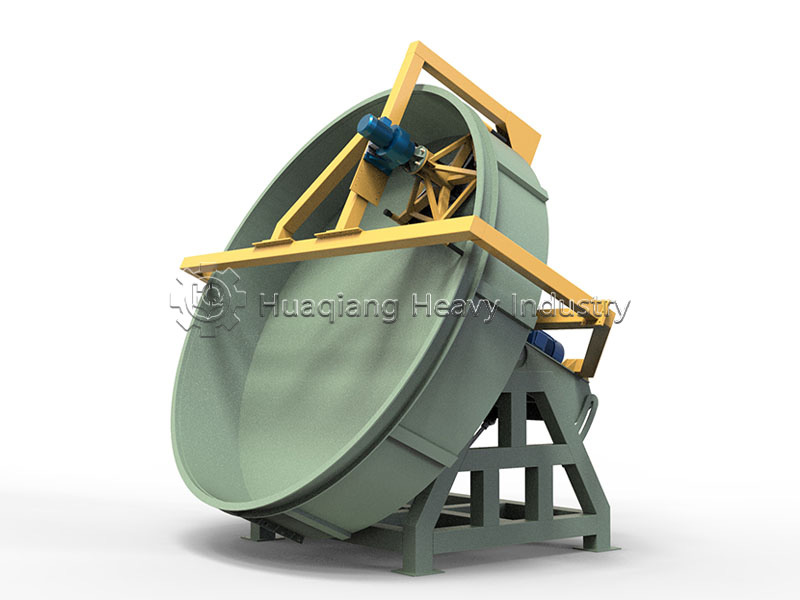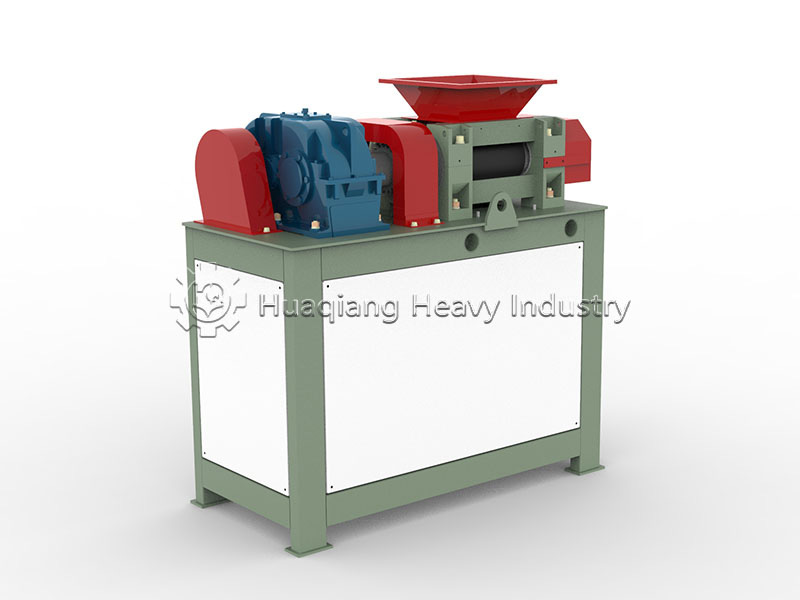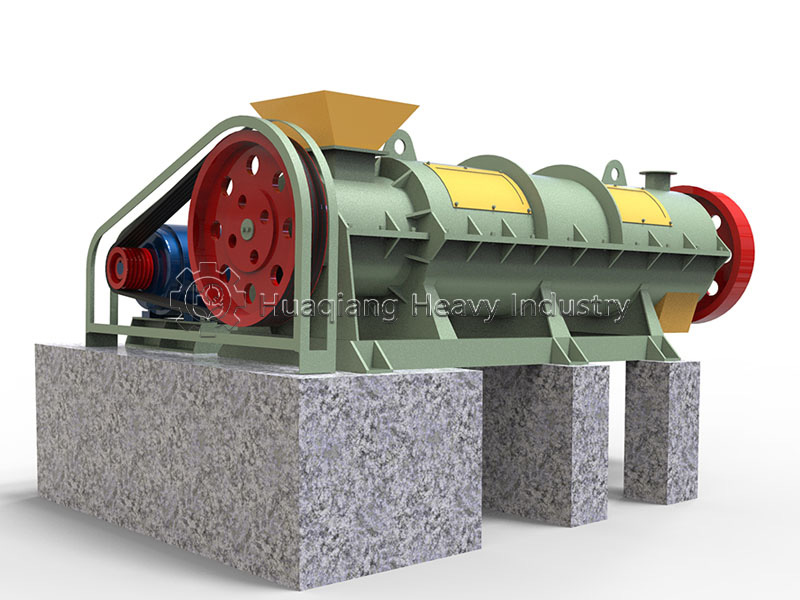
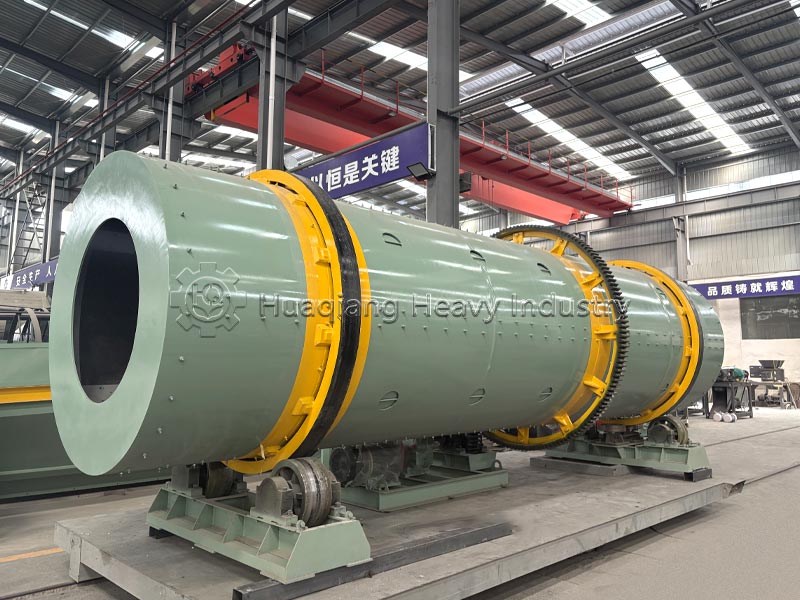
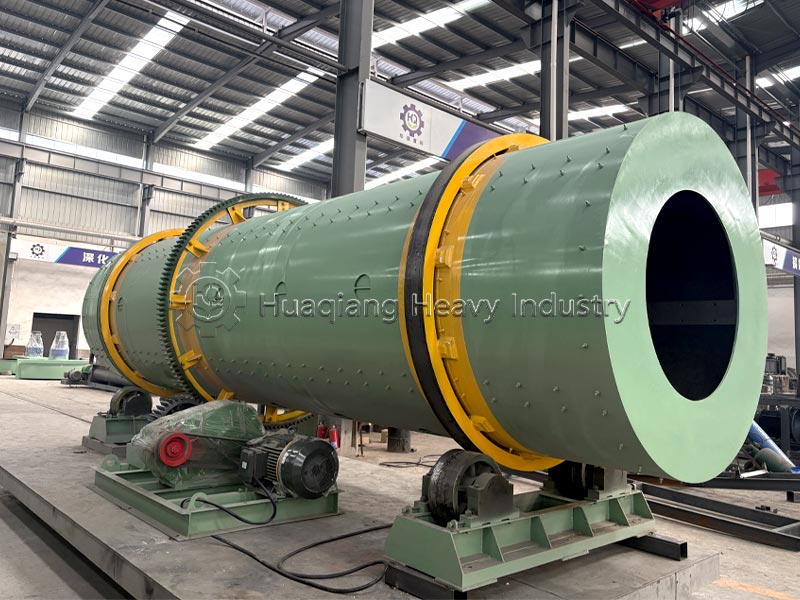
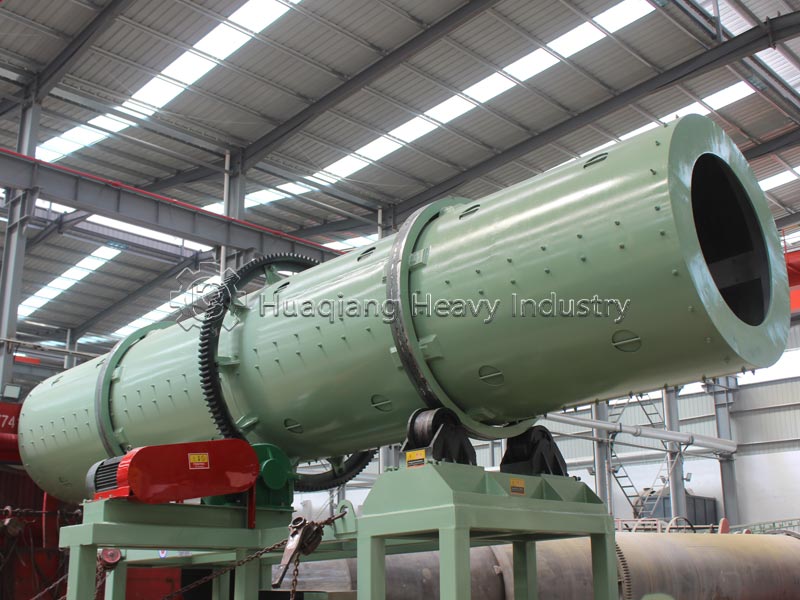
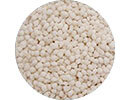
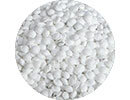
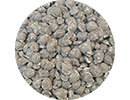
In large-scale production lines for organic and compound fertilizers, the rotary drum granulator serves as the core piece of equipment for the wet granulation process. Thanks to its high stability, substantial production capacity, and broad adaptability, it has become standard equipment for medium-to-large-scale fertilizer production lines. Unlike disc granulators, which face capacity limitations, or extrusion granulators, which often yield loose granules, the rotary drum granulator utilizes mature rolling-agglomeration technology to enable continuous, high-volume production; the resulting granules are round, well-formed, and possess moderate hardness, fully meeting industrial fertilizer production standards.
Rotary drum granulators are versatile, core pieces of equipment for shaping powdered materials, with applications spanning sectors such as agricultural inputs, chemicals, mining, and construction materials. Their mainstream application scenarios include:
1. Organic and Compound Fertilizer Production Lines: This is the primary application. The equipment is suitable for granulating materials such as chicken, sheep, and cattle manure, decomposed straw, and various chemical fertilizer powders, serving as the core shaping unit in complete NPK compound fertilizer production lines.
2. Chemical Powder Granulation: Used for granulating various chemical auxiliaries, additives, and inorganic salt powders. Granulation facilitates storage, transport, and secondary processing while preventing powder caking and losses due to airborne dust.
3. Mineral Powder Shaping: Suitable for granulating materials such as kaolin, bentonite, slag powder, and metal powders; ideal for deep mineral processing and the shaping of construction material feedstocks.
4. Feed and Additive Granulation: Used for granulating powdered feeds, soil conditioners, and microbial agents. The resulting granules are more convenient to use and effectively improve material utilization rates.
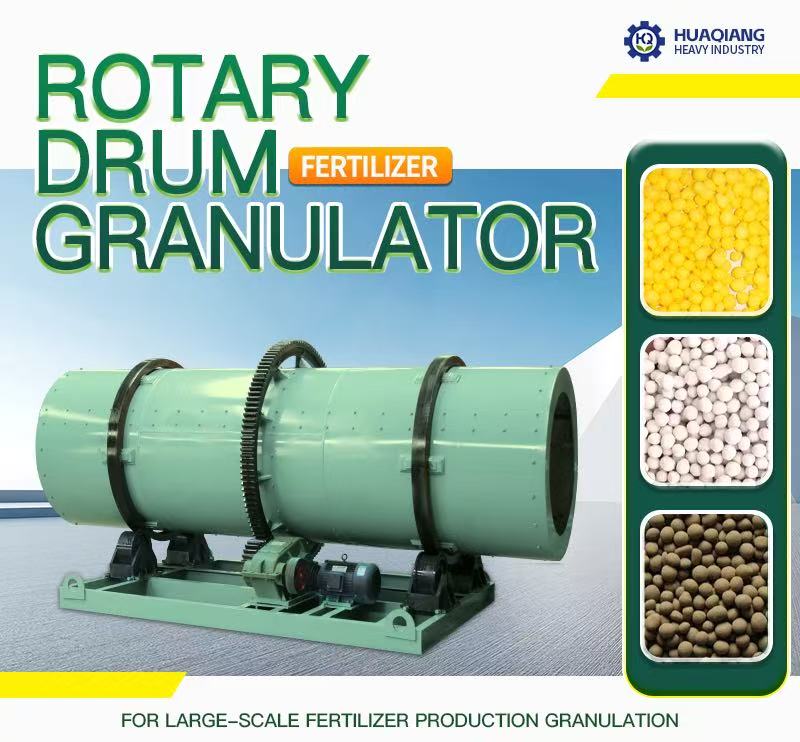
The operation of a rotary drum granulator can be summarized in four stages:
Feeding and Mixing. Pre-treated powdered raw materials enter the rotating drum from the feed end; the continuous rotation of the drum causes the material to tumble.
Liquid Spraying and Nucleation. A spraying system simultaneously applies a binder or liquid (such as decomposed organic liquid for organic fertilizer, or ammonium phosphate solution/sodium silicate for compound fertilizer) onto the material. This forms a liquid film on the surface of the powder particles, causing them to collide and adhere to one another during tumbling, gradually coalescing into small granule nuclei.
Granule Growth. As the drum continues to rotate, the small nuclei continuously capture surrounding powder, growing progressively larger—much like a rolling snowball—until they reach the target particle size. The granulation rate generally exceeds 70%, and under certain process conditions, it can surpass 90%.
Discharge and Screening. Granules meeting the size requirements are discharged from the drum's outlet and passed through a screening unit. Properly sized granules proceed to the subsequent drying stage, while undersized particles or loose powder are returned to the granulator for reprocessing, creating a closed-loop production system.
Throughout the process, the drum's rotational speed and inclination angle can be adjusted based on raw material characteristics and the desired granule size, ensuring stable and controllable granulation results.
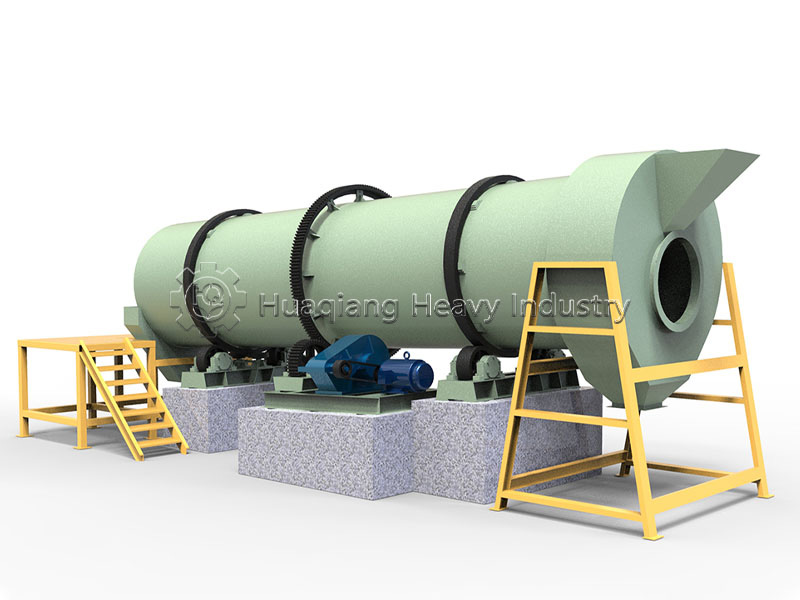
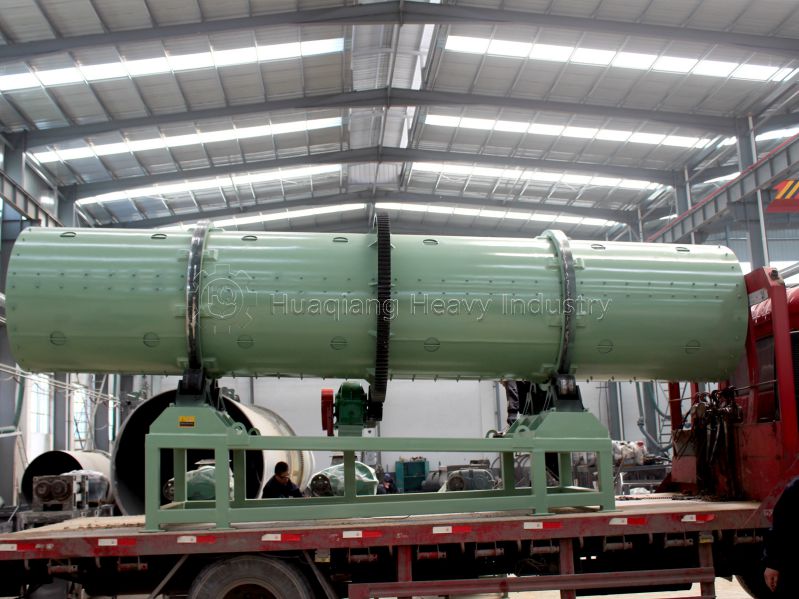
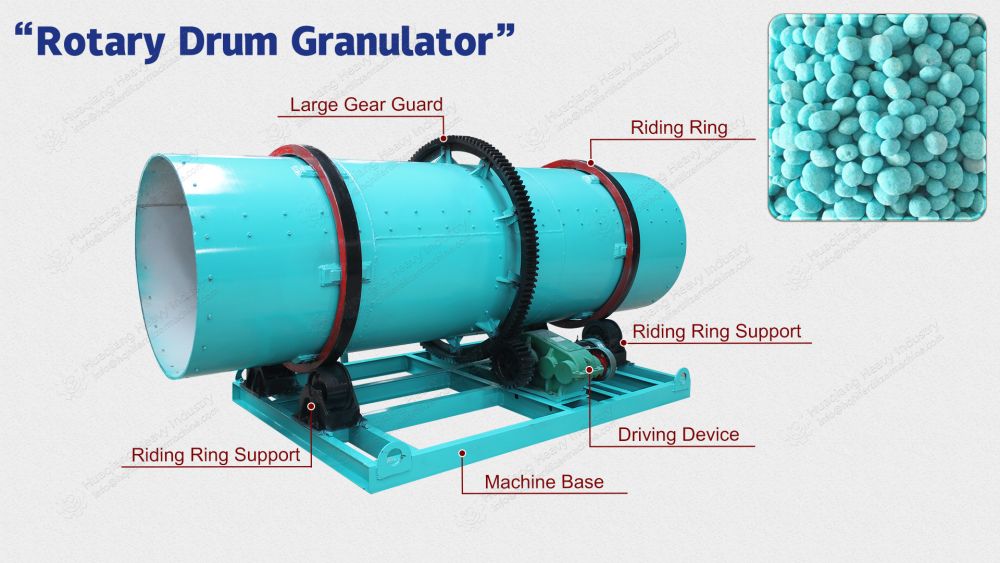
The rotary drum granulator consists of five main parts:
1. Support assembly: The rotating section of the machine is supported by this assembly, which bears significant loads. Consequently, the support roller frames are fabricated from welded medium-carbon steel plates and channel steel; strict quality control and specialized manufacturing processes are employed to ensure the machine meets its operational requirements.
2. Drive assembly: Comprising the main motor, belts and pulleys, a gearbox, and a drive shaft, this unit serves as the power core that drives the rotation of the drum.
3. Large gear ring: Fixed to the machine body, it meshes with a split gear on the drive shaft to transmit power.
4. Riding rings (tires): These interface with the support assembly to facilitate the rotation of the drum.
5. Machine body (drum): The drum serves as the core working area for granulation. Constructed from high-quality carbon steel, the interior is lined with special rubber sheeting or acid-resistant stainless steel plates; this design enables automatic removal of material buildup and crusts, eliminating the need for traditional scraper mechanisms.
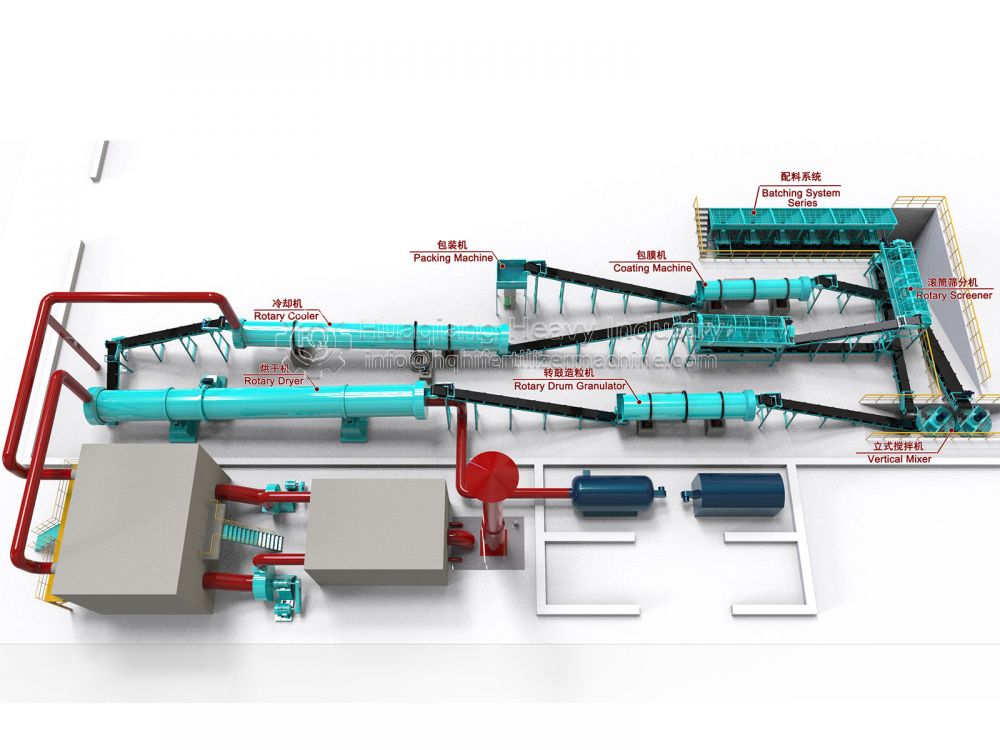
As the core equipment of a fertilizer production line, the rotary drum granulator operates in conjunction with other machinery to form a complete production process.
A complete production line typically includes the following equipment:
Batching system: Automatic batching system (precisely proportions nitrogen, phosphorus, potassium, and fermented materials according to the formula)
Crushing and mixing equipment: Crusher (reduces material to the appropriate size for granulation) and mixer (blends raw materials)
Core granulation equipment: Rotary drum granulator (performs wet granulation)
Post-processing equipment: Dryer (reduces granule moisture content), cooler (lowers granule temperature), rotary screener (separates finished products from undersized/oversized material and classifies finished products), coating machine (facilitates storage), and packaging machine (automatic weighing and packaging)
The entire production line enables a closed-loop process covering batching, crushing, uniform mixing, wet granulation, drying and screening, through to automatic packaging. The line features a high level of automation, requiring minimal manual labor for full operation. Oversized and undersized materials (fines) can be recycled for re-granulation, ensuring extremely high raw material utilization.
With core advantages such as high production capacity, superior granule quality, broad raw material compatibility, stable operation, and ease of maintenance, the rotary drum granulator has become the ideal choice for the large-scale production of organic and compound fertilizers. As a professional manufacturer of rotary drum granulators, Zhengzhou Huaqiang Heavy Industry Technology Co., Ltd. provides comprehensive services—ranging from R&D and manufacturing to installation and commissioning—dedicated to helping clients achieve efficient, stable, and cost-effective fertilizer production.
To learn more about equipment specifications, pricing, and customized production line solutions, please feel free to contact Huaqiang Heavy Industry online for a tailored proposal.
| Model | Diameter(mm) | Length(mm) | Inclination(°) | Rotation Speed(r/min) | Capacity(t/h) | Motor Power(Kw) |
| ZG1.2*4.0 | 1200 | 4000 | 2.5 | 17 | 1-3 | 5.5 |
| ZG1.5*6.0 | 1500 | 6000 | 2.5 | 11.5 | 3-5 | 7.5 |
| ZG1.8*7.0 | 1800 | 7000 | 2.5 | 11.5 | 6-10 | 18.5 |
| ZG2.0*8.0 | 2000 | 8000 | 2.5 | 11 | 10-15 | 22 |
| ZG2.2*12 | 2200 | 12000 | 2.5 | 10.5 | 15-20 | 37 |