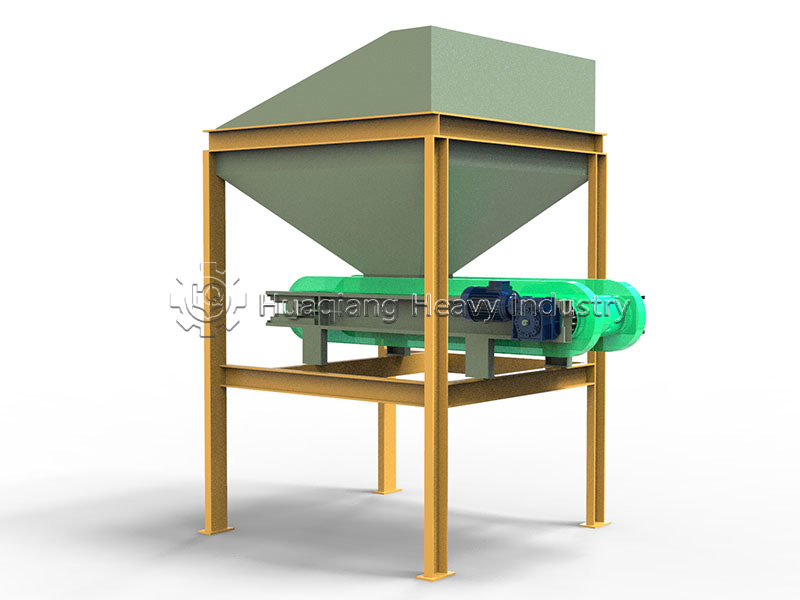
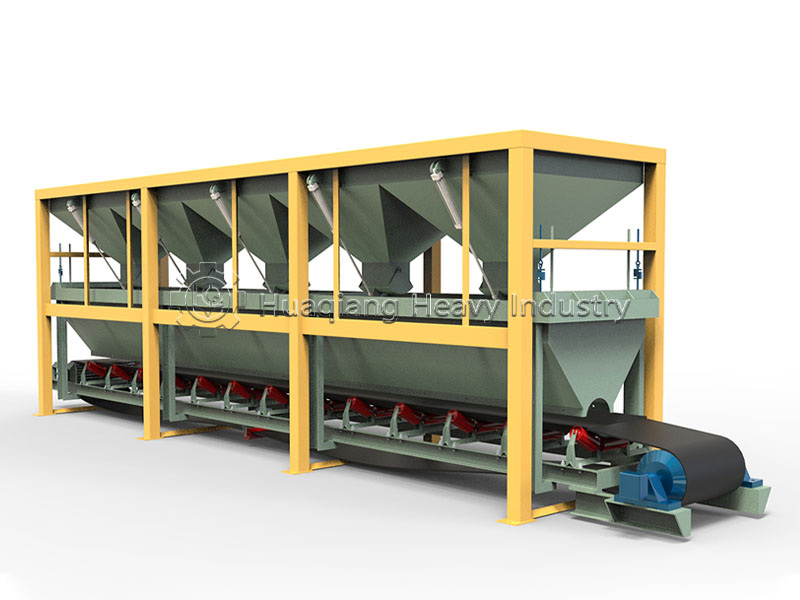
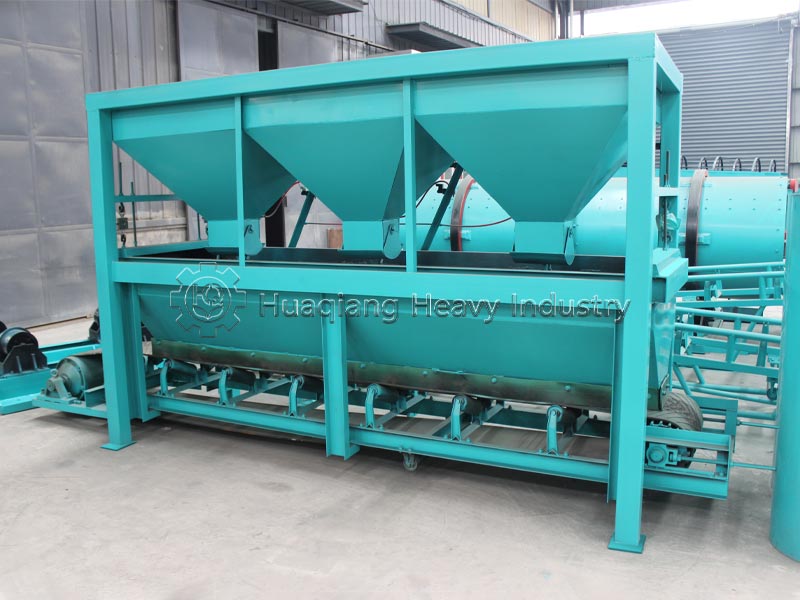
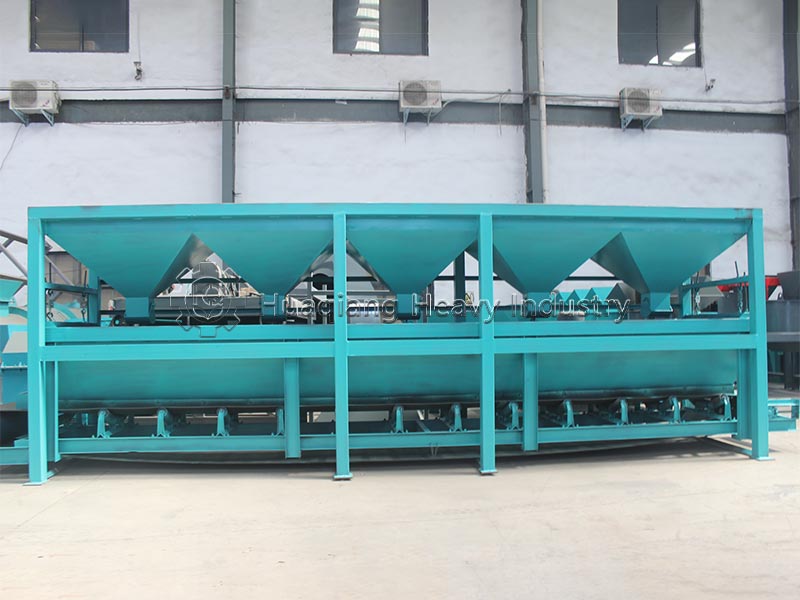
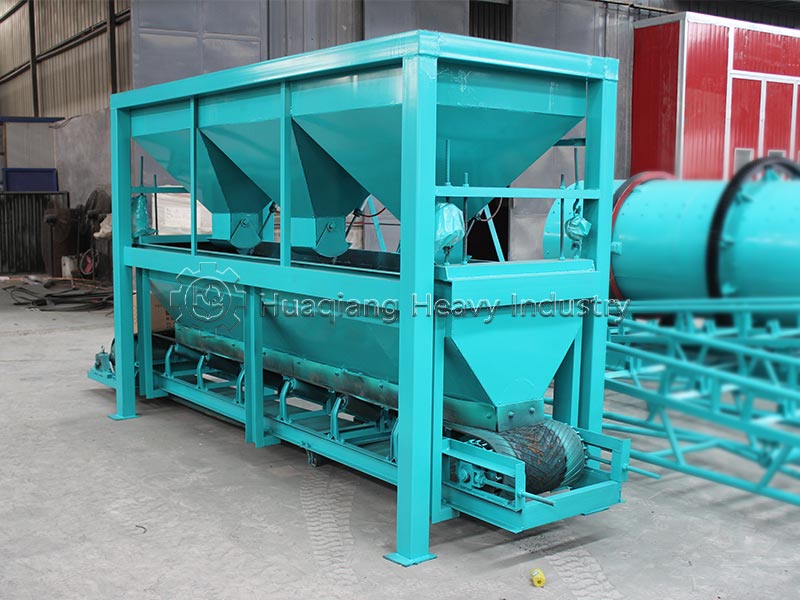
The multiple silos single weigh static automatic batching system operates on a “multiple bins, one scale” configuration. It features a design where materials are stored in multiple bins but weighed on a single scale, typically supporting a flexible setup of 3 to 8 bins. Each bin can independently store a different type of raw material—for instance, in compound fertilizer production, ingredients such as urea, potassium chloride, monoammonium phosphate, and humic acid can be stored in separate bins, with the system sequentially weighing and batching them according to a preset formula.
The system comprises four main components: the bin system, the metering system, the conveying system, and the control system. Its core weighing unit utilizes high-precision sensors and intelligent weighing instruments, enabling dynamic batching accuracy to be maintained within a range of ±0.2% to ±0.5%.
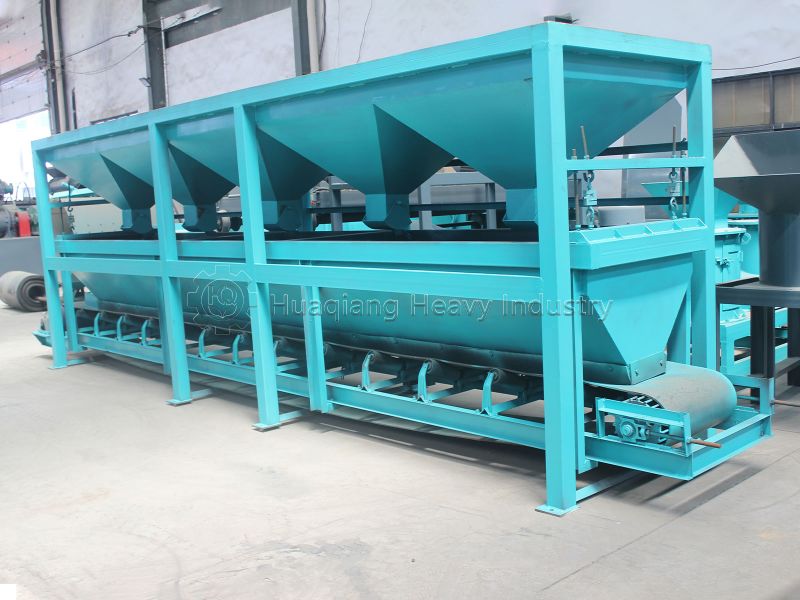
The entire batching process is highly automated. Operators input recipe data—specifying the ratio and total quantity for each ingredient—via a touchscreen interface. Once the system starts, it begins with Bin 1 and proceeds sequentially to Bins 2, 3, and so on; the pneumatic valves or conveyors corresponding to the active bin open, allowing material to discharge into the weighing hopper. Load cells monitor weight changes within the hopper in real time.
When the accumulated weight of a specific material reaches the preset value, that bin automatically stops feeding, and the system switches to the next bin to continue the process. After all materials have been weighed sequentially, the system transfers the combined batch to a mixer or the next stage of production. The entire process requires no manual intervention, and a single unit can achieve a batching capacity of 5 to 10 tons per hour.
The system typically features a PLC control unit and a touchscreen interface, along with a self-diagnostic function that promptly detects issues such as feed blockages or sensor malfunctions. Some models also support recipe storage, allowing hundreds of different formulas to be saved and enabling one-touch switching between production runs.
Thanks to its exceptional versatility and reliability, the multiple silos single weigh static automatic batching system has been widely adopted across various fundamental industrial sectors:
Fertilizer production——Suitable for the precise batching of NPK (nitrogen, phosphorus, and potassium) and organic matter for compound, mixed, organic, and customized fertilizers.
Chemical industry —— Automated mixing and proportioning of various chemical raw materials, such as plastics, rubber, and coatings.
Construction materials industry —— Precise batching control for materials like concrete, asphalt, and ceramics.
Metallurgy and mining —— Applications involving heavy loads and high abrasion, such as ore blending and coal preparation in coking plants.
Whether for continuous or batch production, the system ensures stable and reliable batching performance.
The entire system utilizes only one set of load cells. Since load cells are precision components prone to wear, models with multiple weighing hoppers—which require numerous sensors—are highly susceptible to signal drift in humid or dusty environments. The single-weighing-hopper design minimizes vulnerable components, making it better suited for the dusty conditions of fertilizer workshops and significantly reducing the workload for routine maintenance.
For startups or facilities with limited budgets requiring equipment to batch 4–6 types of raw materials, the multi-bin, single-scale solution eliminates the need for multiple weighing modules and instrument accessories, offering superior cost-effectiveness.
Whether handling loose granules, viscous fermented manure, powdered additives, or lumpy soil conditioners, the system adapts to materials with varying flow characteristics simply by swapping out vibrating discharge or screw-feeding components. Multiple production formulas can be stored and recalled at any time, allowing for convenient switching between the production of bio-organic fertilizers, compound microbial fertilizers, and blended fertilizers.
Automated, cyclical feeding eliminates the need for workers to constantly transport, shovel, or manually weigh materials. A single employee can oversee the entire batching unit; the enclosed feeding structure minimizes airborne dust, optimizes the working environment in manure processing workshops, and prevents mixing ratio errors associated with manual batching.
| Model | Capacity | Number of Positions | Power(kW) | Dimensions(mm) |
| PLZ1000 | 500-750 | 3-8 | 3-11 | (3100-8100)×1200×1800 |
| PLZB1000 | 500-750 | 3-8 | 3-11 | (3100-8100)×1300×2500 |
| PLZ1200 | 750-1000 | 3-8 | 4-15 | (3700-9700)×1300×2150 |
| PLZB1200 | 750-1000 | 3-8 | 4-22 | (3700-9700)×1400×2850 |
| PLZ1500 | 1000-1500 | 3-8 | 5.5-22 | (4500-12200)×1600×3000 |