In composting scenarios such as livestock and poultry waste treatment and straw resource utilization, windrow compost turning machines have become a core piece of equipment in fertilizer production lines due to their unique advantages, providing strong support for the high-quality development of the composting industry. Their benefits are reflected in several key aspects.
Improving fermentation efficiency is their core advantage. Composting requires sufficient oxygen, and the windrow compost turning machine can deeply turn the materials, breaking up clumps and allowing oxygen to fully penetrate the pile, significantly increasing microbial activity. Compared with manual labor or traditional equipment, it can shorten the fermentation cycle by more than 30%. The composting process, which originally took 2-3 months, can be shortened to about 1 month with its help, significantly improving composting output efficiency.
Ensuring stable and reliable compost quality. The equipment provides uniform turning depth, ensuring consistent heating and oxygenation of the materials, avoiding problems of insufficient or excessive fermentation in certain areas, and ensuring balanced nutrient content in the compost. At the same time, the turning process can effectively regulate the temperature of the pile, inhibit the growth of harmful bacteria, and reduce heavy metal activity. The resulting compost has a high organic matter content and good maturity, meeting the standards for green agricultural fertilizers.
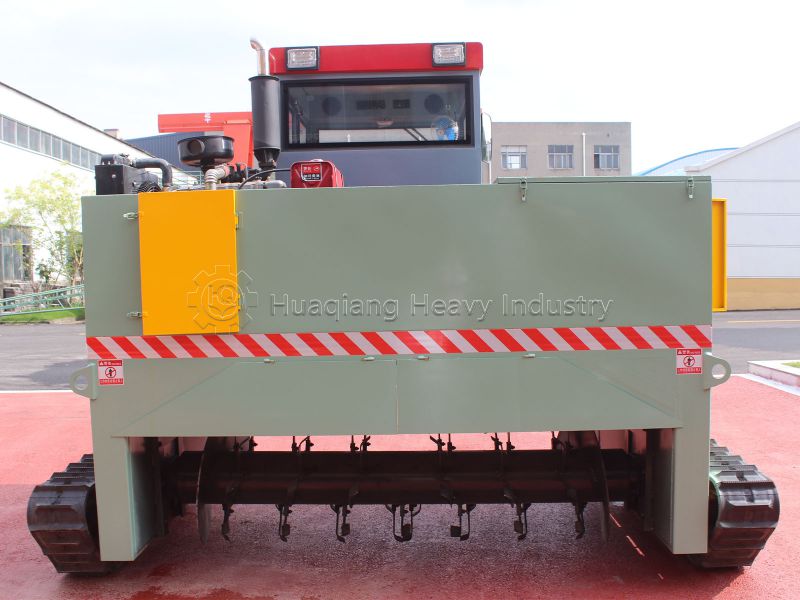
Adaptable to various scenarios, convenient and efficient operation. The crawler design gives it excellent terrain adaptability, allowing it to operate flexibly on both flat and muddy ground. It can directly drive and turn the compost pile without the need for additional tracks. In addition, the equipment is often equipped with an intelligent control system, which can precisely adjust the turning speed and depth, allowing for single-person operation, significantly reducing labor costs and workload.
Contributing to environmental protection and resource recycling. Through efficient fermentation, livestock and poultry manure, straw, and other waste materials can be quickly converted into high-quality organic fertilizer, reducing pollution caused by indiscriminate waste disposal. At the same time, returning organic fertilizer to the field can improve soil structure, reduce the use of chemical fertilizers, and form a "waste-compost-return to field" recycling chain, promoting green and sustainable agricultural development.
_800x600.jpg)
_800x600.jpg)