In the wave of agricultural modernization and fertilizer industry upgrading, BB fertilizer (bulk blended fertilizer) has become an important support for improving agricultural quality and efficiency due to its flexible formulation, precise nutrient distribution, and green efficiency. Establishing a BB fertilizer production line not only aligns with the national policy of reducing fertilizer use and increasing efficiency, but also achieves a win-win situation for enterprise benefits, agricultural development, and ecological protection, injecting lasting momentum into rural revitalization.
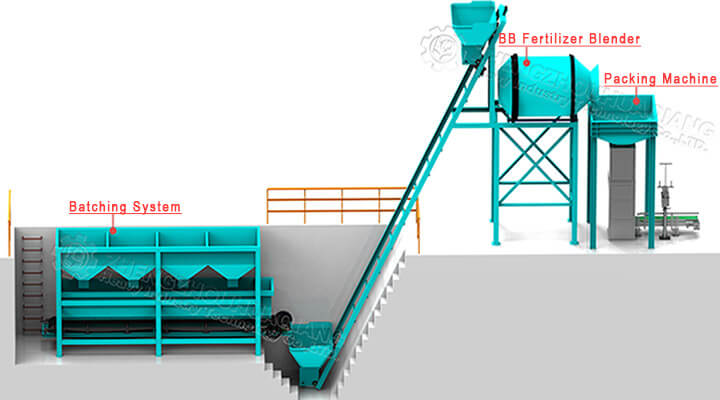
Establishing a BB fertilizer production line can precisely meet agricultural needs, contributing to increased grain yield and improved quality. The BB fertilizer production line uses computer-controlled automation and electronic weighing for precise batching with an error of less than one-thousandth. It can customize exclusive formulas according to different crops and soil conditions, compensating for soil nutrient deficiencies. Whether it's grain crops like wheat and corn, or high-value-added cash crops like fruits and vegetables, they can receive suitable nutrient supply, effectively improving fertilizer utilization by 8%-10%, boosting crop yield by 8%-15%, and improving the quality of agricultural products, helping farmers increase their income and achieve prosperity. This "on-demand fertilizer formulation" model completely changes the drawbacks of traditional fertilizers, such as fixed ratios and nutrient waste, making fertilization more scientific and efficient.
Establishing a BB fertilizer production line can reduce production and planting costs and enhance the core competitiveness of enterprises. The production line achieves fully automated operation, significantly reducing manual labor and labor intensity. It also employs a physical blending process, which is simple and energy-efficient, resulting in significantly lower production costs compared to traditional compound fertilizers. Enterprises can leverage the production line to achieve large-scale production, resolving the seasonal shortage of BB fertilizers and eliminating intermediaries, thus benefiting farmers and creating a virtuous cycle of "enterprise profit and farmer benefit." Furthermore, the production line can store multiple formulas, flexibly adjusting the product structure to meet diverse market demands, helping enterprises seize market share and enhance their resilience.
Establishing a BB fertilizer production line aligns with the green agriculture direction and contributes to ecological sustainable development. Currently, the country is vigorously promoting soil testing and formula fertilization. BB fertilizer, as its core carrier, can effectively reduce nutrient loss caused by indiscriminate fertilization and alleviate environmental pressures such as soil compaction and water pollution. The production line employs clean production processes and is equipped with a closed conveyor system to reduce dust pollution. Furthermore, the carbon emissions per unit of BB fertilizer are reduced by more than 50% compared to traditional compound fertilizers, aligning with the "dual carbon" goals and the requirements for agricultural non-point source pollution control. Simultaneously, the production line can utilize raw materials such as livestock and poultry manure, promoting the resource utilization of agricultural waste and achieving a balance between ecological and economic benefits.
In summary, establishing a BB fertilizer production line is an important measure to adapt to the trend of green agricultural development and assist enterprises in transformation and upgrading. It can precisely empower agricultural production, reduce costs, and protect the ecological environment. With the acceleration of agricultural modernization, the BB fertilizer production line will undoubtedly become a vital link connecting enterprise development and rural revitalization, providing a solid guarantee for high-quality agricultural development.
_800x600.jpg)
_800x600.jpg)