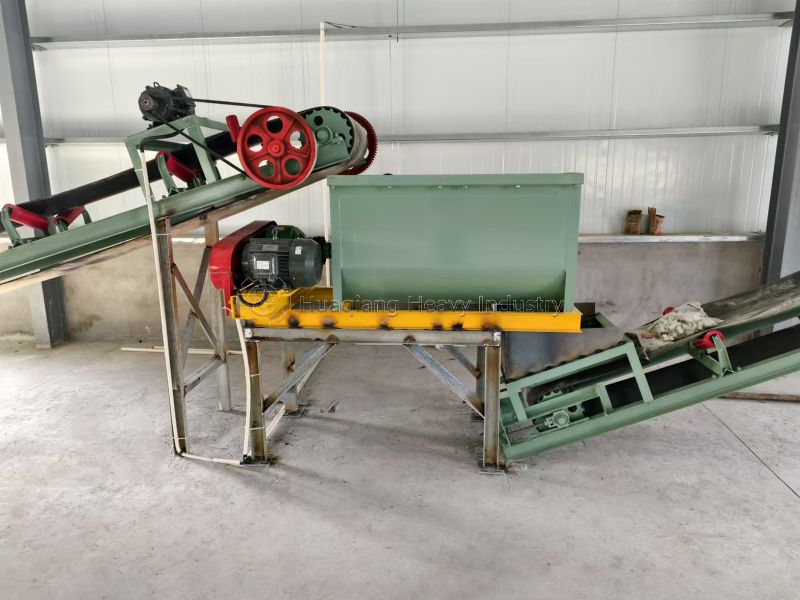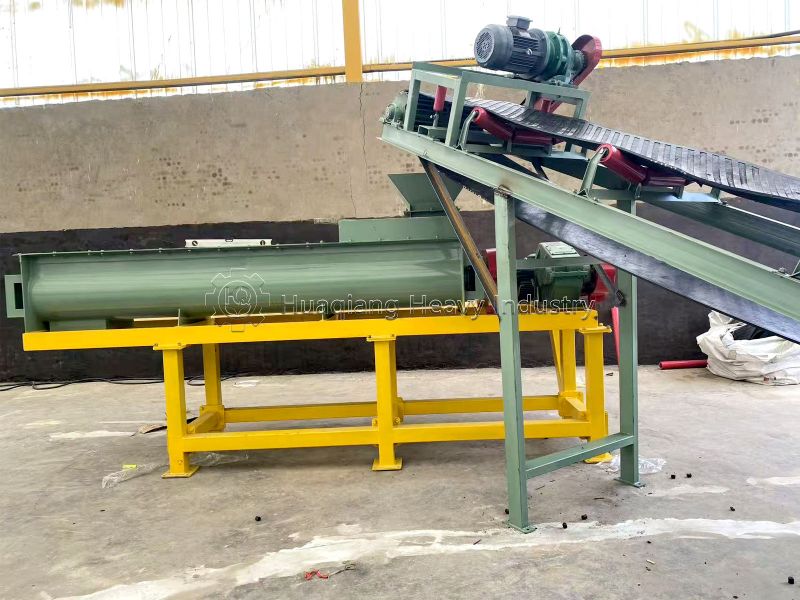
When selecting equipment, many fertilizer processing plants often confuse BB fertilizer blenders with standard industrial mixers, mistakenly assuming that any mixer capable of blending materials will suffice. In reality, the two differ significantly in terms of design principles, mixing performance, and intended applications. Using a standard mixer for BB fertilizer production can easily lead to issues such as uneven nutrient distribution, granule breakage, and product stratification—all of which compromise fertilizer quality.

A BB fertilizer blender is specialized equipment designed specifically for blending granular fertilizers—such as urea, potassium chloride, and monoammonium phosphate—which vary in density and particle size. The process is purely physical, involving no chemical reactions. These mixers utilize a low-speed, tumbling, convective mixing mechanism; the drum or spiral blades gently lift and disperse the materials. Because the shear force is minimal, the equipment ensures a uniform blend while preserving the integrity of the individual granules. In contrast, standard industrial mixers—typically used for powders, wet materials, or viscous substances—rely on high-speed blades that exert intense shear and impact forces. Such high-intensity mixing often crushes fertilizer granules, generates excessive dust, and can cause the fertilizer to clump or lose nutrients.
The most critical differences lie in mixing uniformity and the ability to prevent stratification. Since the raw granules used in BB fertilizers have varying densities, standard mixers often fail to maintain a consistent blend; during discharge and transport, heavier granules tend to sink while lighter ones rise, leading to segregation. This results in significant nutrient variance within the same batch, failing to meet national standards. BB fertilizer mixers, however, employ a three-dimensional blending structure that counteracts stratification caused by density differences. They provide stable, uniform mixing—with a coefficient of variation kept within 5%—ensuring compliance with production standards for blended fertilizers. Furthermore, they leave minimal residue during discharge, which helps prevent cross-contamination when switching between different fertilizer formulations.
There are also distinct differences in the materials used and the structural design. Fertilizers are corrosive; therefore, the mixing drums of BB (bulk blend) fertilizer blenders are typically constructed from stainless steel. These machines feature a fully enclosed design and integrated dust-removal systems, which minimize airborne dust and prevent moisture-induced clumping of the materials. The interior is free of "dead zones" (stagnant areas), and the dual-directional rotation mechanism ensures both thorough mixing and smooth discharge. In contrast, standard mixers are made from a variety of materials—often carbon steel—which are generally not resistant to fertilizer corrosion. Such units typically offer inferior sealing, contain numerous internal dead zones, and result in significant material residue; they are better suited for applications like mixing mortar, animal feed, or moist organic fertilizers.
Regarding production efficiency, BB fertilizer blenders offer short mixing cycles—typically completing a batch in 3–8 minutes—making them ideal for the continuous proportioning and packaging processes found in BB fertilizer production lines. Standard mixers require longer mixing times and are better suited for intermittent, lower-precision mixing operations.
In summary, general-purpose mixers offer high versatility and strong mixing power, making them suitable for both powdery and wet materials; in contrast, BB fertilizer blenders are designed for gentle blending—preventing material segregation and protecting the integrity of the granules—and serve as specialized equipment for BB fertilizer production lines.Huaqiang Heavy Industry advises that specialized blending mixers must be used for BB fertilizer production to ensure the stability of nutrient content, minimize losses, and avoid potential product quality issues stemming from the selection of unsuitable equipment.