Bio-organic fertilizer is produced through the fermentation of organic waste materials—such as livestock manure, crop straw, and spent mushroom substrate—and serves as a key fertilizer for ecological agriculture due to its ability to improve soil quality and boost crop yields and quality. A standardized, automated bio-organic fertilizer production line requires a complete set of specialized equipment operating through four sequential stages—raw material pretreatment, fermentation and decomposition, fine processing, and finished product handling—to ensure fertilizer quality and production efficiency. The following is a detailed introduction to the core equipment and functions of the production line.
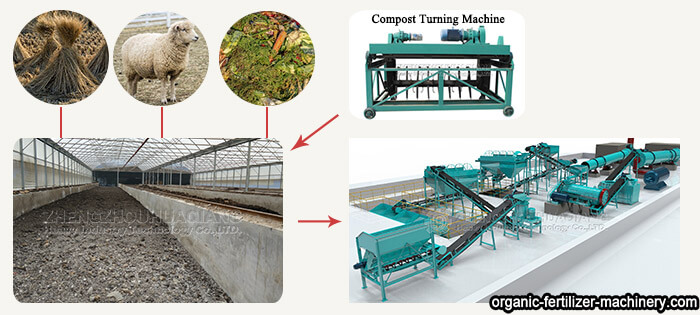
Raw material pretreatment equipment forms the foundation of production, serving primarily to optimize the state of raw materials to meet fermentation requirements. Core equipment includes feeding hoppers, half-wet material crushers, and screening machines. Raw materials such as livestock manure and straw often suffer from issues like clumping, uneven moisture content, and mixed impurities; feeding hoppers ensure the uniform, metered conveyance of materials, maintaining production continuity. Half-wet material crushers are designed to handle high-moisture organic matter, thoroughly breaking down clumps and straw debris to ensure uniform particle size. Drum screens remove stones and hard impurities, selecting suitable raw materials and laying a solid foundation for subsequent fermentation. If the moisture content is excessively high, a dewatering machine can be added to adjust the moisture level to the optimal range for fermentation.
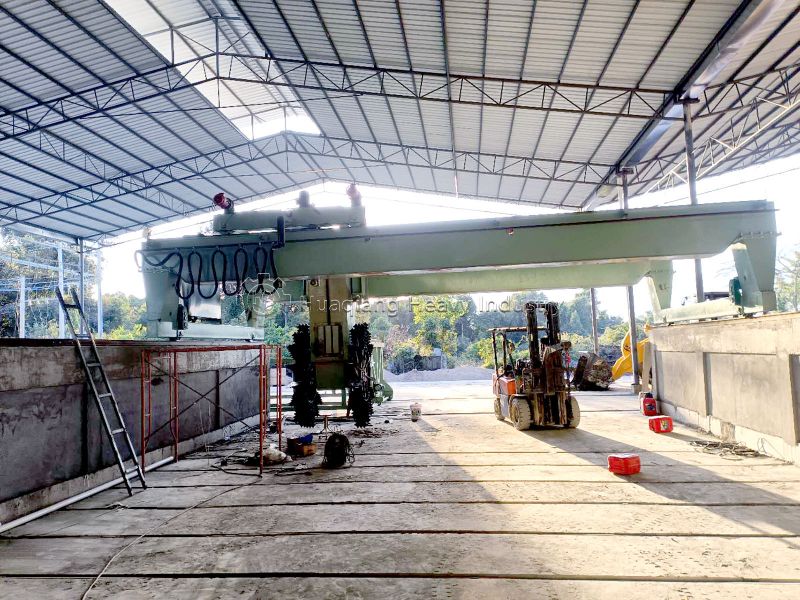
Fermentation and decomposition equipment lies at the heart of bio-organic fertilizer production, directly determining the fertilizer's nutrient content and safety; the primary piece of equipment here is the trough-type compost turner. Bio-organic fertilizer production utilizes a high-temperature aerobic fermentation process; the compost turner periodically turns the material and replenishes oxygen, promoting the proliferation of beneficial bacteria and maintaining a stable material temperature of 55–70°C. Sustained high-temperature fermentation for over ten days thoroughly eliminates pathogens, insect eggs, and weed seeds, degrades harmful substances, and transforms organic raw materials into stable humus, achieving both harmless treatment and resource recovery. Large-scale production lines may incorporate enclosed fermentation tanks to further enhance fermentation efficiency and reduce environmental pollution.
Fine processing equipment is responsible for improving the fertilizer's physical appearance and nutrient uniformity; key components include mixers, granulators, dryers, and coolers. After fermentation and decomposition, the material is fed into a mixer where additives—such as microbial agents and secondary or trace elements—are incorporated as needed to ensure a balanced nutrient profile. For granular organic fertilizer production, a new type organic fertilizer granulator is used to transform the powdered material into uniform granules. The granules then undergo controlled dehydration in a drum dryer to reduce moisture content, followed by cooling to prevent clumping and mold growth, thereby enhancing product stability. Powdered organic fertilizer lines can omit the granulation and drying stages, simplifying the equipment configuration.
The finishing equipment handles the final stages of production and includes a screening machine, a coating machine, and an automatic packaging machine. A secondary screening process separates compliant granules, while substandard material is recycled for reprocessing. The coating machine applies a protective layer to the granule surface, effectively preventing caking and prolonging the fertilizer's efficacy. Finally, the automatic packaging machine performs quantitative weighing, sealing, and bundling; this fully automated process significantly improves packaging precision and production efficiency, yielding a finished product ready for storage and sale.
In summary, the equipment configuration of the bio-organic fertilizer production line aligns with the entire manufacturing workflow, seamlessly linking every stage from raw material processing to final packaging. Small-scale lines can be streamlined to reduce costs, while medium- and large-scale lines feature comprehensive equipment setups to enable standardized, large-scale production. These systems facilitate the resource utilization of organic waste, meeting the demands of sustainable agricultural development.
_800x600.jpg)
_800x600.jpg)