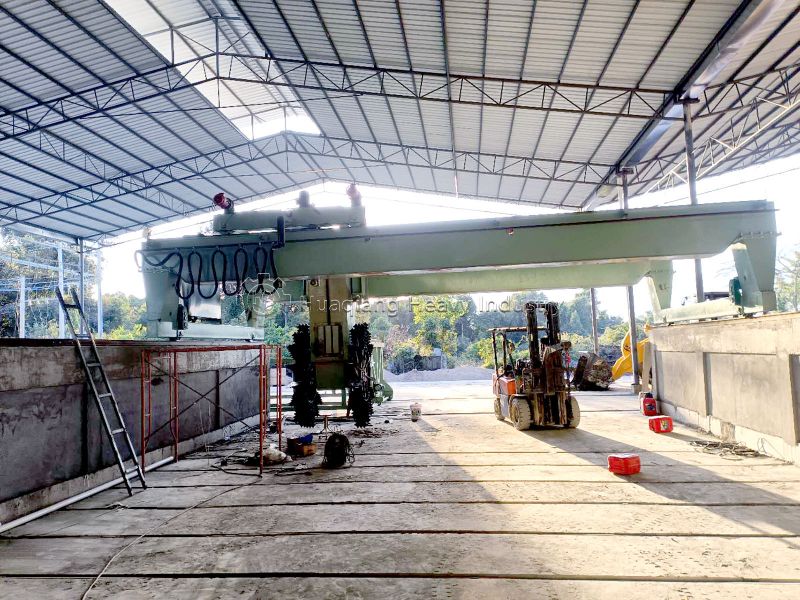
In the advancement of organic waste resource utilization and ecological agriculture, the windrow compost turning machine has emerged—thanks to its unique advantages—as a core piece of equipment in fields such as organic fertilizer fermentation and sludge treatment, providing robust technical support for green, circular agriculture.
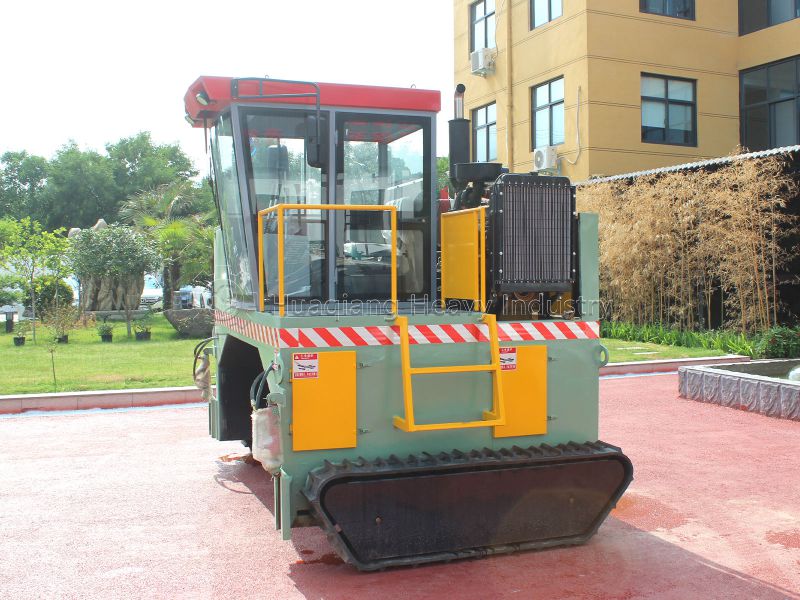
The windrow compost turning machine primarily consists of a crawler chassis, a turning mechanism, a power system, and a control system. Its core operating principle involves utilizing a diesel engine or electric motor as a power source to drive a rotating cutter shaft or helical drum deep into the material pile; as the crawler tracks advance, the machine simultaneously performs the turning, crushing, and mixing of the materials. The turning depth can be flexibly adjusted via hydraulics within a range of 0.5 to 2.5 meters, allowing the machine to accommodate a wide variety of materials—including livestock and poultry manure, crop straw, and sludge—with moisture content ranging from 30% to 60%.
The most outstanding advantage of this equipment is its exceptional adaptability to various terrains. With a low ground pressure of ≤0.05 MPa, it can operate stably in complex environments—including muddy ground and slopes of up to 15°—without the need for fixed tracks. It offers free steering capabilities and can execute on-the-spot turns, effortlessly traversing material piles up to 0.3 meters in height, making it perfectly suited for open-air, irregularly shaped fermentation sites. Furthermore, the machine combines high efficiency with multifunctionality; a single unit boasts an average daily processing capacity of 200 to 500 cubic meters—an efficiency level dozens of times greater than that of manual turning. During the turning process, the machine not only breaks up material clumps, increases porosity, and ensures uniform oxygen distribution to accelerate aerobic fermentation, but it also effectively crushes large pieces of straw and manure. Additionally, by facilitating air exchange, it regulates the temperature of the compost pile, maintaining a high-temperature maturation environment of 55–70°C—a process that effectively eliminates pathogenic bacteria and significantly shortens the overall fermentation cycle.
In terms of application scenarios, the windrow compost turning machine demonstrates broad versatility. For small and medium-sized livestock farms and organic fertilizer plants, this equipment facilitates the processing of mixtures containing animal manure and crop straw, effectively shortening the fermentation cycle from 15 days to 10 days while simultaneously enhancing the organic matter content of the finished product. Furthermore, in environmental protection projects—such as sludge treatment and household waste fermentation—it performs highly efficient material turning, thereby aiding in the safe and harmless disposal of waste.
Moreover, the equipment is simple to operate, requiring only a single person to control; coupled with its low initial investment cost, it offers exceptional value for money. As environmental regulations become more stringent and ecological agriculture gains wider traction, the practical value of the windrow compost turner is becoming increasingly evident. It not only resolves the challenges associated with organic waste disposal but also promotes the resource-oriented recycling of agricultural byproducts, thereby injecting powerful momentum into the sustainable development of green agriculture.
_800x600.jpg)
_800x600.jpg)