Granulation is the core stage of a bio-organic fertilizer production line; it determines the quality of the fertilizer granules, the survival rate of beneficial microorganisms, and the product's overall performance. The entire process—from pre-treatment and granulation to post-treatment and closed-loop recovery—is highly integrated, balancing production efficiency with the preservation of microbial activity.
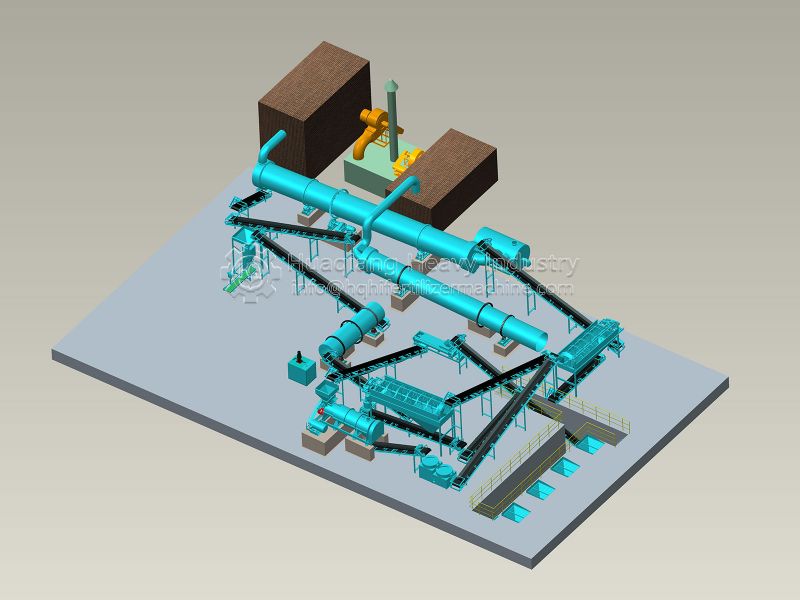
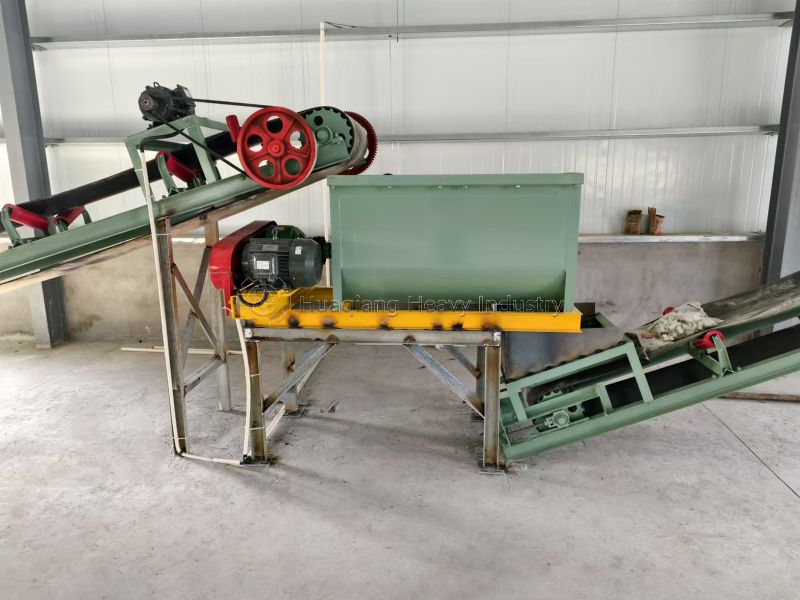
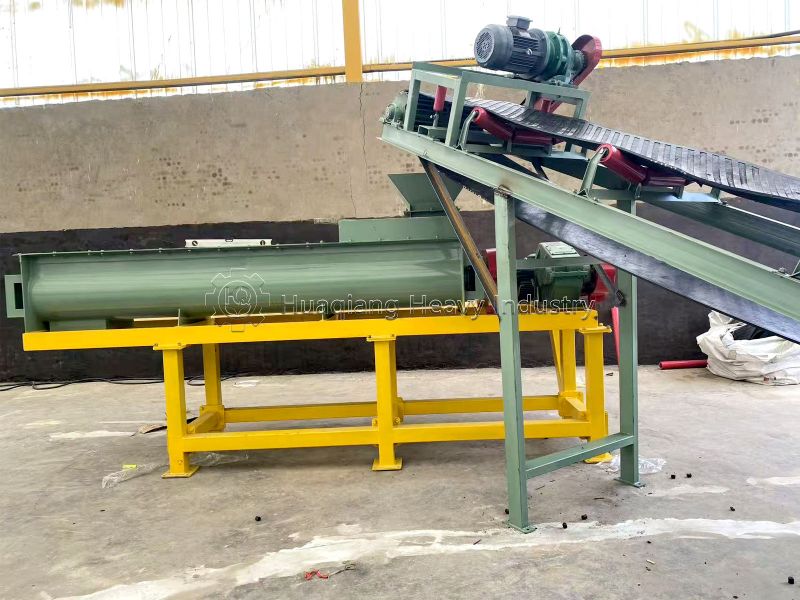
Raw materials first undergo pre-treatment, including composting (fermentation), crushing, and screening. Organic feedstocks, such as livestock manure or crop straw, are rendered harmless through aerobic fermentation, then pulverized to remove hard clumps and impurities, resulting in a fine, uniform powder. Next, the material enters the batching and mixing stage, where functional microbial agents, humic acid, and essential trace elements are added according to a specific formula. These components are thoroughly blended in a mixer, with strict control over moisture content—a critical step that directly influences the subsequent pelletization rate.
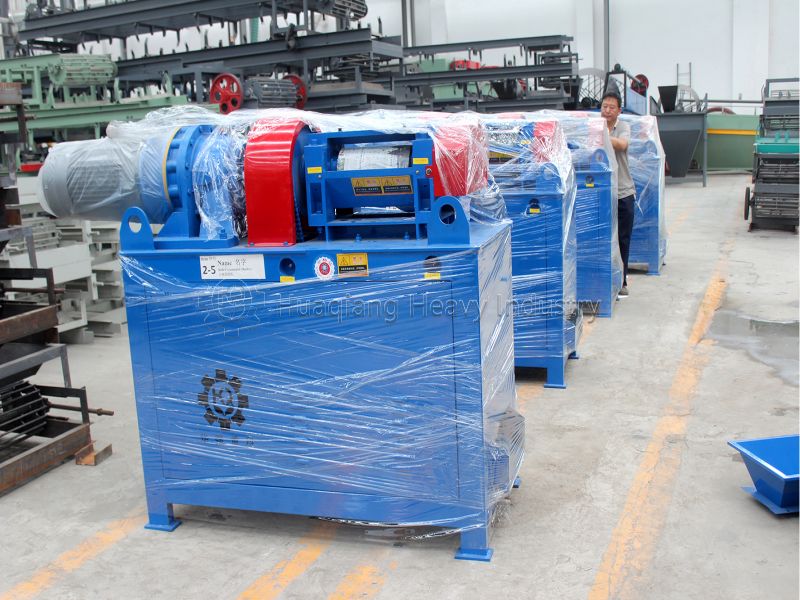
The blended material is then conveyed to the main granulation unit. Common methods include wet granulation techniques, such as disc or rotary drum granulation, where the powder gradually agglomerates into spherical granules through rolling friction and liquid-phase bonding. Production lines from Huaqiang Heavy Industry often utilize new type organic fertilizer granulators, which employ the mechanical force of mixing paddles to densify the material into granules, typically ranging from 2 to 5 mm in diameter. Temperature control during this stage is vital to prevent high heat from damaging or killing the beneficial microorganisms.
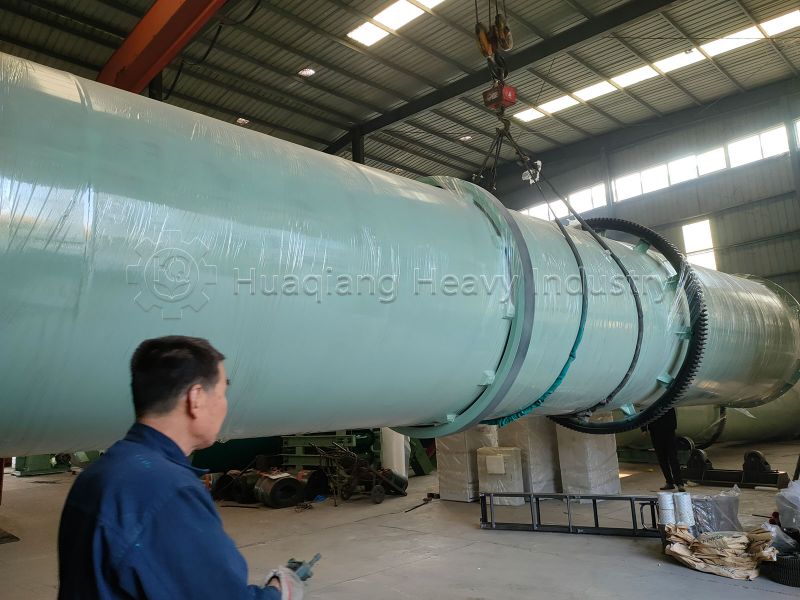
Freshly formed, moist granules have a high water content and must be dried in a rotary dryer at a low temperature (60–70°C). This process reduces moisture to below 15% while maximizing the preservation of microbial viability. Following drying, the warm granules are passed through a cooler, where they are cooled by airflow to prevent moisture re-absorption, clumping, or the loss of microbial activity. Following the cooling stage, the granules undergo screening. Those that meet specifications are sent to the coating section, where a protective layer is applied to enhance granule flowability and extend the shelf life of the viable microorganisms. Fine particles and oversized fragments recovered during screening are returned to the batching and mixing stage to be re-granulated; this creates a closed-loop production system that minimizes raw material waste. Finally, the qualified granules are transported to the packaging station, where they are weighed, packaged, and prepared for storage.
The entire granulation process is designed with the preservation of viable microorganisms as a priority. It utilizes a continuous, enclosed production system to yield uniform granules with optimal structural integrity—making them easy to store, transport, and apply via mechanized spreading. This process aligns with the quality standards for bio-organic fertilizers in sustainable agriculture and serves as a critical step in the resource-based utilization of agricultural waste.