In an bio organic fertilizer production line, conveying equipment serves as the vital link connecting various processes, handling tasks such as raw material transport, inter-process material transfer, and the movement of finished products. Since the raw materials for organic fertilizer—such as livestock and poultry manure, crop straw, and fungal residue—are often highly moist, sticky, and prone to clumping, different types of conveying equipment are required to suit specific operating conditions. Based on practical applications in production lines, Huaqiang Heavy Industry has outlined the primary types of conveying equipment as follows:

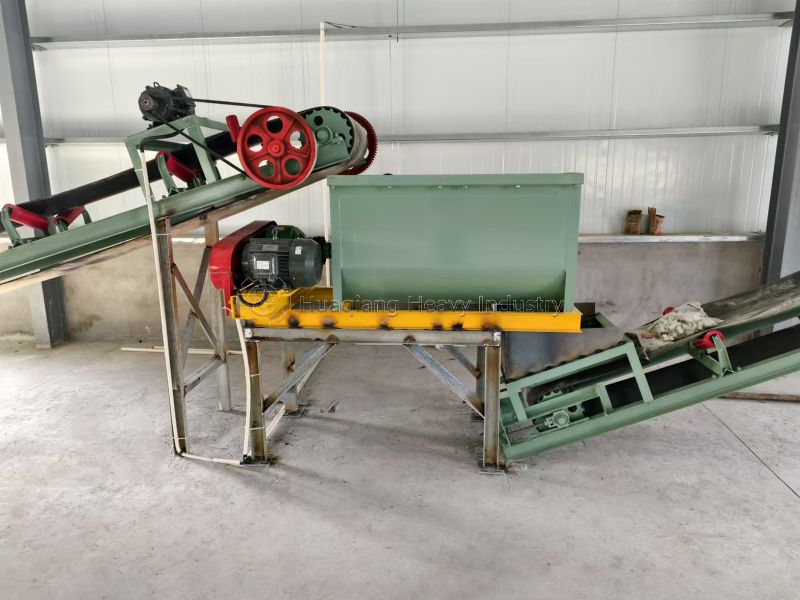
Belt conveyors are the most widely used conveying equipment in production lines. Typically employed for horizontal or low-incline transport, they are well-suited for loose fermented materials, granulated particles, and finished organic fertilizer. They offer high throughput, smooth operation, and simple maintenance, and can be integrated into stages such as raw material pre-treatment, granulation discharge, and the lead-up to finished-product packaging. Trough-style belts help minimize material spillage, though dust control measures—such as the addition of a dust collection system—may be required.
Mobile belt conveyors serve as a supplement to stationary belt conveyors. Equipped with wheels at the base and an adjustable frame height, they offer exceptional flexibility. In organic fertilizer facilities, they are frequently used for transporting fermented/matured materials or loading finished products onto vehicles. They can be quickly positioned to interface with material piles, silos, or the discharge outlets of packaging machines. As they do not require permanent civil engineering foundations, a single mobile conveyor can serve multiple workstations, making them ideal for production lines with limited space that require frequent adjustments to conveying locations.
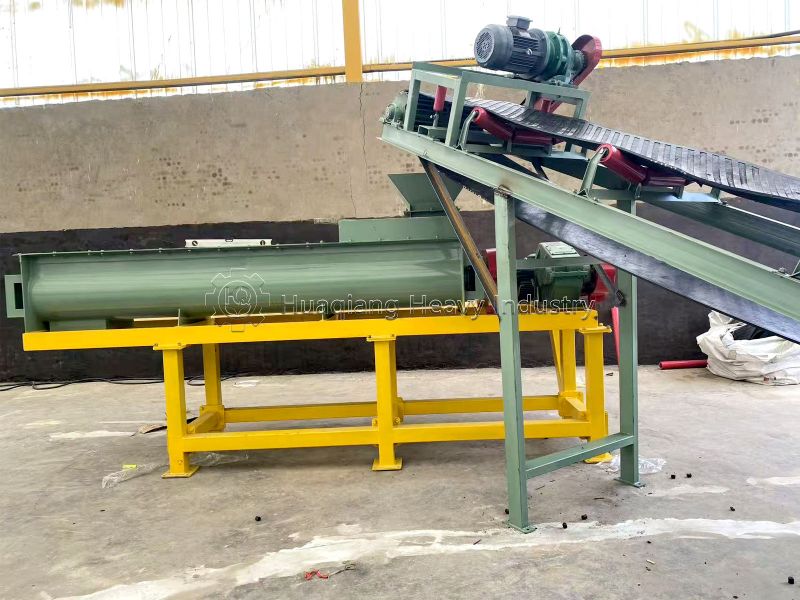
Screw conveyors (often referred to as augers) come in both shafted and shaftless varieties and are the preferred choice for handling powders and semi-moist, sticky materials. Shafted screw conveyors are suitable for dry powders and finely crushed materials, while shaftless versions—which are less prone to clogging or material entanglement—are ideal for high-moisture, sticky substances like manure residue or sludge. They are commonly used for discharging material from fermentation silos or feeding crushers. These units operate within an enclosed system, which minimizes dust, allows for metered (quantitative) feeding, and facilitates seamless integration with mixers and granulators. A drawback is the high resistance encountered during long-distance transport; materials with high moisture content or significant impurities are prone to causing blockages, necessitating careful control of the feed rate.
Bucket elevators are specifically designed for vertical transport. They have a small footprint, making them ideal for lifting granular or powdered organic fertilizer into elevated storage silos or screening equipment. Frequently used in granulation and drying processes, they help conserve floor space while ensuring a stable, continuous supply of material. When selecting a unit, it is crucial to consider the material's moisture content—damp or sticky granules may adhere to the buckets, requiring the inclusion of cleaning mechanisms to prevent material buildup and subsequent equipment failure.
The selection of conveying equipment directly impacts the continuity of the entire production line. Enterprises should make choices based on a comprehensive assessment of factors such as material moisture content, transport distance, lifting height, and site conditions. A well-integrated system—utilizing fixed belt conveyors for stable process transport, mobile belt conveyors for flexible transfer and loading, screw conveyors for metered feeding, and bucket elevators for vertical lifting—is essential to ensure the stable and efficient operation of a bio-organic fertilizer production line.