In the production of BB fertilizers, raw material loss—stemming from weighing inaccuracies, dust emissions, particle breakage and segregation, material clogging or caking, and residual material left behind during product changeovers—directly drives up production costs. Drawing on extensive practical experience, Huaqiang Heavy Industry offers a systematic approach to minimizing raw material loss and maximizing material utilization by focusing on four key areas: raw material selection, equipment optimization, process control, and on-site management.
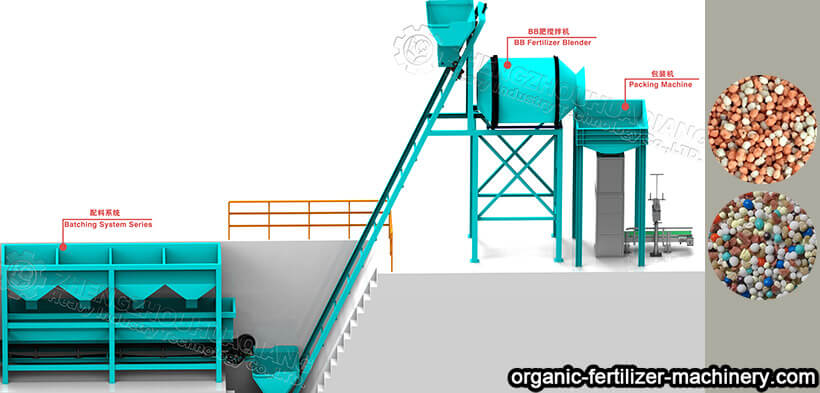
Careful selection of raw materials is the foundation of loss control. When sourcing, prioritize granular materials with similar particle sizes, shapes, and specific gravities; significant disparities in particle size can lead to segregation and breakage during conveying and mixing. Furthermore, strictly control the moisture content of raw materials. High-moisture materials are prone to caking, which can cause "bridging" in storage silos and impede material flow—leading to both increased waste and weighing inaccuracies. Ensure proper, moisture-proof storage by segregating materials upon arrival, and screen out any pre-existing clumps or large aggregates to prevent substandard materials from entering the production line.
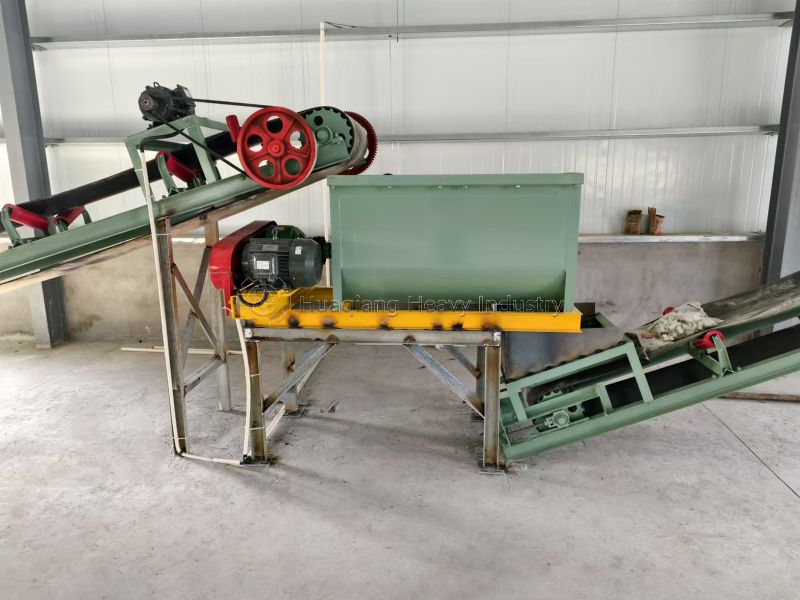
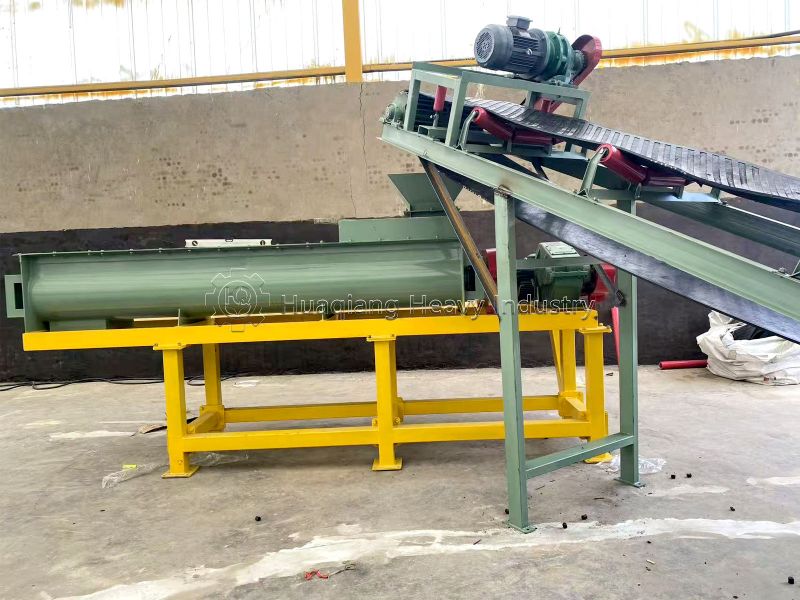
Optimize batching and conveying systems to minimize material loss and breakage. Implement high-precision automated weighing and batching systems, and regularly calibrate load cells to reduce batch-to-batch feeding errors. Equip silos with anti-bridging devices to prevent clogs. During transport, minimize drop heights by using buffer hoppers and enclosed belt conveyors to reduce particle impact and pulverization. The entire BB fertilizer production line should feature an enclosed design, integrated with pulse-jet dust collection systems that capture and recycle dust, keeping such losses to a minimum.
Refine mixing and packaging processes to prevent secondary losses. Utilize high-efficiency mixing equipment specifically designed for BB fertilizers; carefully control mixing duration to ensure uniformity without causing excessive wear or abrasion to the granules. Position packaging units close to the mixing station to shorten the transport distance for finished products, thereby reducing particle segregation and damage caused by vibration. When switching between formulations, utilize designs that facilitate rapid cleaning to minimize internal residue—preventing the contamination of new batches—and ensure that any residual material is collected separately for reuse.
Establish a robust, ongoing system for operation, maintenance, and management. Develop equipment inspection checklists and conduct regular checks on silos, conveying systems, and mixer seals to prevent material leakage. Collect any material spilled during screening or dropped on the floor, and—following quality verification—reintroduce it into the production process. Implement comprehensive staff training to standardize material feeding and changeover procedures, thereby eliminating waste caused by human error. Furthermore, establish a loss-tracking ledger to record raw material consumption by shift, identifying high-loss stages for continuous improvement.
Managing raw material loss is a systematic, end-to-end process. By optimizing raw material pre-treatment, employing enclosed, low-attrition conveying systems, ensuring precise batching, recovering dust, and maintaining rigorous on-site management, companies can effectively minimize material leakage and spillage. This not only reduces the production cost per ton of fertilizer but also stabilizes nutrient content, ultimately enhancing the overall economic efficiency of the BB (bulk blend) fertilizer production line.