In the process of sustainable development in modern agriculture, bio-organic fertilizers are increasingly widely used due to their advantages in improving soil, enhancing crop quality, and reducing environmental pollution. A complete bio-organic fertilizer production line relies on the coordinated operation of multiple specialized equipment. According to the production process, it can be divided into four main stages: pretreatment, fermentation, post-treatment, and finished product packaging. Each stage's equipment performs its specific function, working together to ensure production efficiency and product quality.
Pretreatment equipment is the foundation of production, its core function being to optimize the properties of raw materials, paving the way for the fermentation stage. It mainly includes straw crushers, solid-liquid separators, and mixing and batching equipment. Straw crushers can crush coarse fibrous materials such as straw and sawdust into 2-5 cm pieces, increasing the surface area of the materials, facilitating microbial attachment and water penetration. Solid-liquid separators are used to treat high-moisture livestock and poultry manure, reducing its moisture content to 60%-65%. The separated liquid can be used to produce liquid fertilizer, achieving resource recycling. Horizontal twin-shaft mixers can evenly mix manure, straw, and microbial agents, while adjusting the moisture and carbon-nitrogen ratio to ensure that fermentation conditions are met.
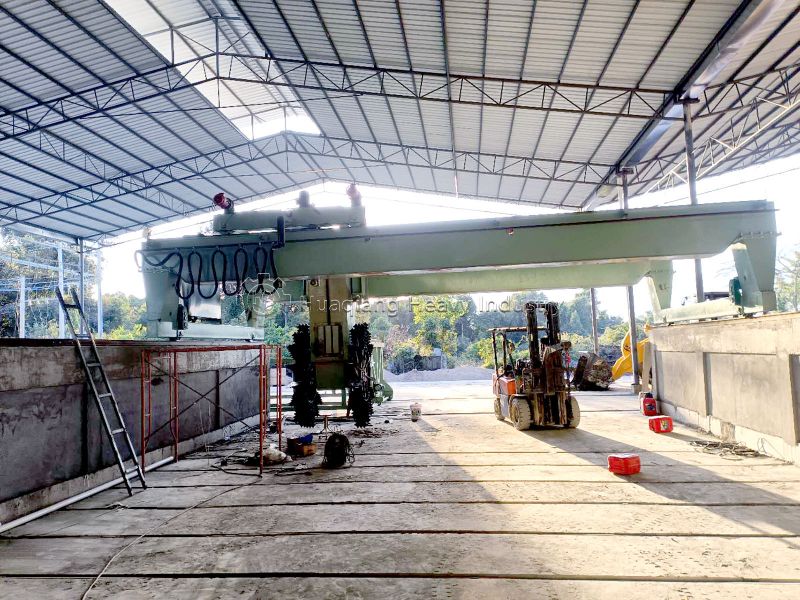
Fermentation equipment is the core of the production line, responsible for converting organic raw materials into mature compost. Common equipment includes windrow compost turners and trough compost turners. Windrow compost turners are suitable for open-air windrow fermentation, using tracks to agitate the material, replenish oxygen, and lower the temperature. Trough compost turners move along the tracks of the fermentation trough, and with the help of a bottom ventilation system, can precisely control the fermentation temperature between 55-70℃, effectively killing pathogens and insect eggs, and shortening the fermentation cycle. During fermentation, some production lines are also equipped with temperature monitoring equipment to monitor the fermentation progress in real time.
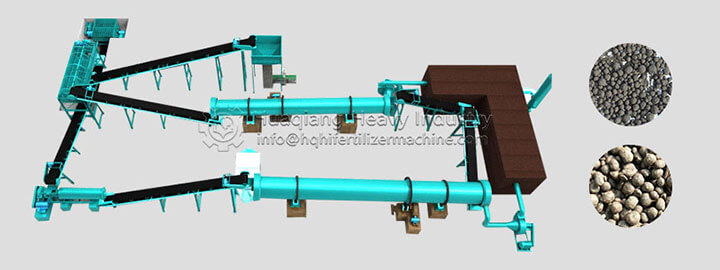
Post-processing equipment is used to process the matured material into commercial fertilizer that meets standards. This mainly includes crushing and screening equipment, granulation equipment, drying equipment, and cooling equipment. Vertical crushers crush the matured, agglomerated material to a uniform particle size, while drum screens separate out substandard coarse material for reprocessing. Disc granulators and new type organic fertilizer granulators can form powdered materials into spherical granules, improving the convenience of fertilizer storage and transportation. After granulation, the quality of the granules needs to be stabilized through drying and cooling equipment. Commonly used drum dryers use hot air to reduce the moisture content of the granules to below 20%, while controlling the temperature to avoid damaging beneficial microorganisms. Cooling equipment primarily uses counter-current coolers, which can quickly cool the high-temperature granules to near ambient temperature, enhancing granule strength and preventing clumping and mold growth during storage. Drying and cooling equipment are arranged close together to reduce heat loss and material waste.
The final stage of production is packaging equipment, mainly automatic quantitative packaging machines. These machines accurately measure the weight of the finished product and package it into standard sizes such as 25kg and 50kg. Equipped with automatic sealing devices, they significantly improve packaging efficiency while ensuring airtight packaging. In addition, the production line also needs auxiliary equipment such as conveyors to ensure smooth material transfer at each stage.
In summary, the equipment composition of the bio-organic fertilizer production line is scientifically configured around the entire production process. The various pieces of equipment work together to achieve both the resource utilization of organic waste and the high-quality and efficient production of bio-organic fertilizer, providing strong support for the development of green agriculture.
_800x600.jpg)
_800x600.jpg)