BB fertilizer, also known as bulk-blend fertilizer, is produced by physically mixing granular single-nutrient fertilizers. It eliminates the need for complex chemical processes like granulation or drying, offers flexible formulation options, and consumes minimal energy—making it a preferred choice for soil-test-based precision fertilization. The BB fertilizer production line from Huaqiang Heavy Industry utilizes automated control and consists of five integrated stages: raw material pre-treatment, automatic proportioning, uniform blending, finished product packaging, and quality inspection/warehousing. Each stage is seamlessly connected to ensure consistent and uniform nutrient distribution.
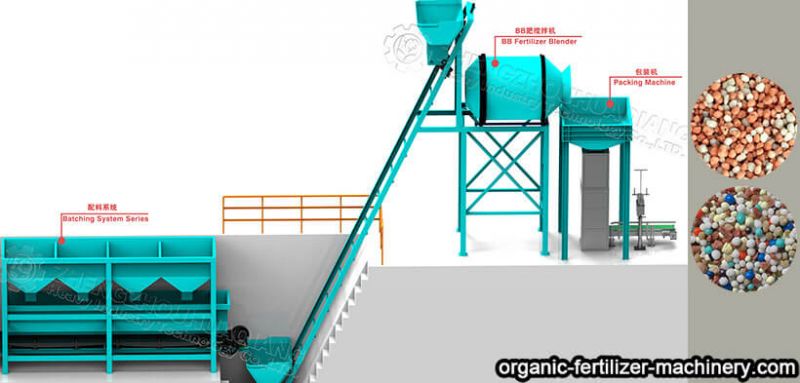
Raw material pre-treatment is the initial step. Once granular raw materials—such as urea, monoammonium phosphate (MAP), and potassium chloride—are received, they are transported through a system equipped with vibrating screens and impurity removal devices to eliminate clumps, debris, twine, and metallic contaminants. Clumped materials can be appropriately crushed to ensure uniform particle size, which helps prevent stratification (separation of ingredients) during subsequent blending. The processed materials are then stored in separate, dedicated silos to prevent premature mixing. These silos are equipped with anti-bridging devices to ensure a smooth, consistent flow of materials.
Precise proportioning is the core process that determines whether the product meets its specified nutrient content. Operators input the required formula into a PLC control system, which then directs multi-silo quantitative feeders to supply materials into a weighing hopper. The system employs a "fast-feed followed by slow-supplement" metering method to minimize weighing errors. This high-precision automated batching system allows for rapid switching between different formulas, catering to the specific fertilization needs of various crops and soil types—a key requirement for soil-test-based fertilizer blending.
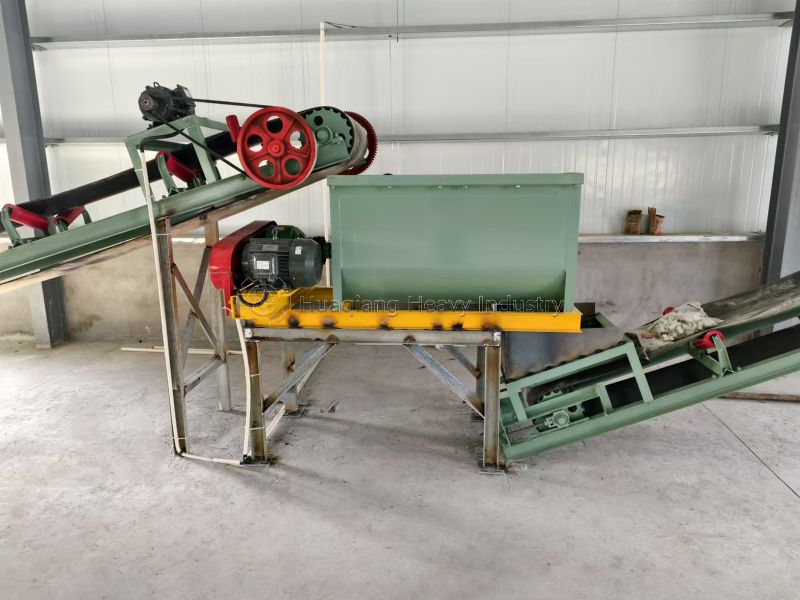
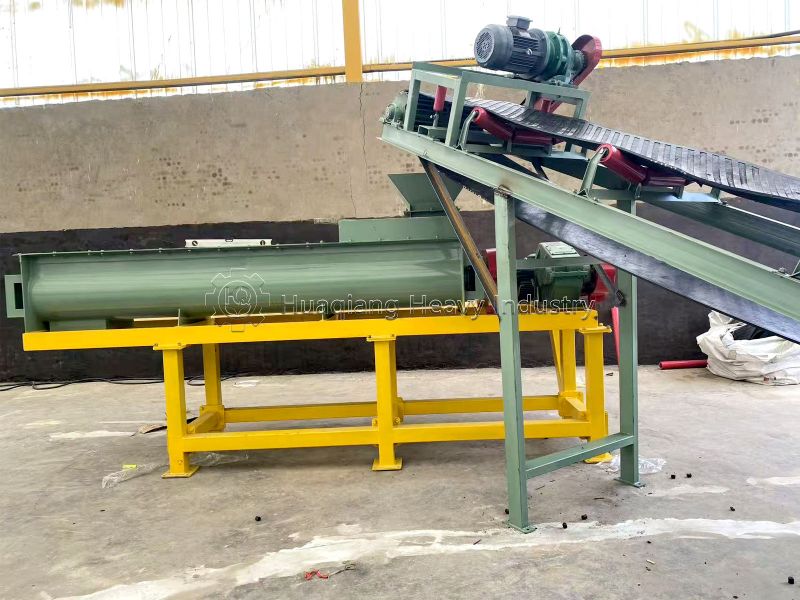
Once proportioned, the materials are fed into a BB fertilizer blender for blending. This is the critical stage for ensuring the uniformity of the fertilizer. Inside the mixer, paddles facilitate convection, shearing, and the turning of the materials; the blending duration is typically controlled to between 3 and 5 minutes. If the duration is too short, the blend will be uneven; if it is too long, the granules may break. During production, anti-caking agents can be added as needed to reduce the risk of the finished product clumping during storage. After blending, samples are taken to verify uniformity; only once the product passes inspection does it proceed to the next stage of the production process. The finished fertilizer blend is fed from a buffer hopper into an automated, quantitative packaging system, which handles weighing, bagging, sealing, and coding. Some production lines are also equipped with palletizing units to further enhance automation. Because the granules in bulk-blended (BB) fertilizer are prone to segregation, the transport distance from the mixing stage to the packaging station should be kept short to minimize the risk of the material re-separating.
The final steps involve random quality inspection of the finished product and subsequent warehousing. Quality control personnel perform spot checks on the nutrient content, net weight, and physical appearance of the packaged fertilizer. Once cleared for quality, the products are moved into storage, with appropriate measures taken to ensure protection against moisture. The entire BB fertilizer production line features a streamlined process and a high degree of automation. Through stable process control, it efficiently produces blended fertilizers that meet established standards, serving a wide range of field crops and cash crops.