
In the fertilizer processing industry, many clients struggle to distinguish between a dedicated BB fertilizer mixer and a standard industrial mixer. Some even attempt to produce blended fertilizers using standard mixers, which often leads to issues such as uneven nutrient distribution, granule breakage, and segregation (separation) of the finished product. While both types of equipment are designed for mixing materials, they differ significantly in their original design intent, mixing mechanisms, suitable applications, and final output quality. Choosing the right equipment is critical to the quality of the BB fertilizer.
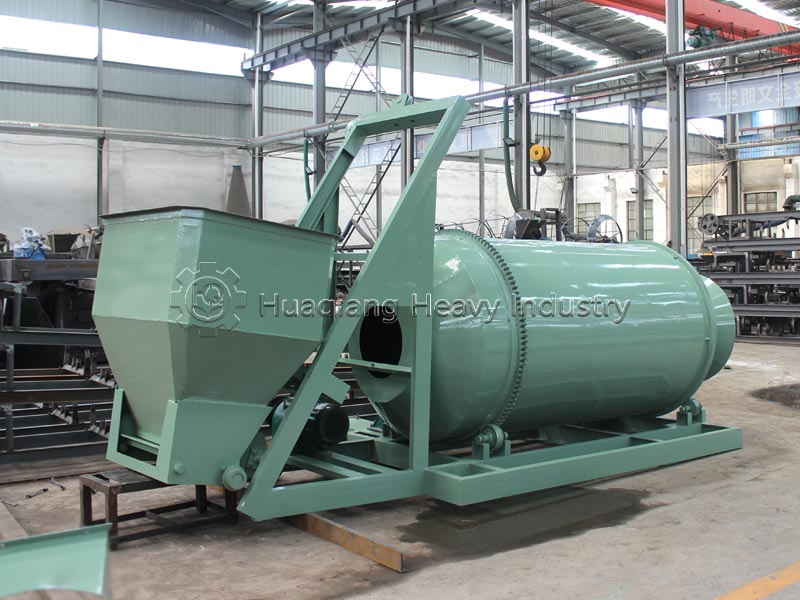
A BB fertilizer mixer is specialized equipment engineered specifically for blending granular fertilizers. Its primary objective is to thoroughly mix granules—such as urea, potash, phosphates, and various micronutrients—that may differ in specific gravity and particle size, all while ensuring the granules remain intact. This prevents the common problem of segregation after mixing. The equipment utilizes a three-dimensional convective tumbling action; the mixing process is gentle and involves low shear. Through the interaction between the mixing drum and the spiral blades, materials are blended multidimensionally—vertically, longitudinally, and laterally—without forceful impact. This results in a very low breakage rate, preserving the physical integrity of the fertilizer granules and the effectiveness of any slow-release coatings. It achieves high mixing uniformity, effectively controlling the coefficient of variation for nutrient content to meet national standards for blended fertilizers. Components that come into contact with the material are typically made of corrosion-resistant stainless steel, designed to withstand the corrosive nature of fertilizers. The drum structure facilitates rapid discharge with minimal material residue, making it easy to clean when switching between different formulations. These mixers are often integrated into complete, automated production lines—including batching, conveying, and packaging systems—making them ideal for continuous, large-scale production.
In contrast, standard industrial mixers are general-purpose machines widely used for blending powders, animal feed, or common chemical raw materials; they are primarily designed to break up and stir powdered substances. Common types, such as horizontal ribbon mixers or vertical paddle mixers, rely on blades to forcefully push the materials, which generates relatively high shear forces. If used for blending granular BB fertilizers, the high-speed blades can easily crush the granules, resulting in a significant amount of fine powder. Standard industrial mixers lack specialized anti-segregation features. When there are significant differences in particle size or specific gravity among the materials, the mixture is highly prone to stratification during subsequent handling and bagging. This results in an uneven distribution of nutrients within a single bag of fertilizer, which directly compromises its effectiveness. Furthermore, such mixers are typically constructed from ordinary carbon steel, which offers poor resistance to fertilizer-induced corrosion; long-term use leads to rusting, which contaminates the product. They also tend to leave substantial residue, making them cumbersome to clean when switching between formulations. Consequently, they are better suited for powdered materials rather than the continuous, large-scale production of bulk-blended (BB) fertilizers.
In terms of application, BB fertilizer mixers are designed specifically for the production of granular blended fertilizers. They allow for flexible, rapid switching between formulations, making them ideal for processing custom fertilizers based on soil-testing data. Standard mixers, by contrast, are better suited for powders or materials with minimal differences in specific gravity, and are commonly used in industries such as animal feed or dry-mix mortar production.
In short, while a standard mixer is a general-purpose blending tool, a BB fertilizer mixer is specialized equipment designed specifically for granular fertilizers. To ensure the consistent production of high-quality blended fertilizers, a dedicated BB fertilizer mixer is the preferred choice; for the blending of powdered materials, a standard mixer is more appropriate. Selecting the right equipment is essential for minimizing raw material waste and ensuring the consistent quality of the finished fertilizer product.
_800x600.jpg)
_800x600.jpg)
_800x600.jpg)
_800x600.jpg)