Fertilizer is a core resource in agricultural production. With the development of modern agriculture toward large-scale and eco-friendly operations, fertilizer processing technologies have continuously evolved, leading to a more specialized range of production line types. Many newly established fertilizer plants and agricultural supply enterprises are often unsure about the specific types of production lines available or how to select the right one when commencing operations. Currently, the mainstream fertilizer production lines in the industry fall into three categories: organic fertilizer production lines, compound fertilizer production lines, and BB fertilizer (bulk blend) production lines. These three types differ in process structure, production models, and application scenarios, catering to various scales and types of fertilizer processing needs.
First is the organic fertilizer production line. This type is currently championed in green agriculture, focusing on the resource utilization of manure and waste. It utilizes organic waste—such as cattle, pig, and chicken manure, crop stalks, and kitchen waste—as raw materials. The core process involves fermentation and decomposition, crushing and screening, mixing and granulation, drying and cooling, and final packaging. The equipment configuration is flexible, offering three specifications: small-scale (household use), medium-scale (farm use), and large-scale (industrial mass production). The resulting organic fertilizer improves soil quality and is eco-friendly and pollution-free; it is suitable for ecological agriculture, orchards, and greenhouse cultivation, and enjoys support from current environmental protection policies.
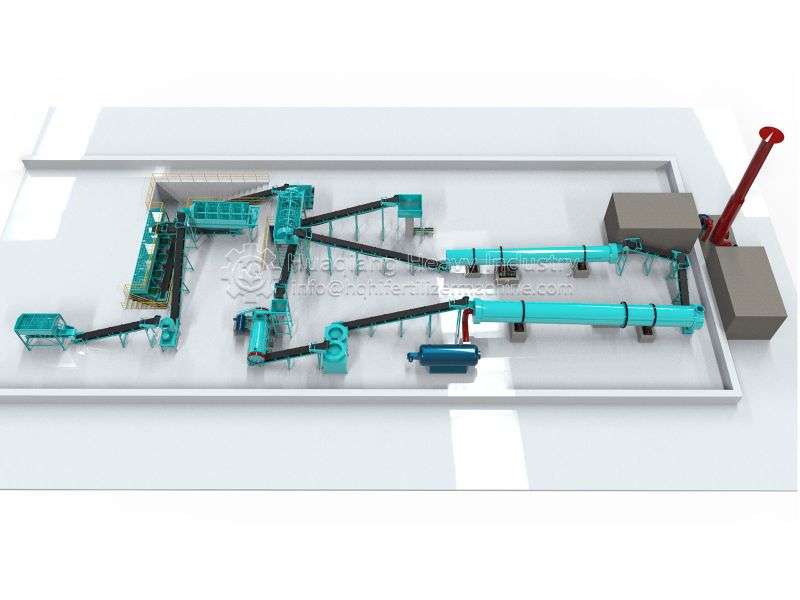
Second is the compound fertilizer production line, a core component of traditional chemical fertilizer manufacturing, primarily producing NPK (nitrogen, phosphorus, and potassium) compound fertilizers. Mainstream processes include rotary drum granulation and disc granulation. By mixing various chemical fertilizer raw materials in specific ratios and subjecting them to moist granulation, high-temperature drying, screening, and polishing, the line produces compound fertilizers with uniform granules and balanced nutrients. These lines offer high production capacity and product stability, yielding fertilizers that act quickly. Widely applicable to field crops and large-scale farming, they serve as a fundamental production line for agricultural supply factories, capable of achieving annual production scales ranging from 10,000 to 200,000 tons.
_800x600.jpg)
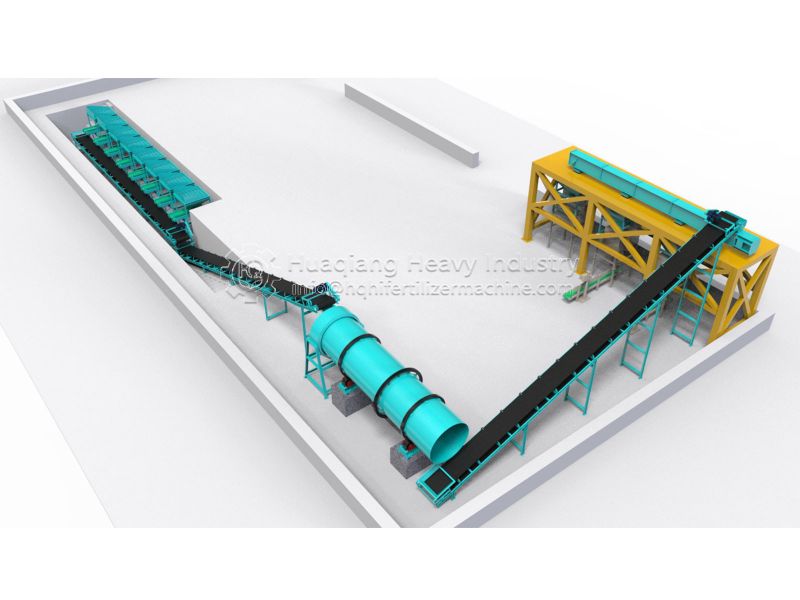
The third type is the BB fertilizer production line—also known as a bulk blending line—which has recently become a popular choice for small and medium-sized fertilizer processing plants due to its simplicity and high efficiency. The core of BB fertilizer production lies in the physical blending process; it eliminates complex steps such as fermentation, granulation, and drying. Instead, it involves precisely mixing two or more types of granular fertilizers—whether straight fertilizers (nitrogen, phosphorus, potassium) or compound fertilizers—according to a customized formula, followed by direct packaging of the finished product. The entire production line features a simple structure, low investment costs, and high production speeds; furthermore, it maximizes nutrient retention by avoiding the nutrient loss often caused by high-temperature processing. The line supports flexible nutrient ratio adjustments, allowing for the customization of fertilizers tailored to specific crops and soil fertility levels. Ideally suited for rural agricultural supply plants and regional fertilizer processing enterprises, this equipment meets a critical demand in the fertilizer industry.
In summary, the three mainstream production lines—organic fertilizer, compound fertilizer, and BB fertilizer—each possess distinct characteristics and serve specific roles. Enterprises can select the appropriate line based on their production strategy: choose an organic fertilizer line if the focus is on eco-friendly products and the resource utilization of livestock waste; opt for a compound fertilizer line to produce standardized, high-nutrient, slow-release fertilizers suitable for large-scale farming; or select a BB fertilizer line to prioritize low costs, flexible formulation, rapid mass production, and localized customization. Making the right choice enhances production efficiency, aligns with market planting needs, and ensures stable, successful operations for fertilizer enterprises.
_800x600.jpg)
_800x600.jpg)
_800x600.jpg)