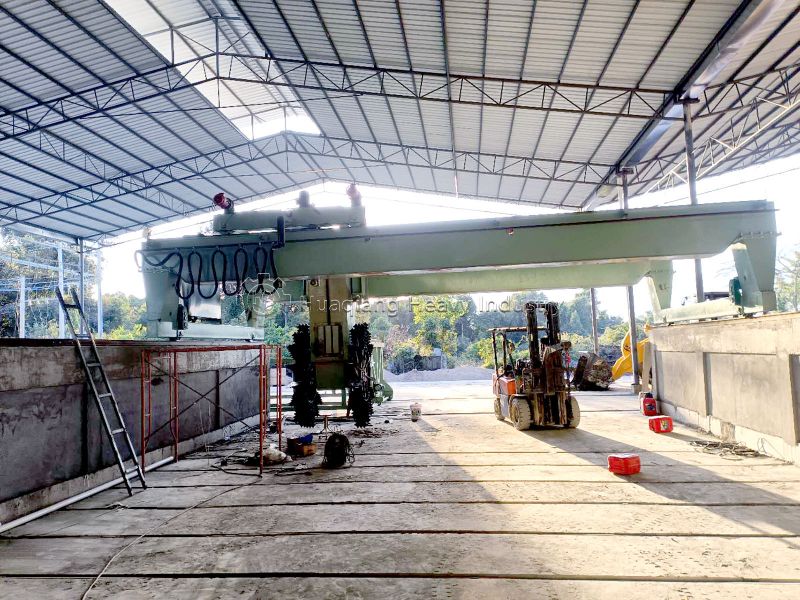
A: Many newly established bio-organic fertilizer production lines suffer from poor operational results, failure to meet capacity targets, and non-compliance with environmental standards. These issues largely stem from three common mistakes regarding equipment selection, production processes, and plant planning—pitfalls that newcomers must avoid from the outset. First is the mistake of equipment selection: many investors blindly pursue low-priced equipment while ignoring compatibility with raw materials. They fail to customize equipment solutions based on the specific characteristics of materials like chicken manure, cattle manure, or crop straw. Instead, they use generic, mixed-purpose equipment, which easily leads to problems such as granulation failure, equipment clogging, and excessive impurities in the final product. Furthermore, many underestimate the importance of the quality of core equipment like compost turners and screening machines; low-cost equipment often has high failure rates, severely disrupting the continuous and stable operation of the production line. Second is the mistake regarding production processes; this is the most widespread issue with the most significant impact.
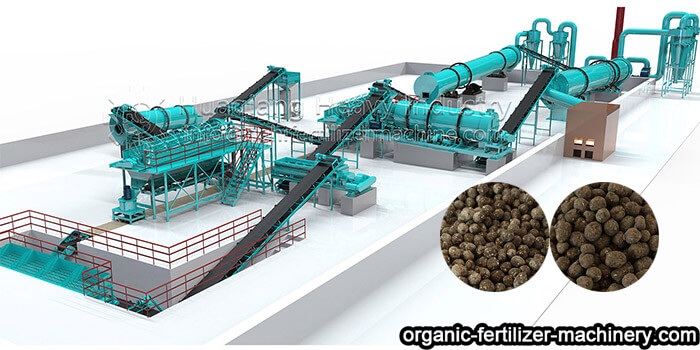
To shorten construction time and cut costs, many manufacturers skip the crucial stage of thorough material decomposition and fermentation, proceeding directly to granulation. Incompletely decomposed organic fertilizer not only has poor fertilizing efficacy and risks burning crops, but the material may also undergo secondary fermentation later, producing foul odors and causing environmental emissions to exceed permissible limits. Additionally, neglecting moisture control—where excessive moisture causes sticking and clogging, while insufficient moisture results in loose granules—drastically lowers the pass rate of the finished product.
Finally, there are mistakes regarding plant planning and cost estimation. Newcomers often make blind estimates of production capacity and haphazardly plan the facility layout, leading to issues like idle equipment and insufficient space. Most people calculate only the equipment purchase price while overlooking hidden costs such as installation and commissioning, labor for operation and maintenance, and environmental control measures, causing actual investment to far exceed the budget. At the same time, neglecting environmental compliance procedures and facility licensing puts the operation at risk of mandatory rectification or shutdowns, resulting in significant financial losses.
_800x600.jpg)
_800x600.jpg)