
Answer: BB fertilizer production lines utilize physical blending as their core process and offer exceptional versatility. They can process various granular straight fertilizers, compound fertilizers, fertilizers containing secondary and trace elements, and functional additives. As long as the granules are uniform and possess good flowability, they can be precisely proportioned and mixed to meet the fertilization needs of different crops.
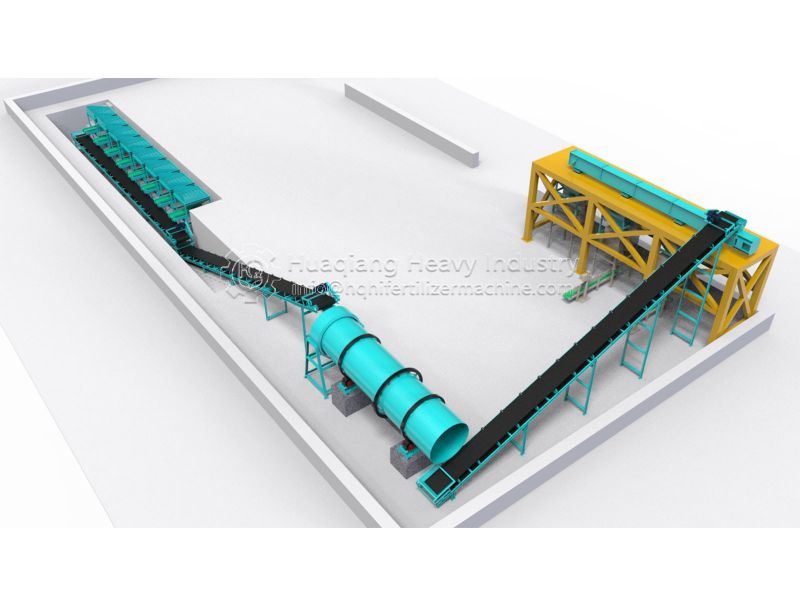
The primary ingredients are standard granular straight fertilizers, which serve as the production base. Nitrogen fertilizers—such as granular urea, ammonium sulfate, and ammonium chloride—supply nitrogen to promote foliage growth. Phosphorus fertilizers, primarily monoammonium phosphate (MAP), diammonium phosphate (DAP), and single superphosphate (SSP), offer stable nutrients and easy blending characteristics, supporting root development, flowering, and fruiting. Potassium fertilizers include potassium chloride, potassium sulfate, and potassium nitrate, all of which enhance crop stress resistance and fruit quality. Additionally, various granular NPK compound fertilizers can be used directly as primary ingredients in the blend.
BB fertilizer production lines are compatible with various raw materials containing secondary and trace elements, helping to address soil nutrient deficiencies. Common examples include magnesium sulfate, calcium sulfate, zinc sulfate, ferrous sulfate, and boron fertilizers; these can be added as needed based on specific soil conditions to resolve issues such as yellowing leaves, stunted growth, and low yields.
Furthermore, the lines can incorporate various functional additives to meet customized production requirements. These include humic acid, organic matter granules, and soil conditioners; some BB fertilizer production lines also allow for the compliant addition of minor amounts of pest-control agents or efficiency-enhancing additives. It is important to note that raw materials must have uniform particle sizes and be free of clumps; materials that have clumped due to moisture require pre-treatment to ensure uniform blending and consistent fertilizer quality.
_800x600.jpg)
_800x600.jpg)
_800x600.jpg)
_800x600.jpg)