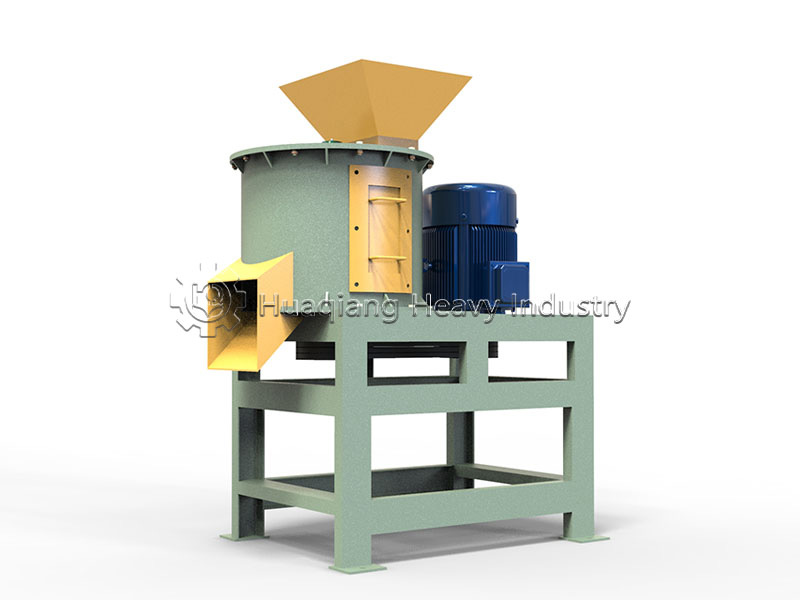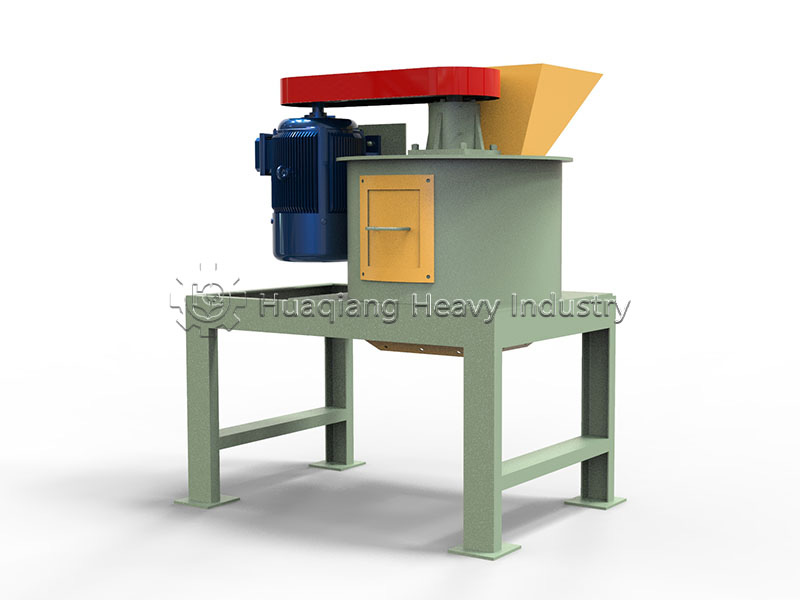
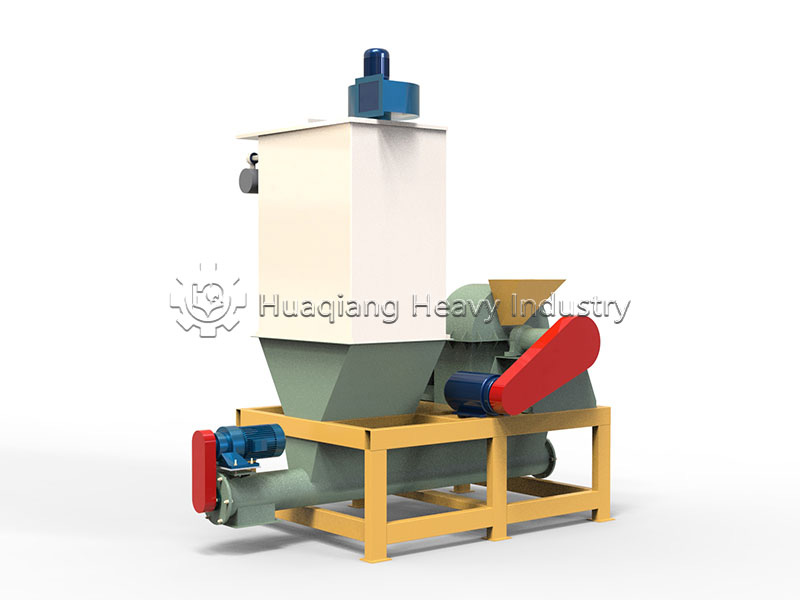
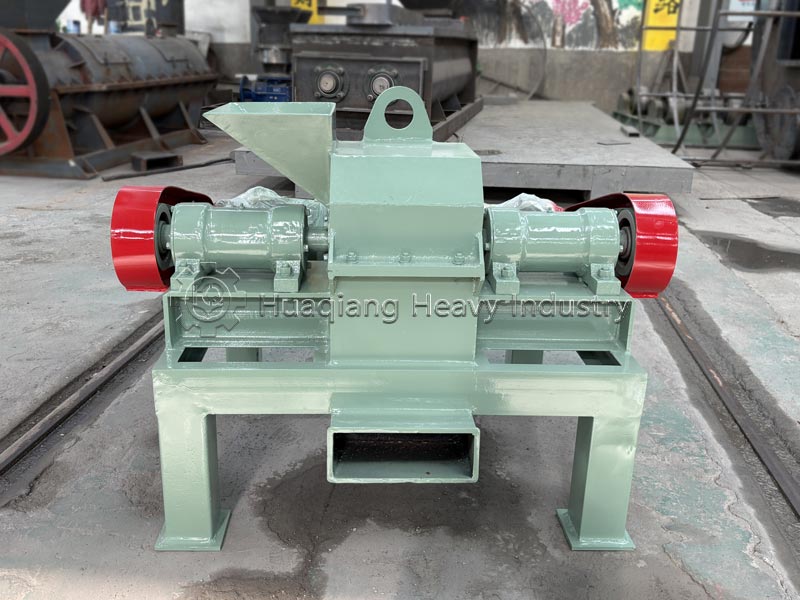
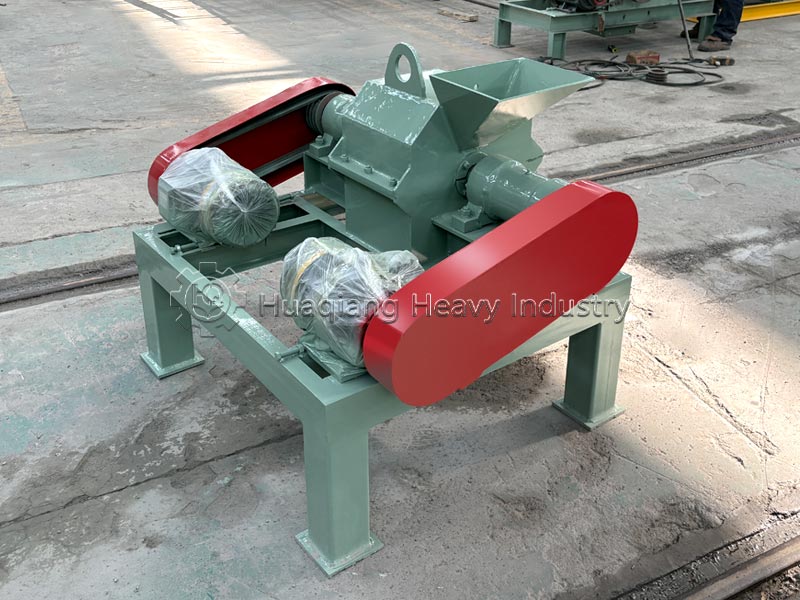
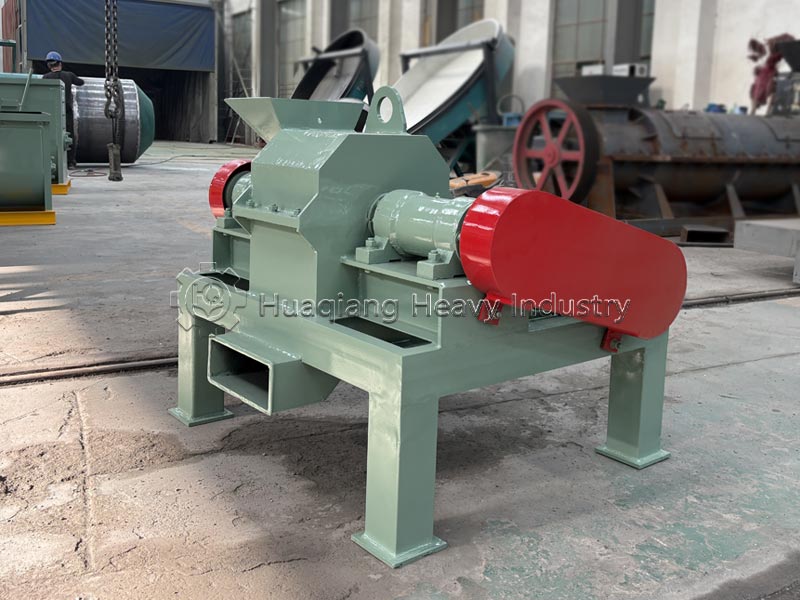
The cage crusher is a medium-sized, horizontal cage-bar crushing machine designed based on the principle of impact crushing. It is widely used across various sectors, including mining, metallurgy, construction materials, road and railway infrastructure, water conservancy, the chemical industry, and fertilizer production. In the fields of compound and organic fertilizer manufacturing, the cage crusher serves as an indispensable pre-treatment unit, effectively addressing common industry pain points associated with traditional crushing equipment—such as frequent clogging, uneven crushing, and high energy consumption.
.jpg)
The working mechanism of a cage crusher is based on the principle of impact crushing. The equipment is driven by two electric motors that rotate two sets of cage bars—an inner set and an outer set—at high speeds in opposite directions; one motor drives the larger cage to rotate in one direction, while the other drives the smaller cage to rotate in the opposite direction.
After entering through the feed inlet, the material first reaches the central area of the inner cage (the smaller cage assembly). Under the action of the high-speed rotating bars, the material undergoes violent impacts and is initially crushed. Subsequently, centrifugal force throws the material outward toward the outer cage—specifically against the steel bars of the other cage—where it is subjected to further impact from the opposing direction. The material undergoes repeated impacts, collisions, and shearing actions between the inner and outer cage bars, becoming progressively finer. Finally, material crushed to the required particle size is discharged from the bottom of the machine casing.
Throughout the crushing process, material reduction is achieved primarily through three mechanisms: direct impact and shattering by the high-speed rotating steel bars; mutual collision and pulverization between material particles; and further breakage caused by the material striking the inner walls of the casing. This multi-stage crushing mechanism ensures uniform output particle size and high crushing efficiency.
The horizontal design is simple and compact, making it particularly suitable for workshop layouts with limited space.
The inner and outer cages rotate at high speeds in opposite directions, achieving a crushing ratio of 10–50 and producing a largely loose, powdery output.
Effectively minimizes dust leakage; vibration and noise levels are kept within industry standards.
Wear parts, such as the cage bars, feature a detachable design; they can be replaced individually without discarding the entire rotor, thereby reducing maintenance costs.
Fundamentally eliminates clogging issues caused by fibrous materials wrapping around screens; ideal for processing materials containing fibers, such as crop stalks and livestock manure.
Output particle size can be flexibly controlled by adjusting parameters or selecting different models to meet specific process requirements.
Thanks to their broad material compatibility, cage crushers play a vital role across various industries.
This is the primary application for cage crushers. In compound fertilizer production, they are used to crush hard raw materials——such as urea, diammonium phosphate, and potash——as well as to break down oversized granules (recycled material) screened out after the granulation process. In organic fertilizer production, they process materials like fermented livestock manure and crop stalks, reducing them to the particle size required for granulation.
They are suitable for crushing soft limestone, shale, coal gangue, and glassy siliceous materials. In brick and tile plants, cage crushers are essential equipment for processing raw materials such as industrial slag and dry clay.
They can be used to break up and finely crush certain chemical crystalline lumps. Note that the material's Mohs hardness should generally be below 5, and the moisture content should be kept under 8% to prevent excessive wear or material sticking to the cage bars.
Cage crushers are also used for crushing low-hardness materials in sectors such as feed processing, food production, pharmaceuticals, and plastics.
| Model | Rotate speed | Power | Prod Capacity | Dimensions L×W×H | Weight |
| mm | r/min | kW | t/h | mm | kg |
| WLF650 | 2000 | 26 | 4-6 | 1800×1300×1160 | 2300 |
| WLF800 | 2000 | 37 | 6-10 | 2200×1500×1360 | 2550 |