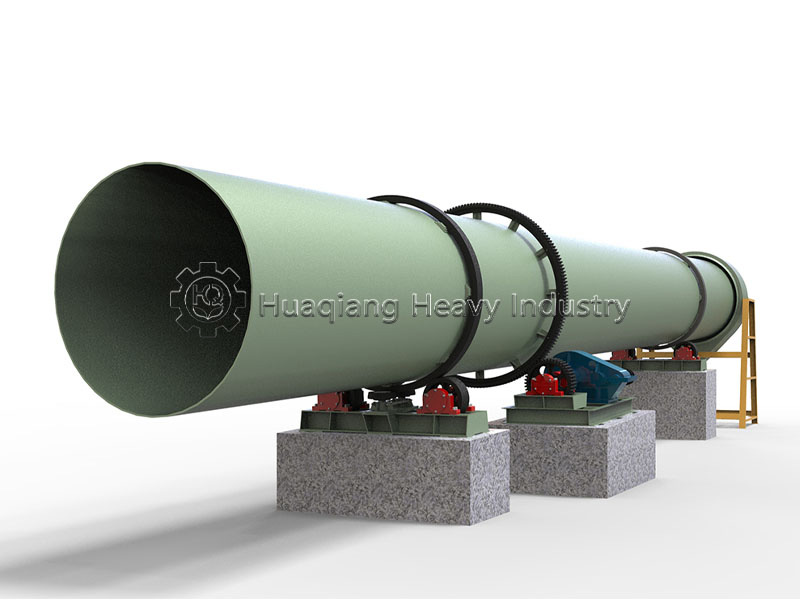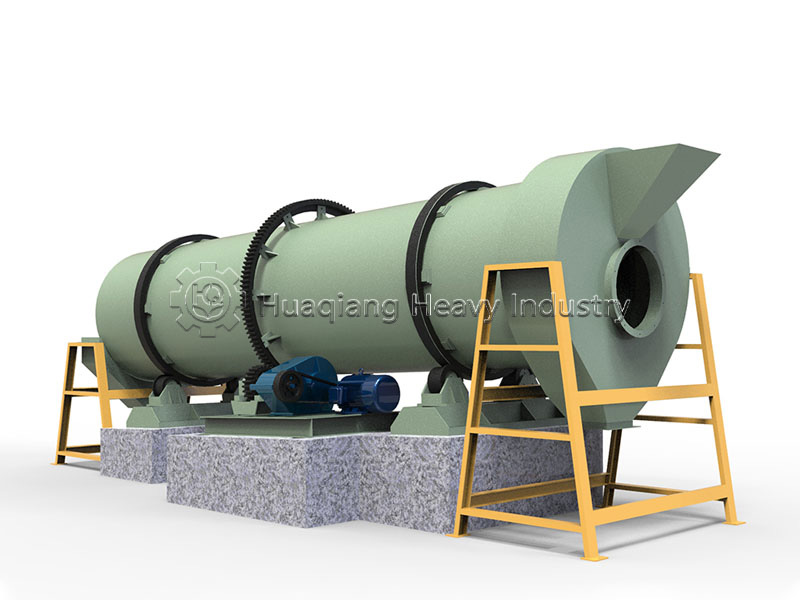
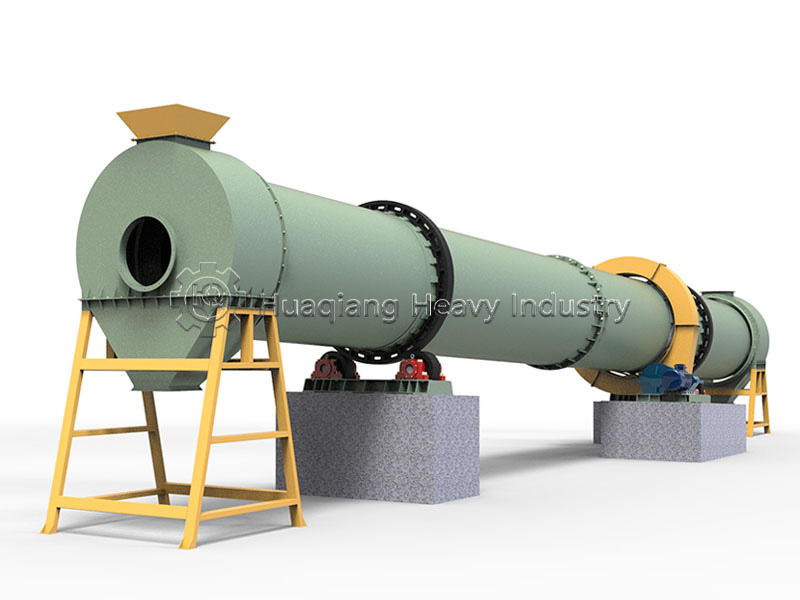
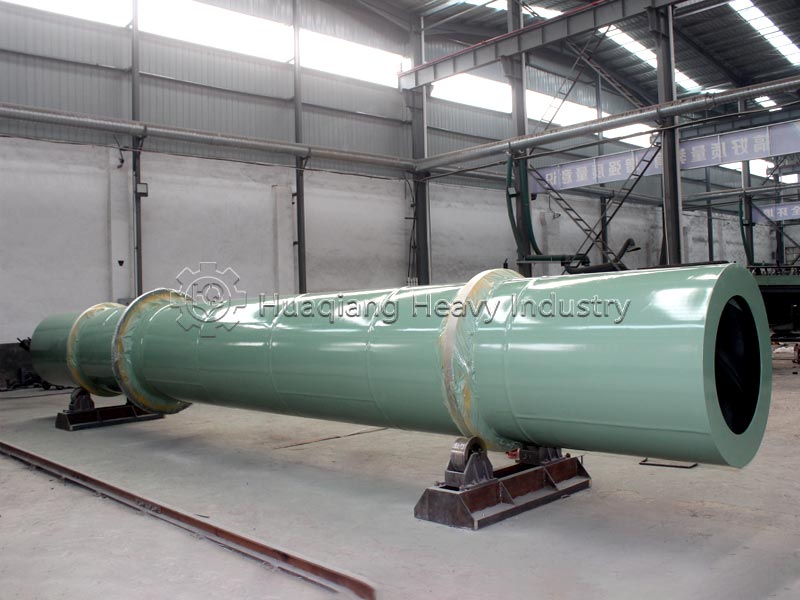

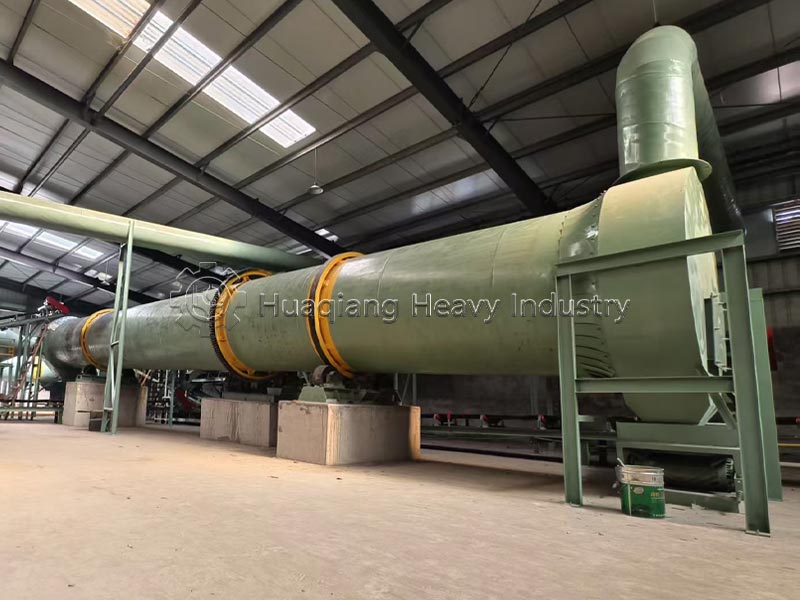
Drum fertilizer dryers(often referred to in the industry as rotary drum dryers)are continuous convection drying machines designed specifically to process wet granules of organic, compound, and bio-fertilizers produced during the granulation stage.
Following granulation, the moisture content of the granules typically ranges from 25% to 35%, falling short of storage and packaging standards; a dryer is therefore required to evaporate the excess moisture. If you are setting up a complete processing line, please visit our organic fertilizer production line equipment page to learn how the associated granulation, crushing, and cooling equipment work together.
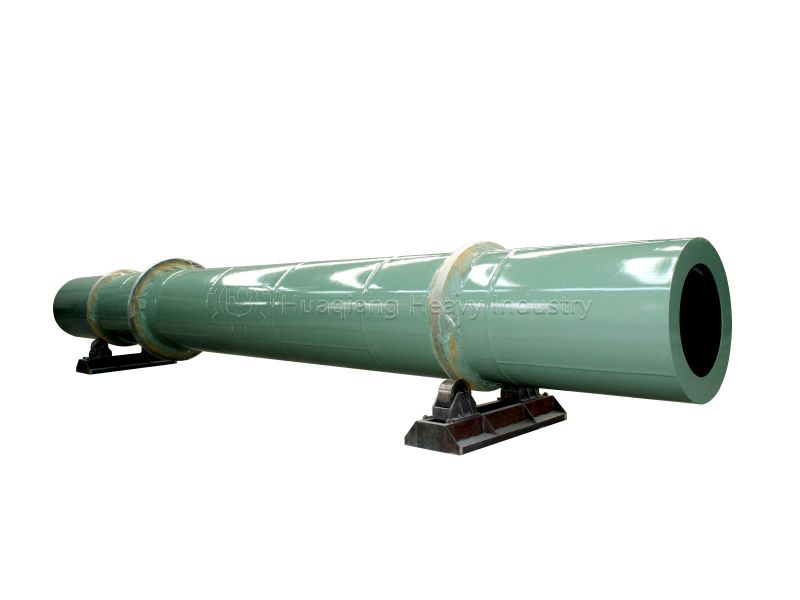
The drum fertilizer dryer operates as a continuous drying system, comprising the following stages: feeding, material lifting and heat exchange, moisture evaporation, discharging, and exhaust gas purification.
Moist fertilizer granules, having been processed by a granulator, are conveyed to the elevated feed inlet;
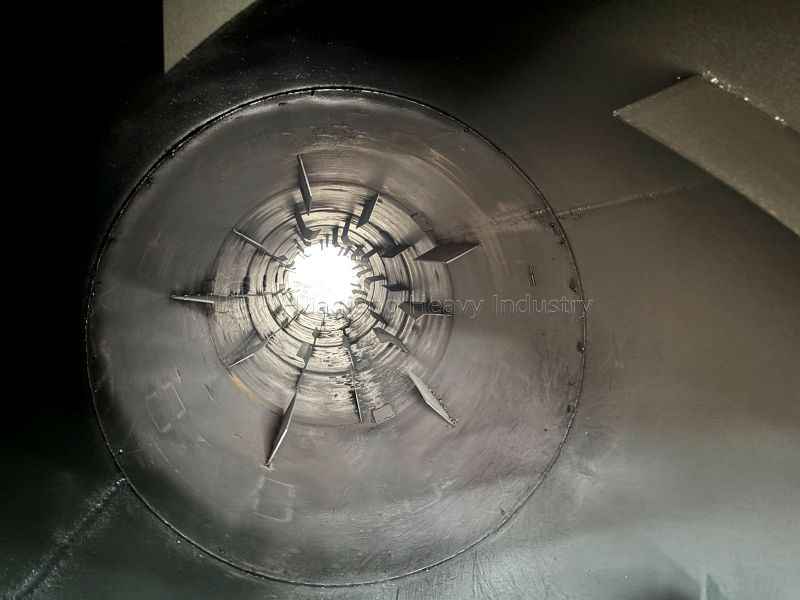
A motor drives the drum to rotate slowly at a constant speed; internal lifting flights continuously scoop up the fertilizer granules and let them cascade down, creating a uniform curtain of material;
High-temperature hot air is introduced into the drum, utilizing either co-current or counter-current heat exchange modes. Co-current heat exchange is suitable for high-moisture organic fertilizer, whereas counter-current drying is selected for bio-organic fertilizer that has undergone preliminary dewatering and contains live bacteria sensitive to high-temperature damage;
The fertilizer granules come into full contact with the high-temperature airflow, causing the moisture inside the granules to vaporize; the inclined structure of the drum allows the material to gradually move toward the discharge end;
The dried fertilizer granules are discharged from the lower outlet and subsequently conveyed to a cooler; dust-laden exhaust gas is routed through dust removal equipment for purification before being vented to the atmosphere.
Fermented organic fertilizers from livestock and poultry manure: cattle, chicken, sheep, and decomposed pig manure granules;
Fermented industrial waste materials: biogas residue, mushroom substrate residue, sugarcane bagasse, and fermented straw materials;
Chemical granular fertilizers: NPK compound fertilizers, blended fertilizers, and slow-release granular fertilizers;
Functional fertilizers: bio-bacterial fertilizers, humic acid fertilizers, and organic-inorganic compound fertilizers.
A single drum fertilizer dryer can process between 1 and 50 tons of material per hour, meeting the needs of operations ranging from small-to-medium-sized farms to large-scale fertilizer plants. It reliably handles a wide variety of materials, including loose fermented compost, sticky wet-granulated pellets, and mixed materials containing impurities like straw.
The scientifically designed internal lifting flights ensure that the material makes uniform contact with the hot air as the drum rotates, preventing localized over-drying or under-drying. The resulting organic fertilizer granules feature consistent moisture content, high structural strength, and resistance to crumbling, effectively preserving the material's organic matter and nutrients. Additionally, the high-temperature drying process further eliminates residual pathogens, enhancing product safety.
Drum fertilizer dryers utilize a self-aligning support roller structure; the precise fit between the rollers and the riding ring significantly reduces wear and energy consumption. A specially designed thrust roller mechanism effectively counteracts the horizontal thrust generated by the equipment's inclined operation. The system boasts strong overload resistance, smooth drum rotation, and high reliability.
The design incorporates a production margin, allowing for slight increases in output without the need to replace equipment. By adjusting the drum rotation speed, hot air temperature, and feed rate, operators can precisely control the drying effect to accommodate materials with varying moisture levels and characteristics.
| Model | Shell | Capacity | Inlet temp of hot air | Outlet temp of hot air | Motor | Decelevators model | |||||
| Inner diam | Length | Inclination | Rotation speed | Model | Power | Rotation Speed | |||||
| mm | mm | 0 | r/min | t/h | °C | °C | |||||
| ZG12120 | 1200 | 12000 | 2-5 | 4.7 | 2-2.5 | 150-250 | 60-80 | Y160M-4 | 7.5 | 1460 | ZQ350 |
| ZG15120 | 1500 | 12000 | 2-5 | 5.0 | 4-6 | 150-250 | 60-80 | Y160L-4 | 15 | 1440 | ZQ400 |
| ZG15150 | 1500 | 15000 | 2-5 | 5.0 | 5-7 | 150-250 | 60-80 | Y160L-4 | 15 | 1440 | ZQ500 |
| ZG18150 | 1800 | 15000 | 2-5 | 3.9 | 7-10 | 150-250 | 60-80 | Y200L1-6 | 18.5 | 970 | ZQ500 |
| ZG20200 | 2000 | 20000 | 2-5 | 3.9 | 8-14 | 150-250 | 60-80 | Y200L2-6 | 22 | 970 | ZQ650 |
| ZG22220 | 2200 | 22000 | 2-5 | 3.2 | 12-16 | 150-250 | 60-80 | Y250M-6 | 37 | 980 | ZQ750 |
| ZG24240 | 2200 | 24000 | 2-5 | 3.0 | 14-19 | 150-250 | 60-80 | Y280S-6 | 45 | 970 | ZQ850 |