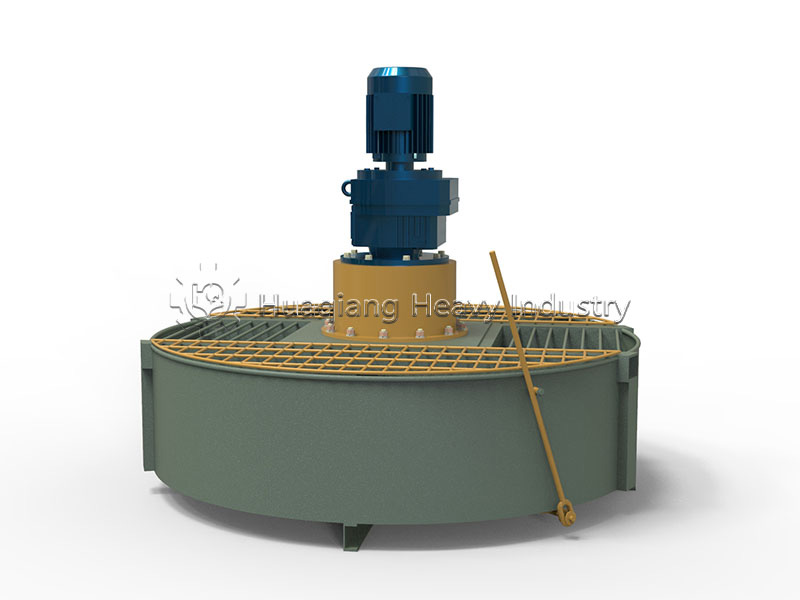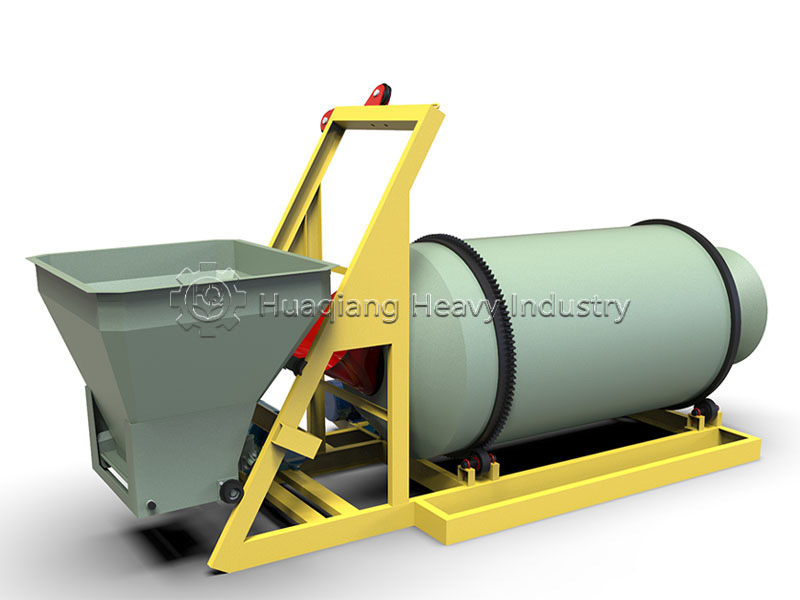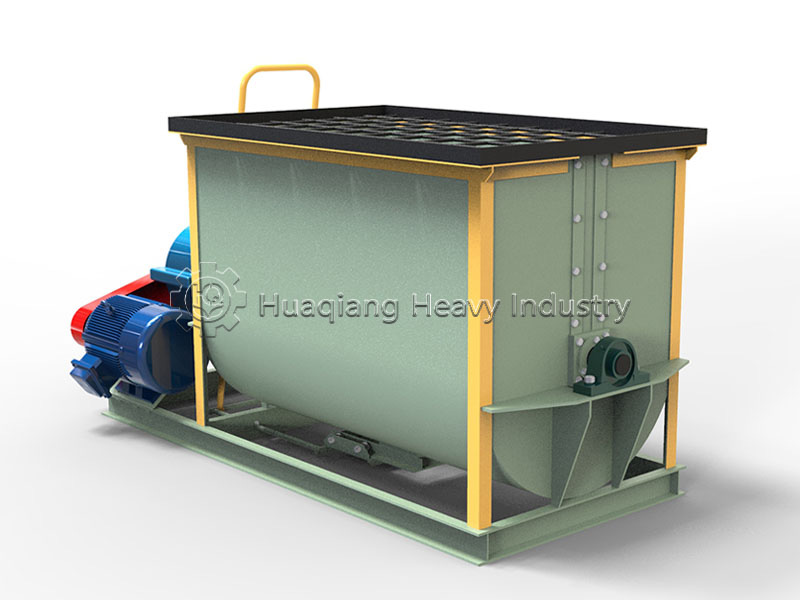
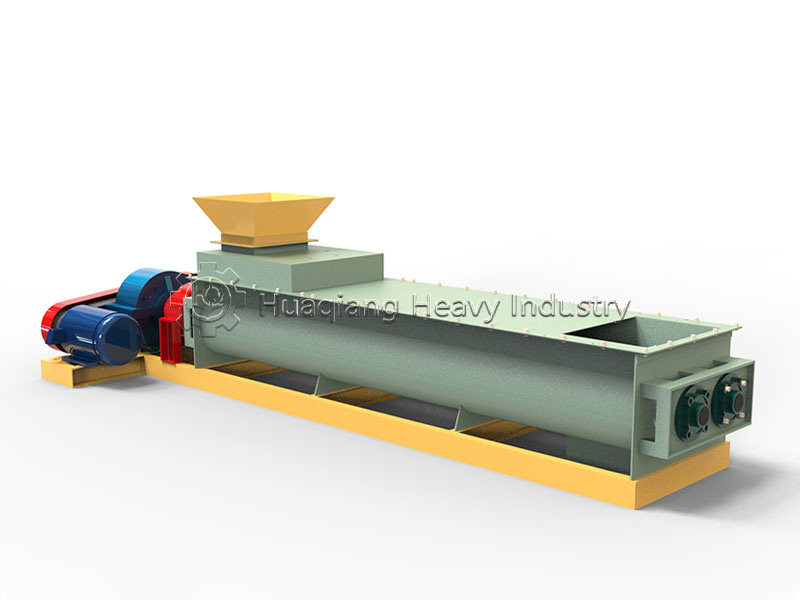
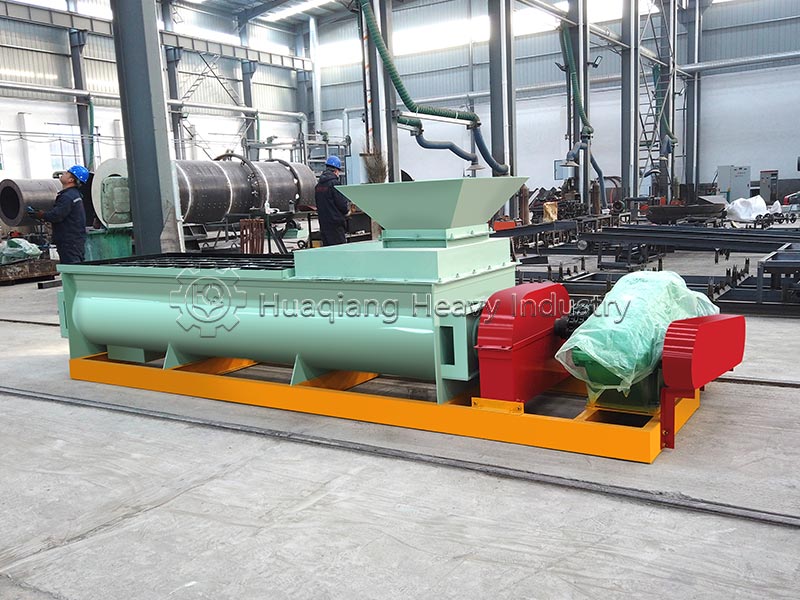
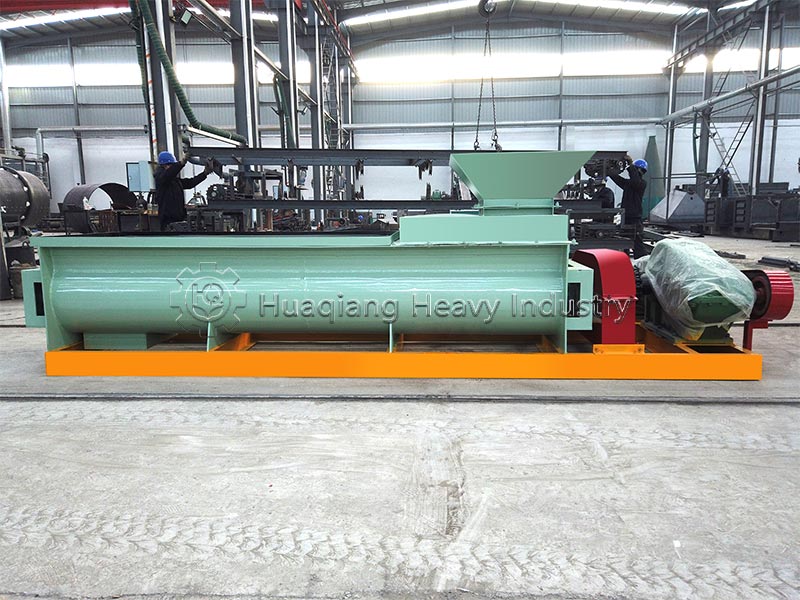
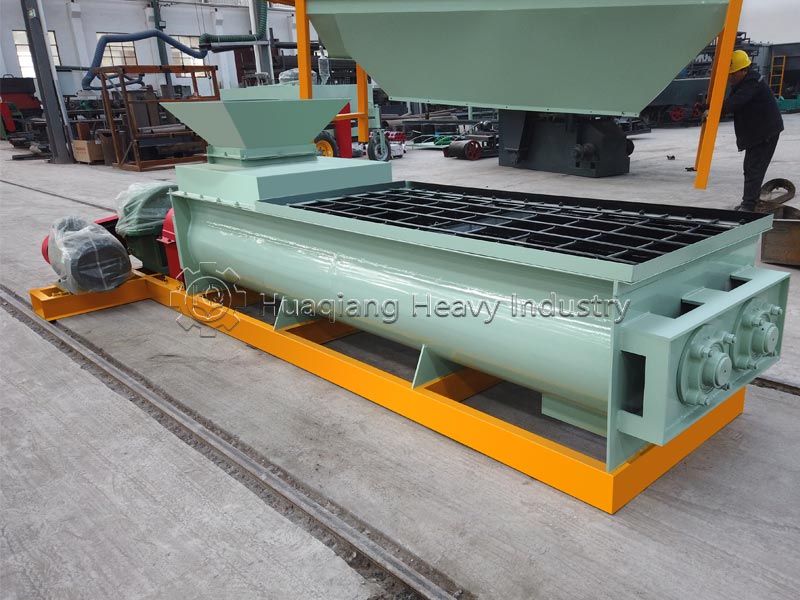
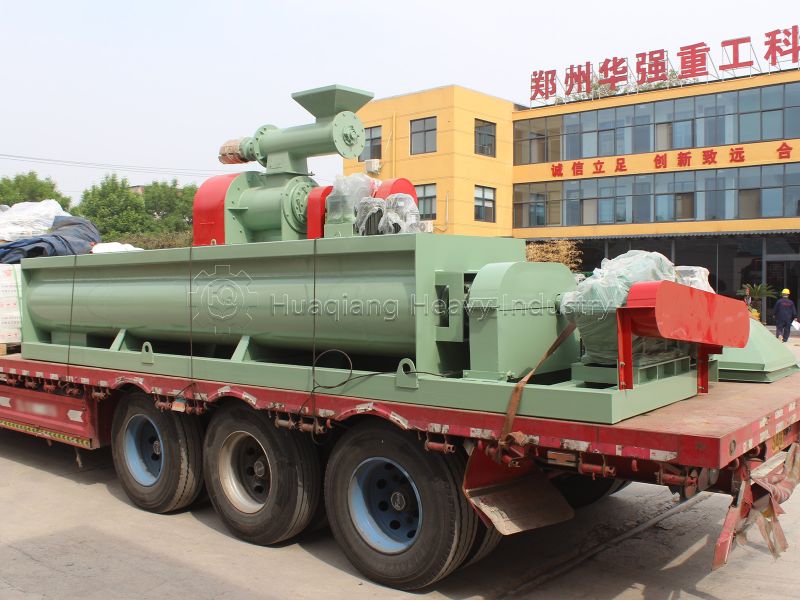
The double shaft paddle mixer is an industrial machine designed for the uniform mixing, humidification, and conveyance of powdery, granular, and viscous materials. It utilizes two symmetrically arranged spiral shafts rotating synchronously to mix and humidify the material while simultaneously transporting it. Integrating the functions of mixing, conveying, and humidifying, the equipment effectively mitigates the issue of dust generation associated with the transport and handling of powdery materials.
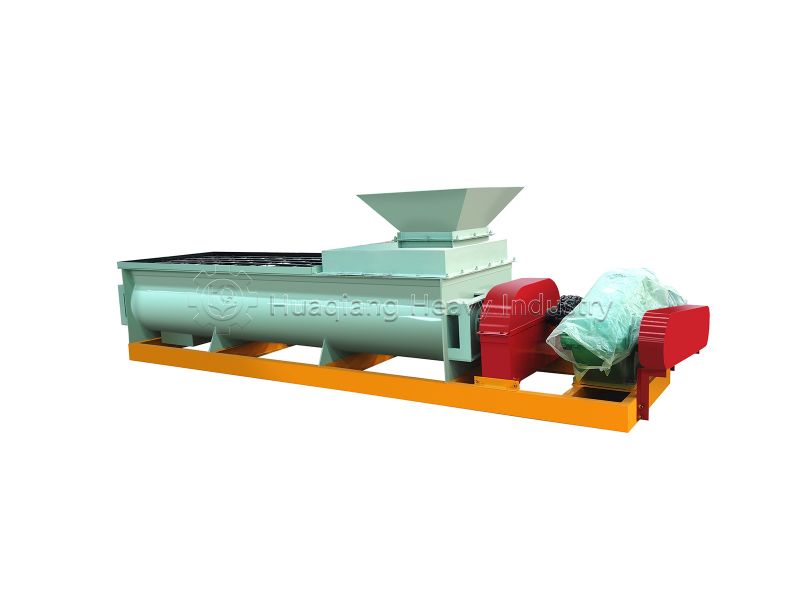
The operating principle of a double shaft paddle mixer is straightforward. A drive mechanism powers two shafts—equipped with mixing blades—to rotate synchronously in opposite directions. Once material enters the mixing trough through the inlet, a water spray system immediately moistens it, transforming it from a dry to a wet state. As humidification occurs, the spiral mixing blades continuously agitate and blend the material while propelling it toward the discharge outlet, where the properly mixed material is finally released.
For dry powder mixing (such as dry-mix mortar), the water addition step is omitted; instead, the two shafts toss the dry powder into the air to create a fluidized layer, inducing a momentary state of weightlessness that enables rapid, uniform mixing.
The entire process can be summarized in three seamless steps: feeding, mixing, and discharging.
A typical double shaft paddle mixerr consists primarily of the following main parts:
Fabricated from welded steel plates and structural sections, this serves as the structural support for the entire machine. The casing is typically U-shaped or inverted-triangular and is tightly sealed to prevent dust leakage.
This is the core component of the mixer, comprising left- and right-hand spiral shafts, bearing housings, bearing sleeves, bearing caps, gears, sprockets, mixing blades, and other parts. The two shafts are positioned side-by-side and rotate in opposite directions; high manufacturing precision is required.
Includes the motor, gearbox, and transmission gears. The motor drives the main shaft via the gearbox, and the main shaft subsequently drives the driven shaft to rotate at the same speed in the opposite direction through meshing gears.
For applications requiring humidification, multiple rows of adjustable nozzles are installed in the upper section of the casing, arranged axially along the length of the spiral shafts to create a water-mist curtain that moistens the material.
These provide sealing and safety protection.
Capable of processing raw materials such as cattle manure, chicken manure, sheep manure, straw powder, biogas residue, spent mushroom substrate, sugarcane bagasse, and oilseed cake. It mixes these with microbial agents, humus, and trace elements, serving as essential pre-processing equipment for bio-organic and organic fertilizer production.
Uniformly blends NPK compound fertilizer powders, fillers, and binding agents; after humidification, the mixture is fed into a double-roller extrusion granulator for granulation.
Handles the humidified transport of fly ash from power plants, homogenization and mixing of sludge, and blending of construction waste powder; the enclosed housing effectively controls dust emissions from dry ash.
Mixes water with materials such as pottery clay, red clay, coal slime, and brick-making raw stock, ensuring uniform moisture content to facilitate molding and shaping.
| Model | Reducer Model | Power (kW) | Spindle speed (r/mm) | Rotating diameter (mm) | Capacity (t/h) | Weight (kg) |
| 400 | 400-1V-2 | 11 | 52 | 400 | 20 | 2350 |
| 450 | 500-1V-2 | 15 | 52 | 450 | 25 | 2620 |
| 500 | 500-1V-2 | 18.5 | 53 | 500 | 30 | 2980 |
| 550 | 650-1V-2 | 22 | 53 | 550 | 35 | 3450 |
| 600 | 650-1V-2 | 30 | 52 | 600 | 40 | 3850 |
| 650 | 750-1V-2 | 37 | 52 | 650 | 45 | 4260 |