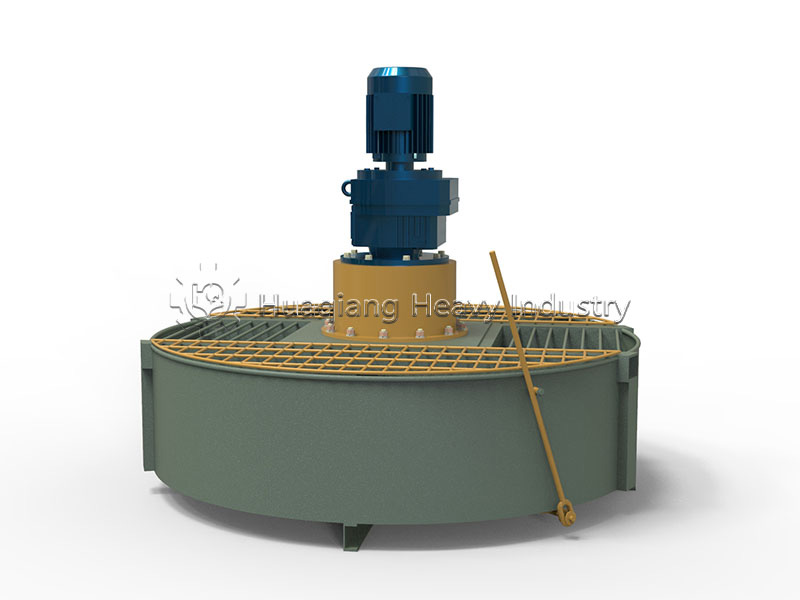
In sectors such as organic fertilizer production, compound fertilizer processing, chemical raw material blending, and the building materials industry, the uniformity of material mixing directly determines the quality of the final product and production efficiency. Thanks to its unique vertical disc structure and highly efficient mixing mechanism, the vertical disc mixer (also known as a vertical mixer or vertical disc blender) has become an ideal choice for replacing traditional horizontal mixers in small- to medium-scale production lines.
After the batching process, various powdered and semi-solid raw materials enter the disc chamber through the top inlet. A motor drives a vertical main shaft to rotate continuously, while multi-layered mixing paddles subject the materials to shearing, tumbling, and convective diffusion forces.
As the materials circulate along the inner wall of the disc, gravity causes them to tumble and fall back toward the center, creating a continuous, turbulent mixing cycle. For standard raw materials, the coefficient of variation for the mixture can drop below 5% in just 30 to 90 seconds, ensuring that various nutrient additives and fermentation starter cultures are thoroughly blended.
Unlike horizontal twin-shaft mixers that push materials horizontally, the vertical disc mixer relies on gravity-assisted tumbling; consequently, material stratification or settling is unlikely to occur, even when there are significant differences in material density—such as between chopped straw, composted pig manure, and mineral additives.
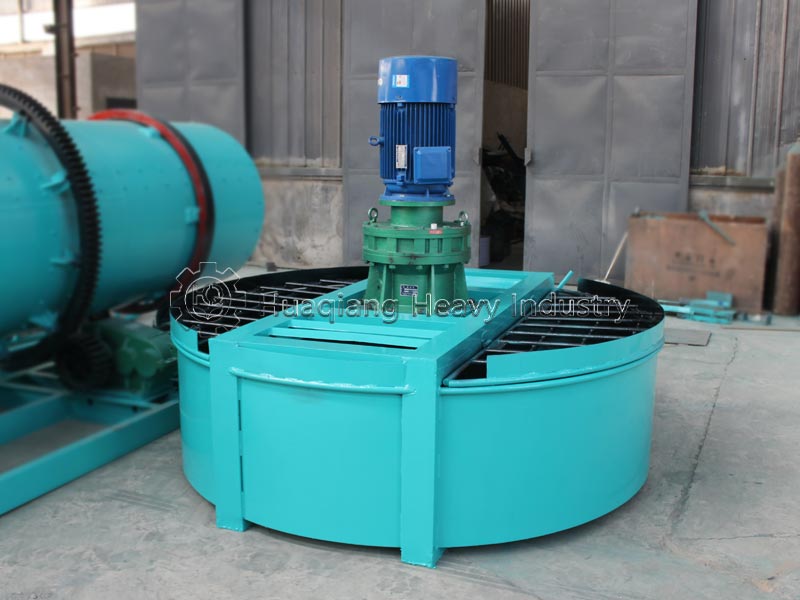
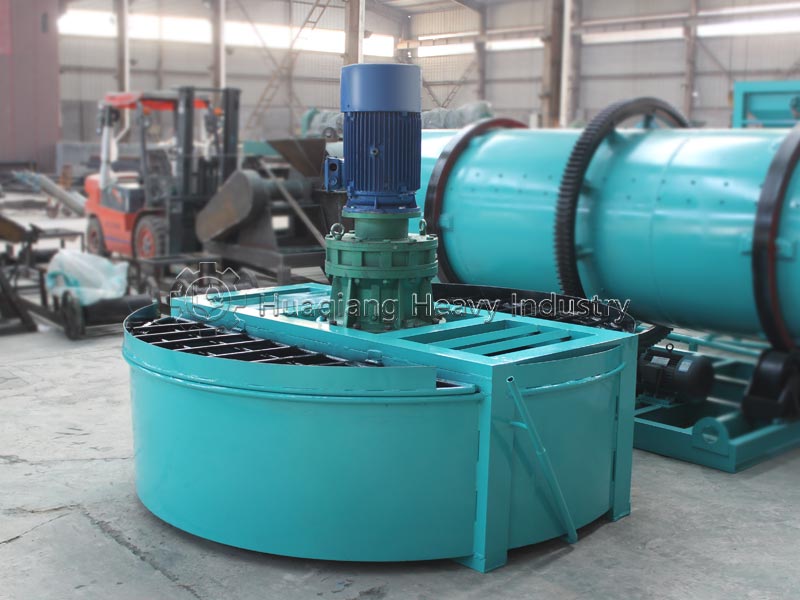
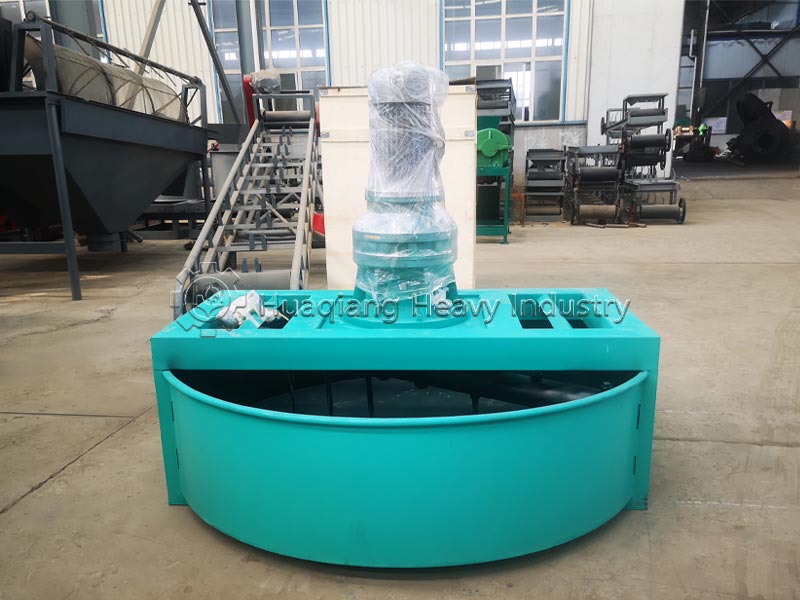
The vertical disc mixer features a simple yet robust overall design, comprising seven core components: the drive motor, hardened-gear reducer, vertical main shaft, multi-level staggered mixing paddles, circular mixing pan, bottom discharge mechanism, and equipment frame.
Drive and transmission unit: It comes standard with either a cycloidal pin-wheel reducer or a hardened-gear reducer, providing ample torque to prevent stalling or jamming when handling moist, viscous raw materials like cattle or chicken manure. Compared to standard transmission components, it offers quieter operation and a lower failure rate.
Mixing shaft and paddles: Wear-resistant mixing paddles are arranged in a staggered, multi-level configuration. The clearance between the paddles and the pan bottom can be adjusted based on material viscosity—typically within a range of 5–10 mm—to minimize material buildup and residue. For processing highly corrosive chemical fertilizer raw materials, wear-resistant alloy paddles can be installed as an option.
Circular mixing pan: The pan lining is available in two materials: polypropylene or stainless steel. Polypropylene linings resist adhesion by moist organic materials, while stainless steel linings are suitable for mixing chemical powders and corrosive raw materials.
Discharge mechanism: An openable discharge port is installed at the bottom of the disc, allowing for rapid material unloading after the mixing process is complete; the discharge flow is smooth, with minimal risk of material clogging.
Used for the premixing of decomposed cattle, sheep, and chicken manure, biogas residue, mushroom substrate, straw additives, fermentation agents, and medium/trace elements; it is essential equipment for organic fertilizer plants with annual capacities ranging from 10,000 to 100,000 tons.
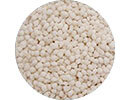
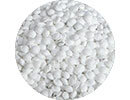
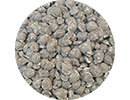
Mixing various granular fertilizers, such as BB fertilizers and blended fertilizers.
Mixing and blending powders for putty, dry-mixed mortar, refractory clay, and ceramic tile raw materials.
Forced mixing of feed additive premixes, pigment powders, plastic additives, and bentonite raw materials.
The vertical disc mixer is not designed for high speeds or massive throughput. Its true value lies in thoroughly and reliably blending various raw materials, thereby ensuring the smooth execution of downstream processes such as granulation, drying, and screening. For production environments characterized by limited space, diverse product varieties, and frequent batch changes, it offers a practical solution that features a compact footprint, rapid cleaning, minimal material residue, and low energy consumption.
| Model | Mixer | Rotate Speed | Power | Product Capacity | Dimensions (L*W*H) | Weight | |
| Diameter | Wall Height | ||||||
| mm | mm | r/min | kW | t/h | mm | kg | |
| PJ1600 | 1600 | 400 | 12 | 5.5 | 3-5 | 1612×1612×1368 | 1200 |
| PJ1800 | 1800 | 400 | 10.5 | 7.5 | 4-6 | 1900×1812×1368 | 1400 |
| PJ2200 | 2200 | 500 | 10.5 | 11 | 6-10 | 2300×2216×1503 | 1668 |
| PJ2500 | 2500 | 550 | 9 | 15 | 10-16 | 2600×2516×1653 | 2050 |