In the wave of green agricultural development, bio-organic fertilizer has become an important fertilizer in modern agriculture due to its advantages in improving soil, enhancing crop quality, and reducing pollution. Its production is a systematic process of biological transformation of organic materials. Through a standardized bio-organic fertilizer production line, it proceeds in an orderly manner according to the core process, mainly divided into four key steps: raw material pretreatment, microbial fermentation, post-processing, and finished product inspection. Each step directly affects product quality.
Raw material pretreatment is the foundation of production and directly determines fermentation efficiency. First, high-quality organic raw materials such as livestock and poultry manure, straw, and mushroom residue are screened, and impurities such as stones and plastics are removed. Then, coarse fibrous materials such as straw are crushed using crushing equipment to increase the surface area, which is conducive to microbial adhesion. Subsequently, the moisture content of the raw materials is adjusted to 50%-60%, and the carbon-nitrogen ratio is adjusted to 25:1-35:1 when different raw materials are combined to create suitable conditions for microbial growth. At the same time, a small amount of conditioner is added to optimize the material's permeability.
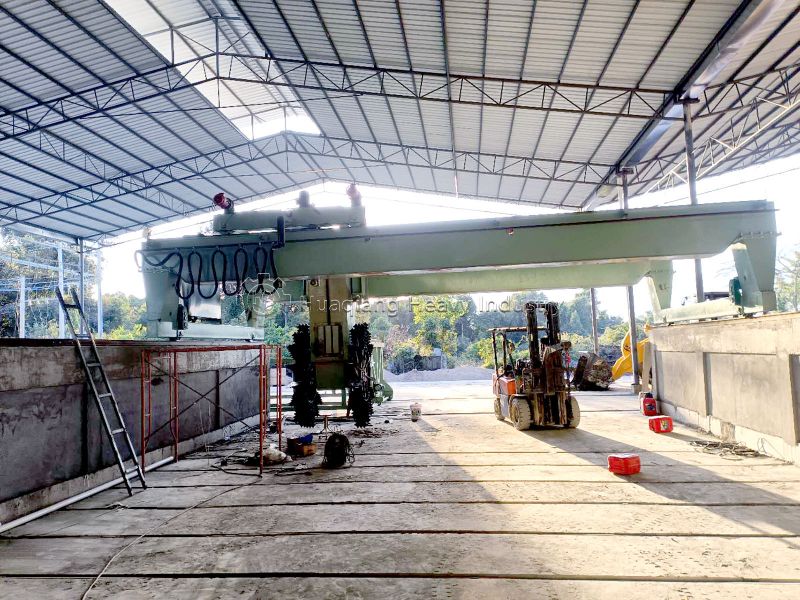
Microbial fermentation is the core link and the key to the transformation of organic materials. The pretreated material is inoculated with a high-efficiency compound microbial agent, uniformly mixed, and piled into trapezoidal or elongated shapes. Aeration is provided by periodically turning the pile using a compost turning machine, controlling the fermentation temperature at 55-65℃ and maintaining this temperature for at least 5 days. This accelerates the decomposition of organic matter and kills pathogens and weed seeds. The fermentation cycle is approximately 7-15 days, during which temperature and humidity must be monitored in real time. After fermentation, the material undergoes approximately 7 days of aging to further stabilize and mature.
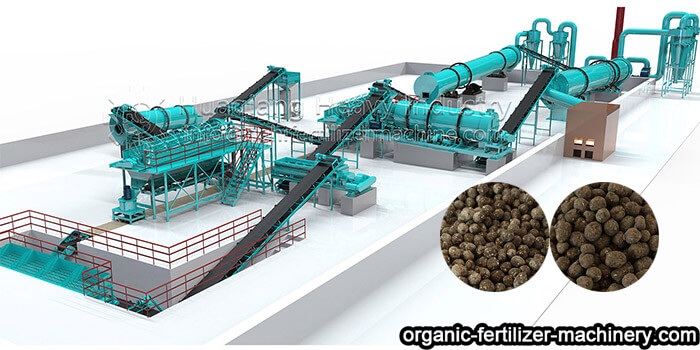
Post-processing aims to improve product usability. The aged material undergoes secondary crushing and sieving to remove unfermented impurities. Powder products need to be refined to 80-100 mesh. If producing granular fertilizer, it also requires conditioning, granulation, drying, and cooling to reduce the moisture content to below 15% and ensure the granule hardness meets standards. Finally, functional microbial agents are added as needed, and the mixture is uniformly mixed and quantitatively packaged.
Finished product inspection is the final quality assurance step, requiring testing of indicators such as moisture content, organic matter, and viable bacteria count to ensure compliance with relevant national standards. After passing inspection, the product is stored in a warehouse to prevent moisture absorption and spoilage. The entire process realizes the resource utilization of organic waste, which not only solves environmental protection problems, but also produces high-quality fertilizer, providing strong support for the sustainable development of agriculture.
_800x600.jpg)
_800x600.jpg)