The bio-organic fertilizer production line serves as core equipment for the resource utilization of organic waste and for fostering the development of green agriculture; its stable operation directly determines product quality and production efficiency. Given that the production line continuously processes materials characterized by high moisture and high corrosiveness—and involves multiple stages such as crushing, fermentation, granulation, and drying—equipment is prone to issues such as wear, clogging, and mechanical failure. Consequently, conducting maintenance and upkeep work in a scientific and systematic manner becomes crucial for extending equipment lifespan and ensuring production continuity.
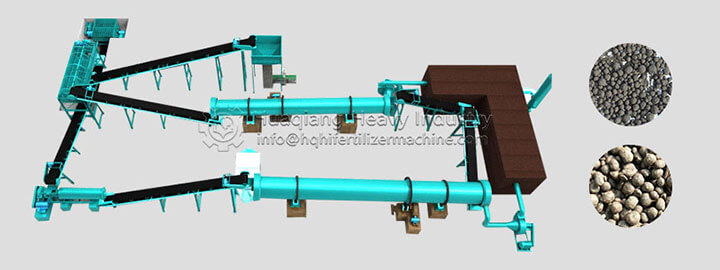
Routine inspections and basic maintenance constitute the first line of defense in maintenance work and must be integrated throughout the entire production process. Before and after every production shift, key equipment must undergo a comprehensive inspection; material residues within crushers and granulators should be cleared to prevent clumping and clogging. Additionally, the sealing components and connecting pipelines of fermentation tanks should be inspected, and minor leaks addressed promptly to avoid compromising the fermentation environment. Concurrently, the accuracy of instrumentation and the oil levels in lubrication systems should be checked periodically; moving parts—such as bearings and speed reducers—require regular replenishment of lubricant, while equipment surfaces should be cleaned of dust and grime to prevent corrosion and aging, thereby mitigating potential fault risks at the source.
Precise fault diagnosis and rapid, efficient troubleshooting are central to minimizing production losses. To address common production line malfunctions, a targeted troubleshooting mechanism must be established: issues with the granulator—such as poor pellet formation or abnormal noises—are often linked to irregular material moisture levels, worn cutter arms, or loose bolts, necessitating the timely adjustment of material moisture, replacement of wear-resistant components, and tightening of bolts. If the moisture content of the dryer's output is abnormal, the issue can typically be resolved by adjusting fuel supply, feed rate, or by repairing the lifting flights. In cases of abnormal temperatures within the fermentation tank, the ventilation system and temperature control instrumentation must be inspected to ensure the stability of the fermentation process. Troubleshooting procedures must strictly adhere to the principles of "shutting down and cutting power," "precise fault localization," and "standardized operation" to prevent the escalation of malfunctions.
Regular, comprehensive overhauls and professional personnel training serve as the long-term guarantees for effective maintenance work. In accordance with the equipment maintenance cycle, the entire production line should undergo a comprehensive overhaul on a quarterly or semi-annual basis; this involves replacing consumable parts—such as mixing paddles and seals—calibrating instrumentation, and verifying the safety and integrity of the electrical systems. Concurrently, professional training for operators and maintenance personnel must be enhanced to ensure they are thoroughly familiar with the equipment's structure and operational protocols, and proficient in troubleshooting common faults. This serves to prevent equipment damage caused by improper operation while simultaneously improving the efficiency and quality of maintenance work.
The maintenance of a bio-organic fertilizer production line is not merely a process of equipment upkeep; it is also a critical measure for safeguarding production safety and elevating product quality. Only by establishing a comprehensive, tripartite maintenance system—encompassing routine upkeep, fault diagnosis, and periodic overhaul—and by strictly assigning responsibilities and standardizing operations, can equipment failures be effectively minimized and the service life of the production line be extended. Ultimately, this fosters the sustained and efficient resource utilization of organic waste, thereby providing robust support for the development of green agriculture.
_800x600.jpg)
_800x600.jpg)