Bulk blend (BB) fertilizers are highly seasonal products, with orders concentrated during spring plowing and autumn sowing, and lower output during off-peak periods. A common mistake clients make is selecting equipment based solely on average annual sales volume, which often leads to insufficient supply during peak seasons or idle equipment during off-peak periods. Huaqiang Heavy Industry recommends that the selection of a BB fertilizer production line should be centered on peak-season demand. This involves a comprehensive assessment—factoring in annual output, shift arrangements, raw material supply, and facility conditions—to ensure that production capacity aligns with business requirements.
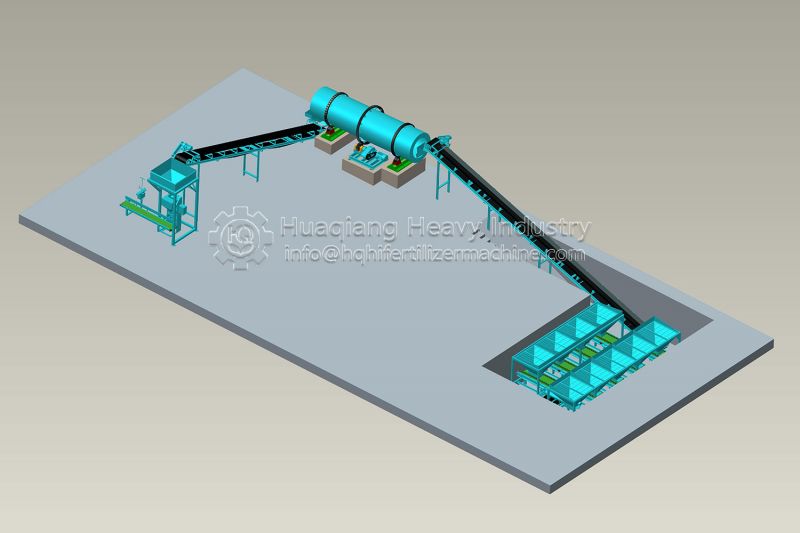
First, it is essential to distinguish between theoretical hourly capacity and actual effective capacity. BB fertilizer production is typically batch-based; a single cycle—encompassing proportioning, mixing, discharging, and packaging—generally takes 3–6 minutes. While the hourly capacity stated on equipment nameplates reflects ideal conditions, actual production must account for downtime caused by formula changes, equipment cleaning, maintenance, or material blockages. Consequently, the effective capacity is usually 70%–85% of the theoretical value. When calculating requirements, base the hourly capacity specifications on the maximum daily shipment volume during the peak season, rather than simply dividing the total annual output by time.
There are clear, standard capacity tiers in the market: 5–8 t/h small-scale lines are suitable for county-level distributors or fertilizer blending stations with an annual output of 10,000–20,000 tons, manageable via a single shift. 10–15 t/h medium-scale lines are the most versatile option, ideal for regional processing plants; operating on two shifts, they can handle large-volume orders during peak seasons. 20–30 t/h large-scale lines are designed for major fertilizer blending centers, catering to consistent, large-scale orders and the production of various formulas, often featuring higher levels of automation in storage, packaging, and palletizing.
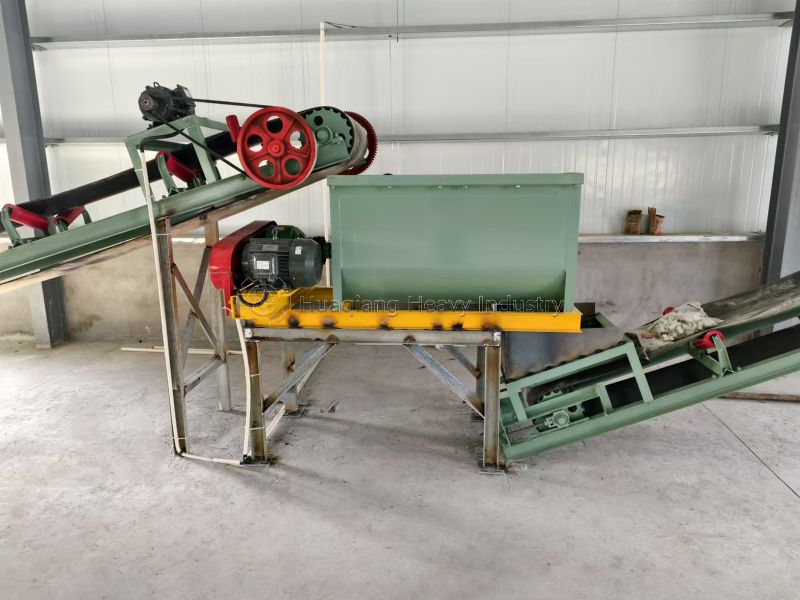
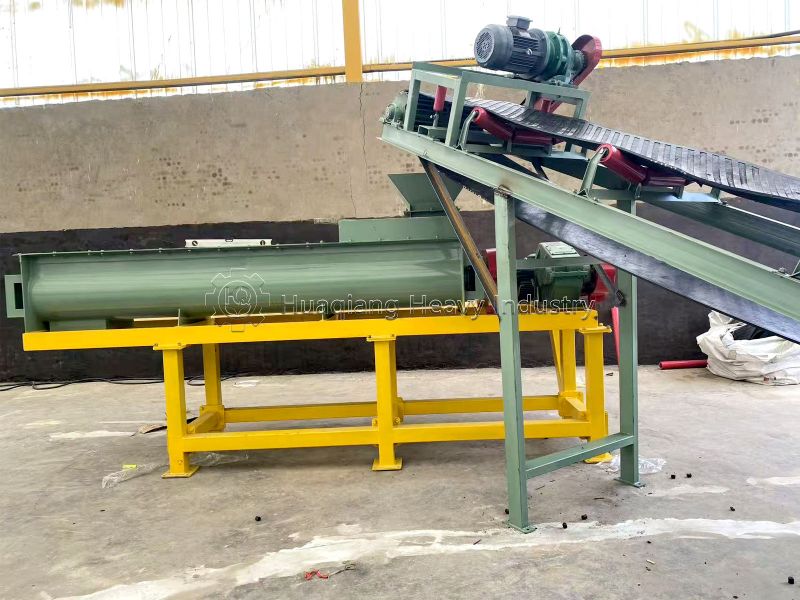
Furthermore, capacity matching must ensure balance across all units of the production line—do not focus solely on the mixer. If the proportioning scales or packaging machines cannot keep pace with the main mixer, the mixer’s full potential cannot be realized. For instance, when configuring a 15 t/h production line, the automatic batching system, packaging scales, and conveying equipment must all be synchronized to prevent any "bottleneck" stage from slowing down the entire production process. It is also advisable to maintain a certain buffer capacity; this allows you to handle sudden spikes in orders during peak seasons by extending production shifts, rather than needing to replace the main machinery.
Furthermore, selecting the appropriate production capacity requires considering factors such as factory ceiling height, available floor space, and raw material storage conditions. High-capacity systems typically feature more storage hoppers and a larger physical footprint, necessitating greater ceiling clearance and increased raw material storage capacity. If your facility is cramped or storage space is limited, installing high-capacity equipment—without the ability to keep up with raw material supply—will lead to the machinery frequently running idle, resulting in wasted energy and unnecessary capital expenditure. For clients with tighter budgets, modular systems are a better choice; these allow for capacity upgrades later on—such as adding more storage hoppers or packaging stations—as your business grows.
In short, when selecting the capacity for a bulk-blend (BB) fertilizer production line, "bigger" does not necessarily mean "better." You should first calculate the peak demand during your busiest season, then determine the required effective hourly output. Ensure that the batching, mixing, and packaging stages are well-coordinated, and take into account your site constraints, raw material logistics, and labor costs. By doing so, you can select a production line that offers the best value for money and delivers reliable, long-term performance.