Caking is a common problem in the production and storage of bio-organic fertilizers. It not only affects the product's appearance and ease of application but can also damage the activity of beneficial microorganisms and reduce fertilizer efficiency. Its causes are closely related to raw material characteristics, production processes, and storage conditions. Effective control requires comprehensive management throughout the entire bio-organic fertilizer production process, combining scientific methods to ensure both product quality and application performance.
Raw material pretreatment is fundamental to preventing caking. Livestock manure, straw, and other raw materials should be sorted and crushed to remove large, non-degradable impurities. Straw and other coarse fiber materials should be crushed to 3-5 centimeters to ensure uniform particle size and reduce caking caused by uneven stacking gaps. Simultaneously, precisely adjust the moisture content and carbon-to-nitrogen ratio. Control the moisture content of the raw materials to 50%-60% and adjust the carbon-to-nitrogen ratio to 25-35:1 to prevent material adhesion due to excessive moisture or uneven fermentation due to insufficient moisture, thus reducing the risk of caking from the source.
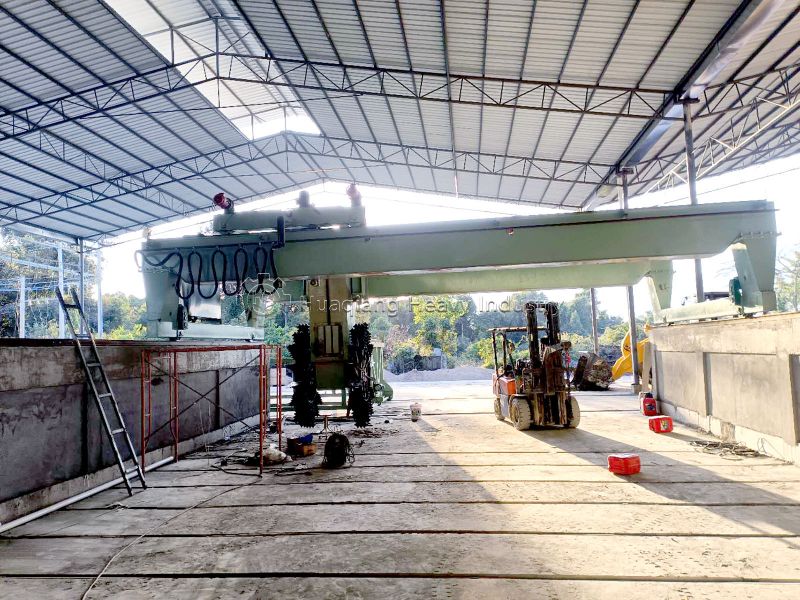
Optimizing the fermentation process can reduce the causes of caking. Utilizing professional bio-organic fertilizer production lines and compatible equipment, employ large-scale processes such as trough fermentation. Regularly use a compost turning machine to turn and aerate the compost every 2-3 days to ensure uniform fermentation and prevent localized over-fermentation or incomplete decomposition that forms hard lumps. Strictly control the fermentation temperature, maintaining a high-temperature period of 55-70℃ for 7-15 days. Complete the composting process when the temperature drops below 40℃ and the material is loose and odorless. Extending the fermentation time can prevent subsequent caking caused by incompletely decomposed materials.
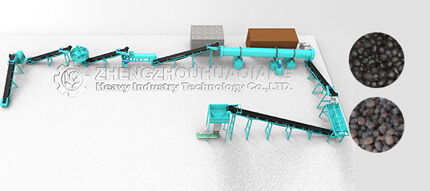
Post-processing requires strengthened control of shaping and drying/cooling. After fermentation, the material is crushed and screened to below 80 mesh. During granulation, prioritize extrusion granulation to reduce the use of binders, or add anti-caking agents such as diatomaceous earth or talc powder. Control the dosage within a reasonable range to avoid affecting microbial activity while reducing the hygroscopicity and stickiness of the granules. After granulation, use low-temperature drying to control the moisture content of the material to below 12%, avoiding high-temperature drying that can cause component denaturation and adhesion. After drying, sufficient cooling is necessary to prevent residual heat from causing subsequent caking, ensuring the looseness of the finished product granules. Proper storage and packaging are the last line of defense against caking. Using sealed, moisture-proof packaging prevents the intrusion of humid air. Before packaging, ensure the material is fully cooled to prevent condensation inside the bags due to residual heat. During storage, choose a well-ventilated and dry warehouse, use pallets for stacking, avoid stacking too high to prevent pressure-induced caking, and regularly turn the material to keep it loose.
In summary, preventing caking in bio-organic fertilizers requires attention throughout the entire production process. Through raw material refinement, process optimization, additive assistance, and standardized storage, caking problems can be effectively avoided while preserving the activity of beneficial microorganisms, thereby improving product quality and market competitiveness, and promoting the high-quality development of ecological agriculture.
_800x600.jpg)
_800x600.jpg)