Bio-organic fertilizer relies on aerobic microorganisms for decomposition and fermentation. The turning process is a core step, serving to increase oxygen levels, lower temperatures, and break up clumps—thereby preventing anaerobic conditions (which cause foul odors) and ensuring uniform decomposition. Selecting the right turner can shorten the fermentation cycle and stabilize the quality of the final organic fertilizer product. Common types include crawler-type, trough-type, chain-plate, and large-wheel (rotary-disc) compost turners; the key is to choose the one that best fits your specific needs.
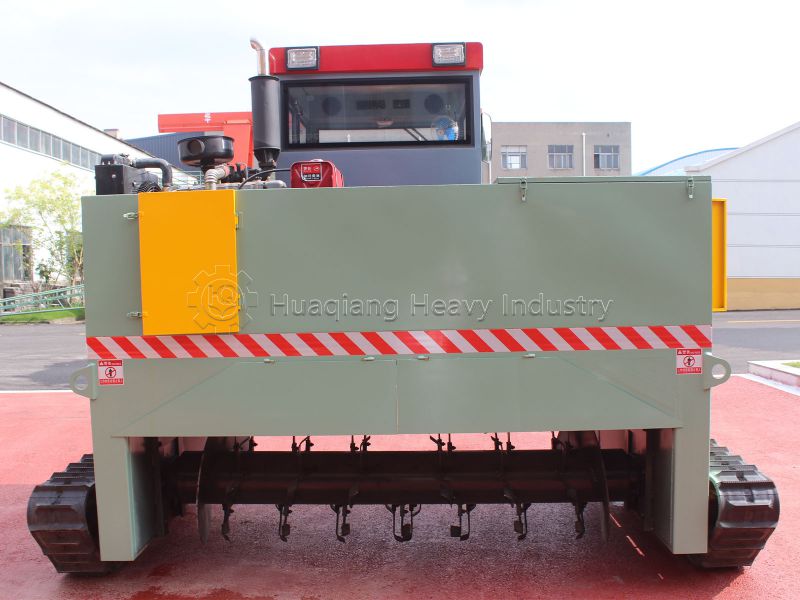
Crawler-type compost turners are a popular choice for small-to-medium-scale composting operations or sites with limited space. They do not require the construction of fermentation troughs, as they operate directly on windrows (piles) laid out on the ground. Their crawler tracks prevent slippage even on muddy terrain, and their diesel-powered, mobile design allows for great flexibility, requiring minimal infrastructure investment and offering a quick setup. They are well-suited for small-to-medium-sized farms—such as livestock or family-run farms—processing materials like chicken manure, sheep manure, or crop straw. Their drawbacks include difficulty in controlling odors during open-air composting, limited turning depth, and unsuitability for high-capacity, continuous industrial production.
Trough-type compost turners are the most widely used. They require the construction of concrete fermentation troughs, with the equipment moving back and forth along rails installed on the trough walls. Driven by electric motors and often controllable via remote, these machines provide uniform turning at a controlled depth. Because the materials are contained within the troughs, it is easier to collect and treat odors and leachate, offering significant environmental advantages—making them ideal for small-to-medium-sized organic fertilizer processing plants. A single machine can serve multiple troughs when paired with a transfer carriage, enabling sequential operation. This setup offers a high degree of automation, stable performance, and simple daily maintenance, and is frequently incorporated into complete bio-organic fertilizer production lines.

Chain-plate compost turners are heavy-duty, in-trough machines characterized by powerful turning action and excellent material-breaking capabilities. They are specifically designed for high-moisture, high-viscosity materials such as cattle manure, pig manure, or sludge. With a deep turning reach and superior oxygen supply, they are well-suited for large-scale organic fertilizer projects with an annual capacity of 10,000 tons or more. However, they feature complex structural designs, entail higher procurement and maintenance costs, and impose strict requirements on the construction of the concrete troughs. Large wheel compost turners feature a wide span and high processing efficiency, capable of turning materials at significant depths. Often equipped with PLC-based automated control systems, they are well-suited for large-scale manure treatment centers and organic fertilizer industrial parks, enabling continuous, unattended fermentation processes—ideal for high-standard, large-scale operations.

When selecting equipment, do not focus solely on price; instead, prioritize factors such as production capacity, material characteristics, site conditions, and environmental compliance requirements. For high-volume, sticky, or heavy materials, a chain-plate type turner is recommended. For facilities with a structured layout and strict environmental regulations, a trough-type (bay-style) system is preferable. For operations with limited budgets, ample space, and smaller production scales, a crawler-type (tracked) turner is a suitable choice. Huaqiang Heavy Industry notes that the tines (teeth) of the turner are wear-prone components; opting for wear-resistant alloy steel will help ensure long-term, stable operation. Only by pairing the right turning equipment with an effective fermentation process can materials be fully decomposed to produce high-quality, consistent bio-organic fertilizer.