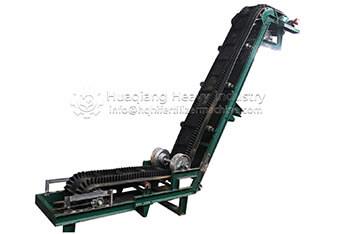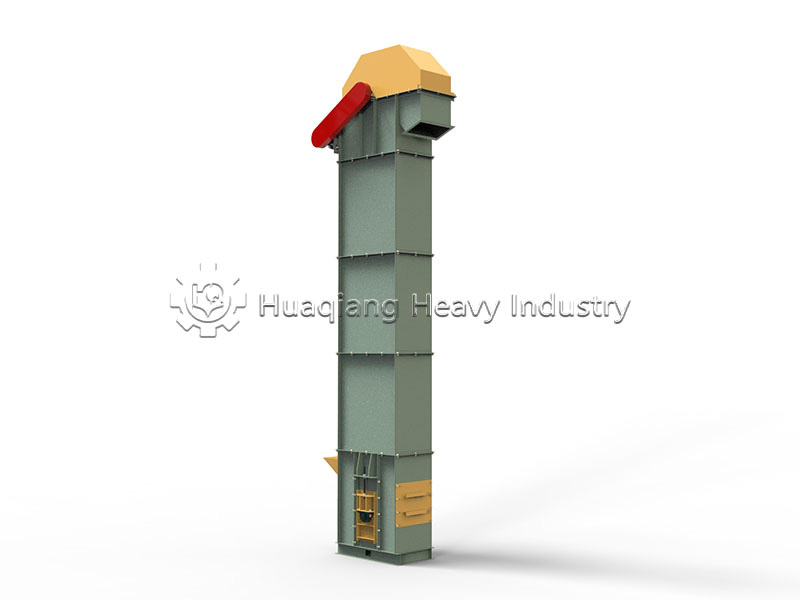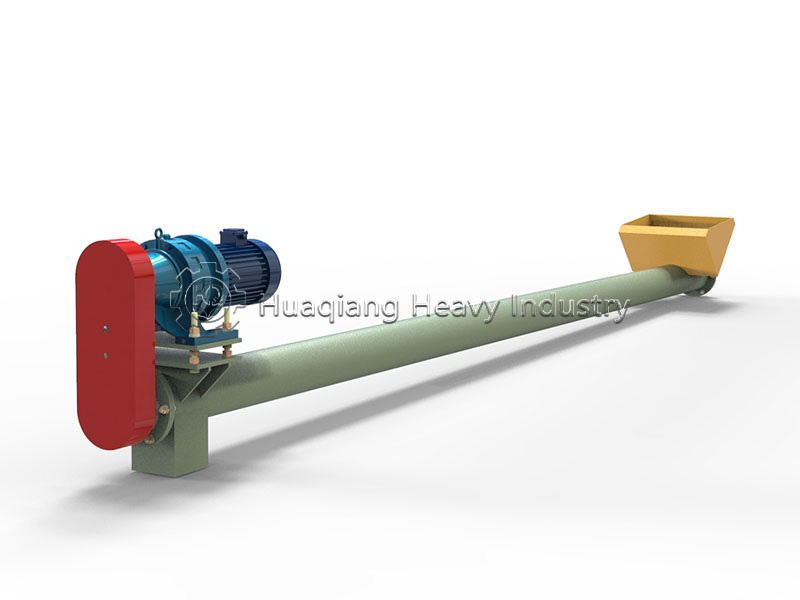
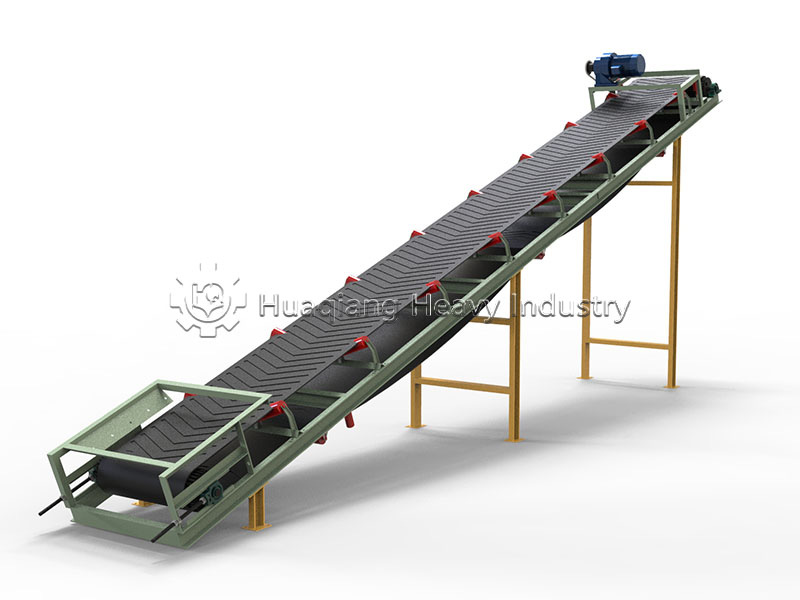

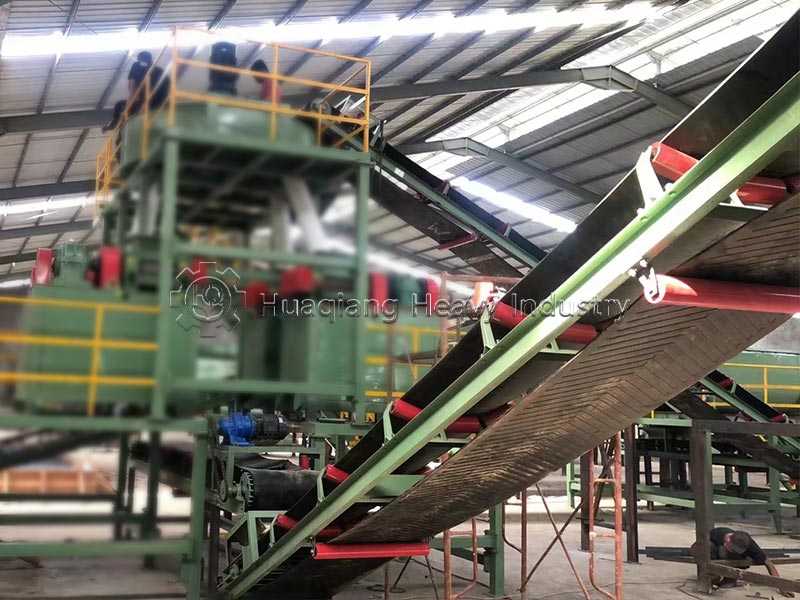

A belt conveyor is a piece of mechanical equipment that utilizes friction drive to transport materials continuously. As one of the most widely used continuous conveying systems in modern industrial logistics, it plays a vital role across numerous key sectors—including mining, port loading and unloading, grain storage, and the production of building materials and fertilizers—thanks to its outstanding advantages, such as high conveying capacity, simple structure, ease of maintenance, and smooth operation.
The core operating principle of a belt conveyor is straightforward: it relies on the friction between the drive pulley and the conveyor belt to propel both the belt and the material in continuous motion. The conveyor belt plays a dual role within the system, serving simultaneously as the load-bearing surface for the material and the traction element that transmits the driving force.
Specifically, the drive unit rotates the drive pulley, and the friction between the pulley and the belt drives the belt forward. Material placed on the belt moves along with it and is discharged upon reaching the destination, while the belt returns via the bend pulley, creating a continuous, closed-loop conveying cycle. This design—integrating load-bearing and traction functions—enables the belt conveyor to achieve efficient and stable material transport, whether horizontally or at certain angles of inclination.
Belt conveyors are utilized across virtually every industrial sector involving material handling:
Fertilizer production: On production lines for chemical fertilizers (nitrogen, phosphate, potash, and compound fertilizers), belt conveyors handle continuous transport throughout the entire process—from raw material crushing, mixing, granulation, and drying to final product packaging.
Mining and metallurgy: This sector accounts for the largest share of demand; belt conveyors are widely used for tasks such as transporting ore up steep slopes in open-pit mines, hoisting materials in underground tunnels, and conveying tailings at mineral processing plants.
Ports and logistics: They play a pivotal role in bulk cargo handling at large, modern ports. Telescopic belt conveyors feature a modular design that allows for rapid extension and retraction, accommodating varying loading and unloading distances.
Grain and warehousing: Serving as core equipment in grain storage and logistics systems, they facilitate the entire process of moving grain into and out of both silos and flat warehouses.
Power generation: Standard equipment for coal handling systems in thermal power plants.
Construction materials, chemicals, food processing, and other industries: These sectors also rely heavily on belt conveyors for material handling operations.
1.Exceptional conveying efficiency:Capable of continuous, uninterrupted operation, these conveyors handle materials such as powdered, granular, and lump fertilizers, as well as sand and gravel. With high load capacity, they are ideal for bulk material transfer in fertilizer plants and mining sites, effectively reducing manual handling costs.
2.Simple and robust structure:The unit features a solid steel frame, while components like idlers are standardized for easy interchangeability, assembly, and disassembly. Installation and commissioning are straightforward; models are available in fixed or mobile (liftable) configurations, offering great flexibility for truck loading and site relocation.
3.Stable operation with minimal loss:The drive drum provides ample friction and belt tension is optimized, resulting in low vibration and noise levels. Materials are less prone to spillage or impact damage during transport, thereby reducing raw material waste.
4.Strong environmental adaptability:Supports both horizontal and inclined loading layouts. Wear-resistant and corrosion-resistant belts can be installed to suit challenging operating conditions, such as open-air facilities or humid workshops.
5.Economical and hassle-free maintenance:The system boasts a low failure rate and simple daily maintenance. With low running resistance and energy consumption, it supports long-term, round-the-clock operation, offering excellent cost-effectiveness for fertilizer production lines.
| Belt width (mm) |
Conveying length(m) Power(kW) |
Conveying speed (m/s) |
Delivery quantity (t/h) |
||
| 500 | ≤12 3 |
12-20 4-5.5 |
20-30 5.5-7.5 |
1.3-1.6 | 78-191 |
| 650 | ≤12 4 |
12-20 5.5 |
20-30 7.5-11 |
1.3-1.6 | 131-323 |
| 800 | ≤6 4 |
6-15 5.5 |
15-30 7.5-15 |
1.3-1.6 | 278-546 |
| 1000 | ≤10 5.5 |
10-20 7.5-11 |
20-40 11-22 |
1.3-2.0 | 435-853 |
| 1200 | ≤12 7.5 |
10-20 11 |
20-30 15-30 |
1.3-2.0 | 655-1284 |