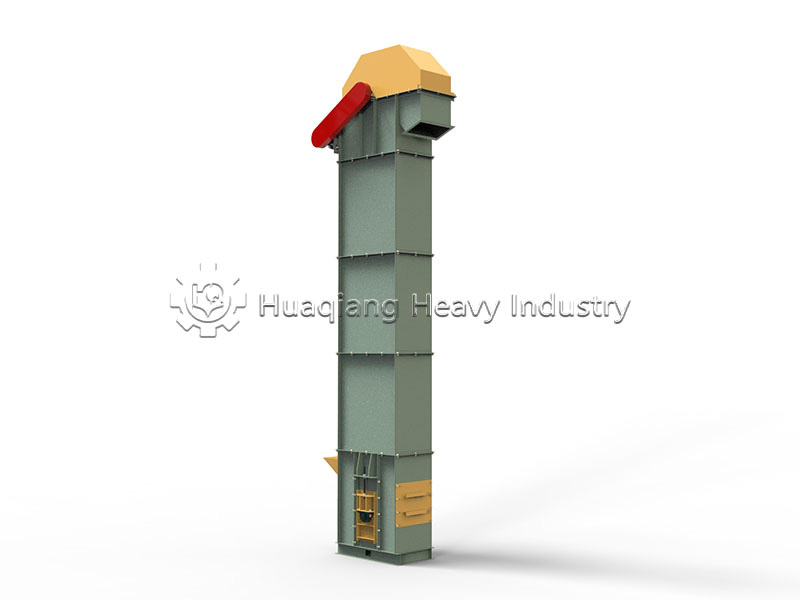
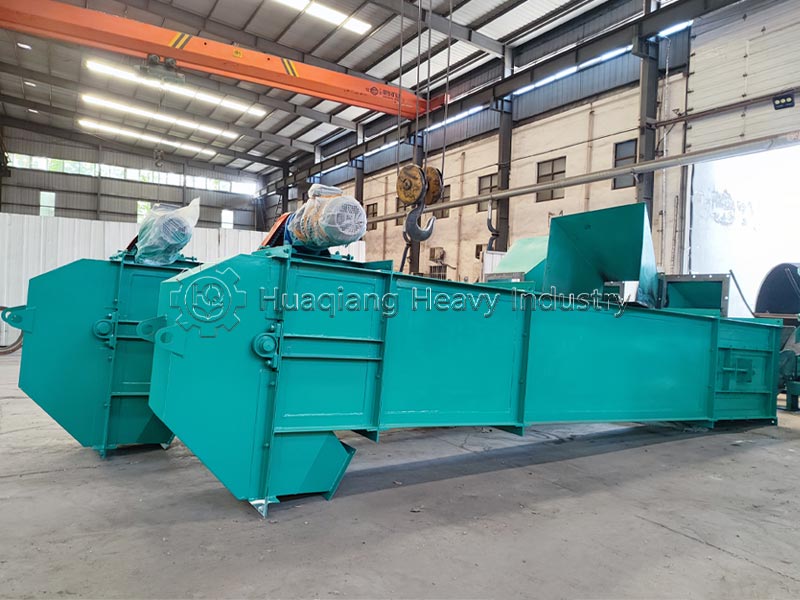
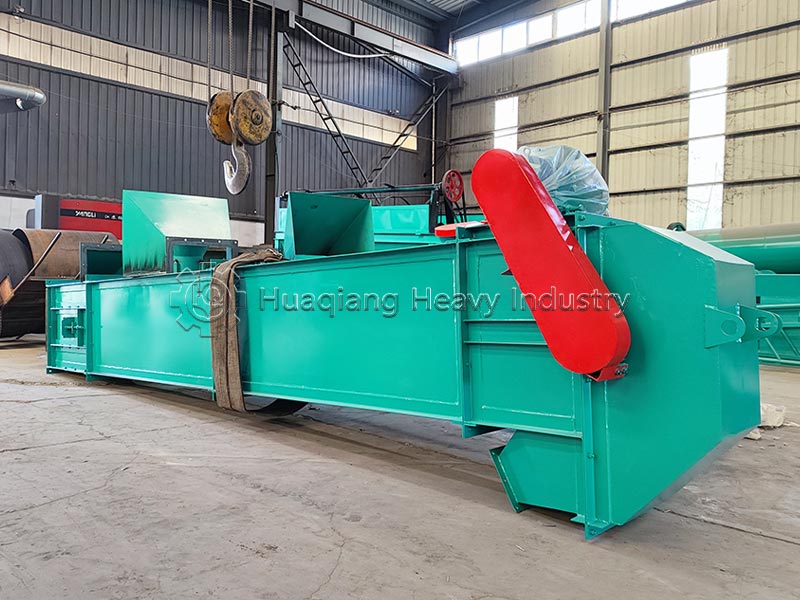
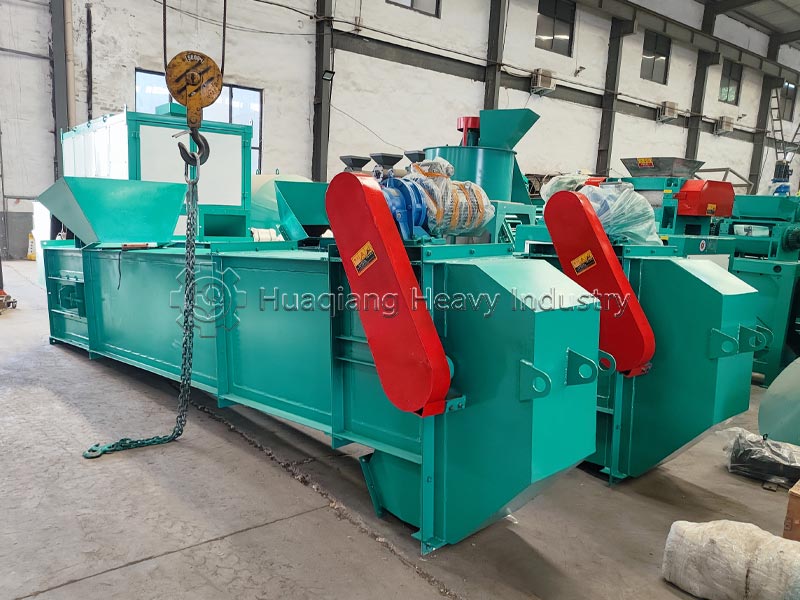
A bucket elevator is a type of conveying machinery that continuously transports bulk materials upward in a vertical or near-vertical direction using a series of buckets evenly attached to an endless traction element. It scoops or receives material from a storage area at the bottom, carries it up to the top via the traction element, discharges the material into a receiving chute, and then returns the emptied buckets to the bottom to repeat the cycle.
A complete bucket elevator consists primarily of the following core components:
Traction element: A belt or chain that serves as the core component for power transmission. Belts offer smooth, quiet operation, while chains provide high load-bearing capacity and high-temperature resistance.
Buckets: Attached to the traction element to hold the material; the bucket type, size, and spacing directly affect conveying efficiency and material suitability.
Drive unit: Comprising the motor, gearbox, and transmission components, this provides power to the equipment.
Head and tail pulleys (or sprockets): Installed at the top and bottom to facilitate guidance and power transmission.
Tensioning device: Adjusts the tension of the traction element to ensure smooth operation.
Casing: An enclosed vertical housing that protects internal components and prevents dust leakage.
Bucket elevators are used across virtually all industrial sectors involving bulk material handling:
Lifting grain, soybean meal, corn flour, etc., in grain silos, feed mills, and flour mills
Lifting raw materials such as cement, limestone, and gypsum
Conveying ore, coal, slag, etc.
Lifting fertilizers, soda ash, limestone powder for desulfurization, etc.
Lifting food ingredients, pharmaceutical intermediates, etc.
1. Pre-sales customization and consultation: Engineers select the appropriate model based on the material to be conveyed, lifting height, and production capacity requirements. We support non-standard modifications to suit specific operating conditions (such as dusty, humid, or corrosive environments) and provide free equipment placement and production line layout planning.
2. In-process acceptance and logistics services: Equipment undergoes no-load testing before leaving the factory and comes with a certificate of conformity and assembly drawings. We track shipment and can assist in planning unloading and foundation construction to ensure smooth equipment installation.
3. On-site installation and commissioning: Technical personnel are dispatched to the site to supervise the entire process—including assembly, wiring, and testing (both no-load and with-load)—until the bucket elevator is ready for stable, full-load operation.
4. Free hands-on training: Staff receive on-site training on equipment startup/shutdown, daily inspections, lubrication and maintenance, and basic troubleshooting to minimize damage caused by improper operation.
5. Comprehensive warranty and repair coverage: A one-year warranty on the entire unit, backed by a 15-minute rapid response time for after-sales inquiries.
6. Long-term spare parts supply: We maintain a year-round inventory of genuine parts—such as buckets, chains, sprockets, and belts—and charge only cost price for parts after the warranty expires.
7. Lifetime follow-up and technical support: We conduct regular follow-ups on equipment status, provide ongoing online maintenance advice and production line optimization guidance, and offer upgrade and modification plans for existing customers.
| Model | Th315 | Th400 | Th500 | Th630 | ||||
| Hopper Type | ZH | SH | ZH | SH | ZH | SH | ZH | SH |
| Conveying Capacity | 35 | 59 | 58 | 94 | 73 | 118 | 114 | 185 |
| Hopper Volume | 3.75 | 6 | 5.9 | 9.5 | 9.3 | 15 | 14.6 | 23.6 |
| Hopper Distance | 512 | 688 | ||||||
| Round steel diameter×Pitch | Φ18×64 | Φ12.1×86 | ||||||
| Single chain strength | 320 | 480 | ||||||
| Traction weight per unit length | 25.64 | 26.58 | 31 | 31.9 | 41.5 | 44.2 | 49 | 52.3 |
| Driving gear speed | 42.5 | 37.6 | 35.8 | 31.8 | ||||
| Max conveying particle size | 35 | 40 | 50 | 60 | ||||
| Hopper running speed | 1.4 | 1.5 | ||||||