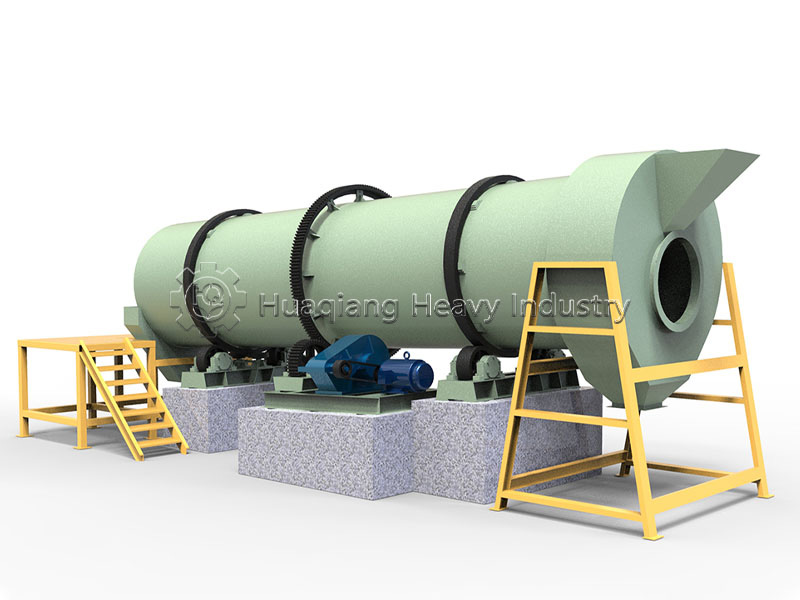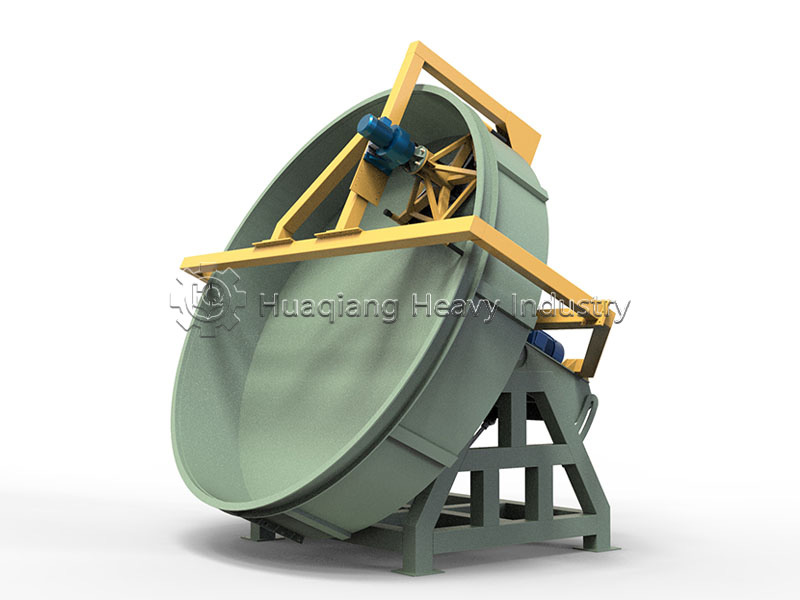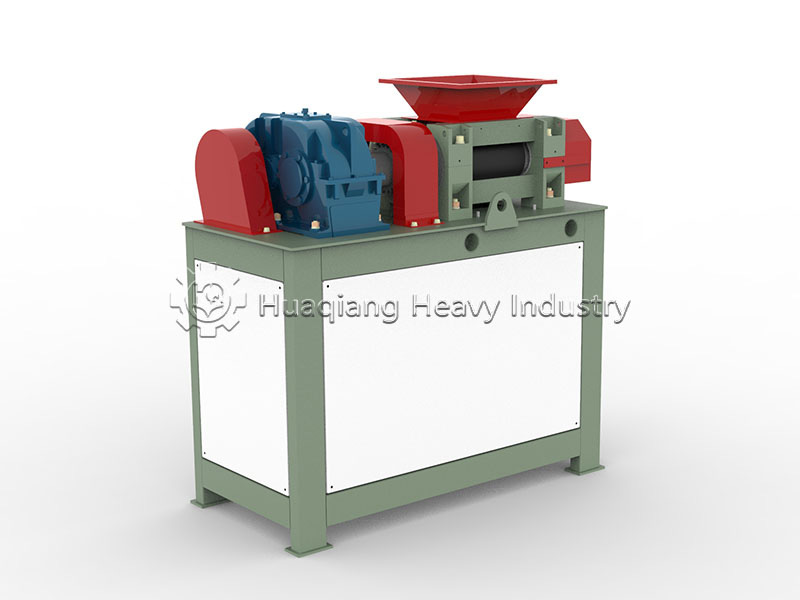
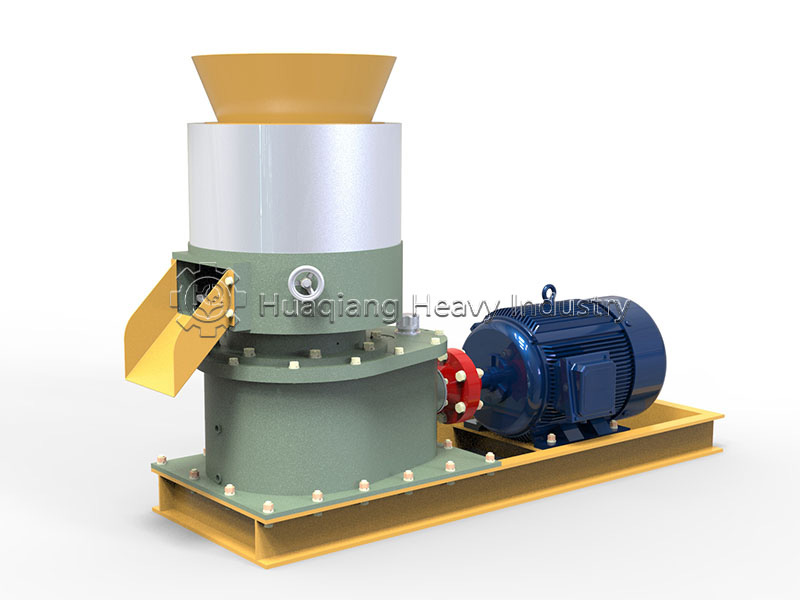

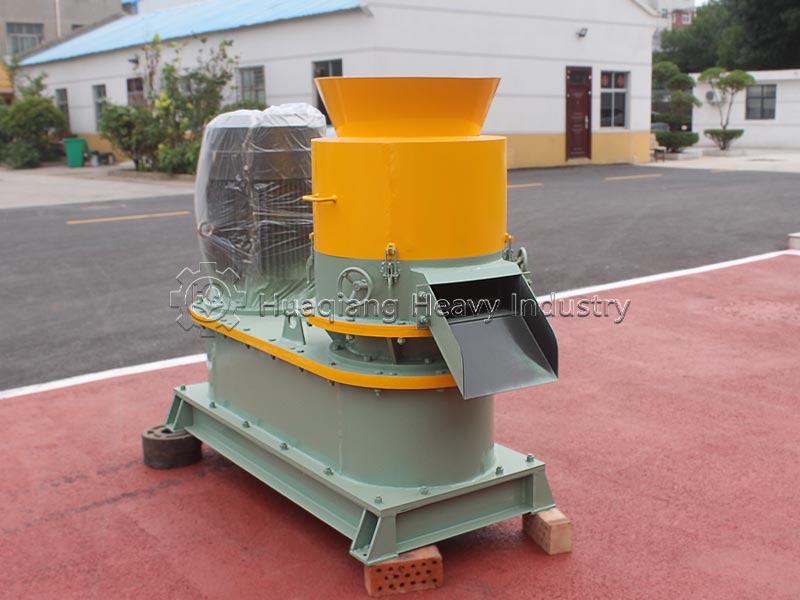
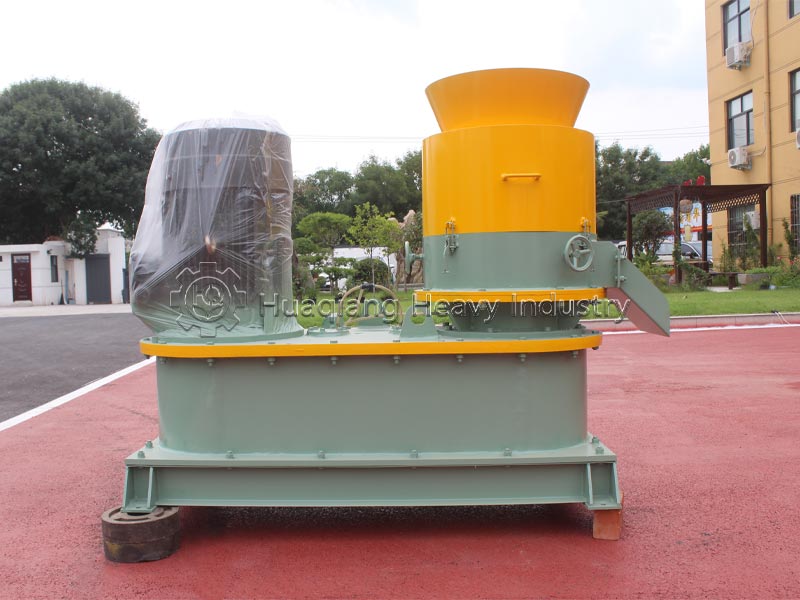
The flat-die pellet mill is a piece of machinery that utilizes extrusion technology to process powdered or fibrous materials into cylindrical pellets. Widely used in sectors such as (bio-)organic fertilizer production, animal feed processing, and biomass fuel manufacturing, it holds a significant position in small- and medium-scale production due to its versatility regarding raw materials, low investment costs, and ease of operation.
The working principle of the flat die pellet machine is based on die-roller extrusion technology. The core process is as follows:
After entering through the feed hopper, the material is processed as the main motor drives the flat die plate to rotate via a gearbox and transmission mechanism. Pressure rollers mounted on the drive shaft operate against the flat die plate; under the force of extrusion, the material is pressed into the die holes and compacted into shape. Once extruded from the die holes, the cylindrical material is cut into pellets of a specific length by a rotating cutter and finally discharged from the machine by a scraper blade.
The entire operation of a flat-die pellet mill can be summarized in four stages: feeding,extrusion molding,shape retention,and cutting/discharge. Some models utilize a differential and universal joint drive system, with feeding driven by gravity to effectively prevent clogging. The main shaft rotates at approximately 60 rpm, and the linear speed of the pressure rollers is about 2.5 m/s; this relatively low linear speed helps expel air from the material and increases the density of the finished product.
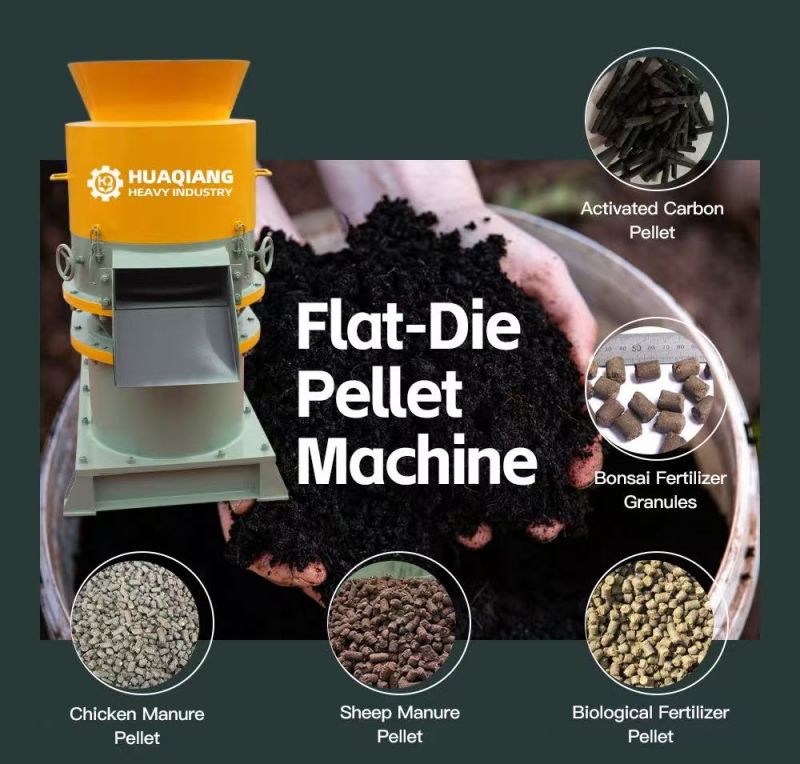
Flat-die pellet mills have a wide range of applications across various sectors:
Organic fertilizer production: Processing fermented livestock manure, crop stalks, and other raw materials into granular fertilizer, thereby turning organic waste into a usable resource.
Feed processing: Producing various types of feed pellets to meet the nutritional needs of livestock and poultry, such as chickens, pigs, cattle, sheep, and fish.
Biomass energy: Compressing biomass materials—such as sawdust and rice husks—into biomass fuel pellets.
Environmental protection: Processing waste materials like municipal sludge and kitchen waste to achieve waste reduction and resource recovery.
Family farms and cooperatives: Processing organic fertilizer and feed on-site for their own use, thereby reducing production costs.
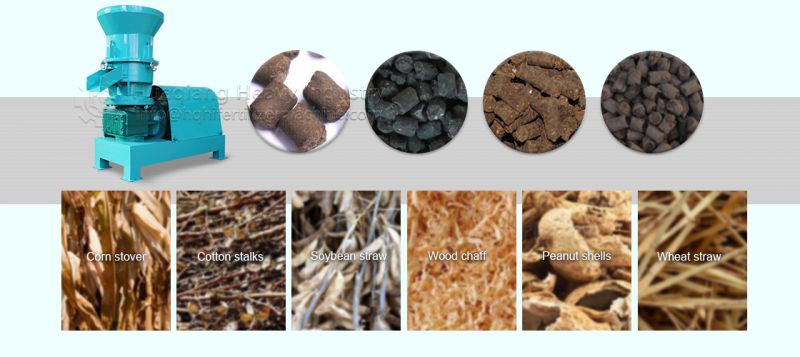
Wide range of raw material adaptability: It has relatively low requirements regarding raw material moisture content and particle fineness; it can process coarse-fiber materials such as sawdust and straw, as well as various other materials like organic fertilizer and animal feed.
High pelletizing rate: The pelletizing rate exceeds 95%, producing uniform, high-strength pellets.
Low-temperature processing: The extrusion process generates minimal heat, effectively preserving the activity of beneficial microorganisms in organic fertilizers and the nutritional content of feed ingredients.
Ease of operation: It features a simple structure; ordinary workers can operate it after brief training, eliminating the need for a specialized technical team on-site.
Low operating costs: The pressure rollers and dies are highly wear-resistant; the dies are reversible (usable on both sides), and the cost of replacement parts is relatively low.
Raw material processing: Crusher, mixer, belt conveyor
Pelletizing/Forming: Flat-die pellet machine (core unit)
Post-processing: Ball shaping machine (optional), dryer, cooler, screener, packaging machine
Specific configurations vary based on raw materials, production capacity, and finished product requirements; consulting a supplier for a customized solution is recommended.
_800x600.jpg)
Family farms and small workshops: Opt for compact models; they require minimal space and involve lower investment.
Small-scale organic fertilizer or feed plants: Choose standard models that balance production capacity with cost.
Processing high-fiber materials: Prioritize models equipped with reinforced pressure rollers and wear-resistant flat dies.
Clear residual material from the die holes and pelletizing chamber after each operation to prevent clogging caused by material buildup.
Regularly inspect pressure roller bearing clearance and housing wear; ensure the gap between the roller and the die is adjusted to the proper range (typically 0.1–0.3 mm).
Flat dies typically have a service life of 300–500 hours, while pressure rollers last 500–800 hours; replace them periodically.
Pre-processing raw materials (grinding to a particle size of ≤3 mm) can extend die service life by 30%.
| Model | KP-210 | KP-260 | KP-400 | KP-500 |
| Capacity (t/h) | 0.2-0.3 | 0.4-0.5 | 1-1.2 | 2-5 |
| Pelleting Rate (%) | >95% | >95% | >95% | >95% |
| Rotation Speed(r/min) | 370 | 260 | 260 | 125 |
| Power(Kw) | 7.5 | 11 | 30 | 55 |