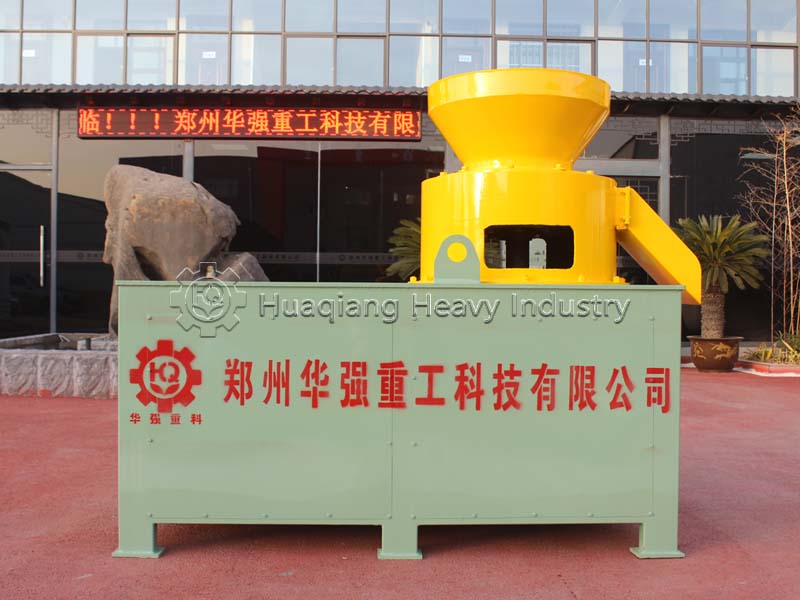
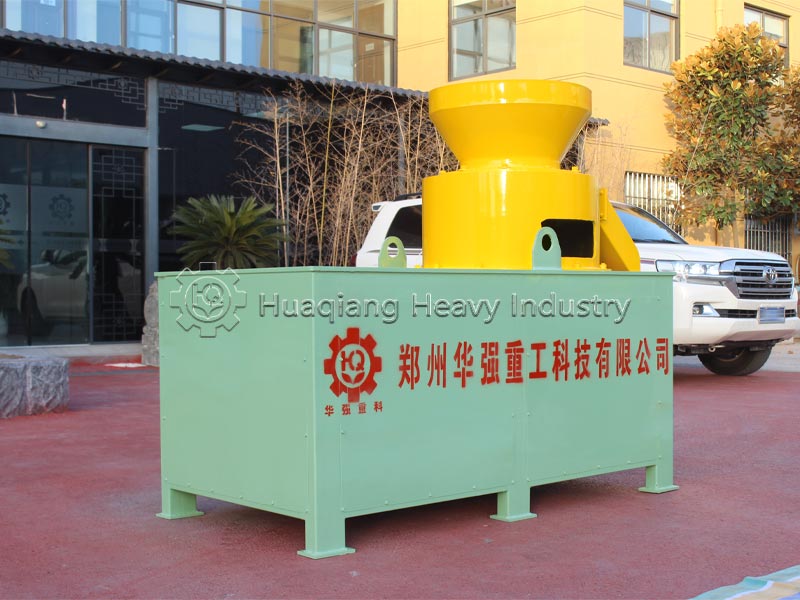
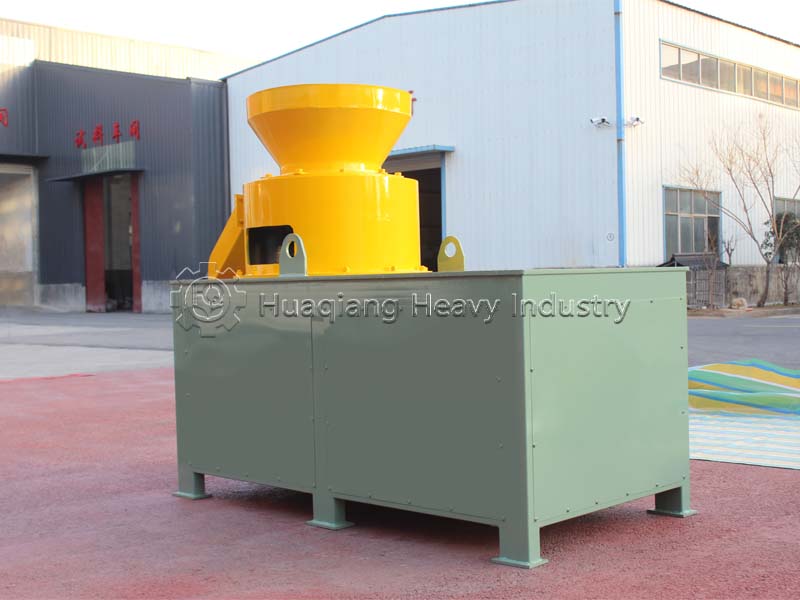
The ring-die pellet machine (also known as a ring-die granulator) is specialized forming equipment designed to compress powdered materials——through mechanical extrusion——into granular, cylindrical, or block-shaped products. As core equipment for industrial-scale pellet production, the ring-die pellet machine plays an indispensable role in sectors such as feed processing, biomass energy, and organic fertilizer production.
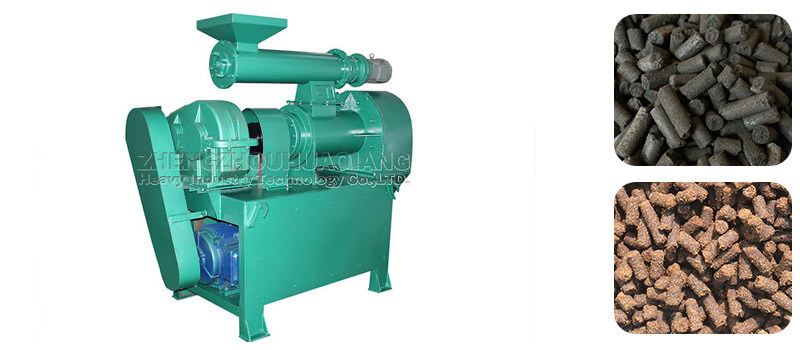
Ring-die pellet machines are renowned for their versatility regarding raw materials and can primarily process the following types of materials:
Fertilizers and other materials: Ring-die pellet machines are also used to produce organic fertilizer pellets and biomass fuel pellets, as well as to pelletize materials such as alfalfa, peat, hops, and leaves. Their applications span various industries, including feed mills, wood processing plants, fuel production facilities, fertilizer plants, and chemical factories.
Feed ingredients: Processing pulverized materials such as corn, soybean meal, straw, grass meal, and rice husks represents the most classic application of ring-die pellet mills.
Biomass materials: Ring-die pellet machines excel at processing materials that are difficult to bind or shape. These include various fruit and seed hulls (such as rice husks, sunflower seed shells, and peanut shells); wood processing residues (such as branches, trunks, and bark); and various types of crop straw.
The working principle of the ring die pellet machine can be summarized as “extrusion molding” its core mechanism involves the relative motion between the ring die and the press rollers, which forces material into the die holes and extrudes it into pellets.
After entering the granulation chamber through the inlet, the material is evenly distributed against the inner wall of the ring die by centrifugal force, forming an annular material layer. As the ring die (or press roller) rotates, the material is carried into the compression zone situated between the ring die and the press rollers. Based on the state of the material during compression, the process can be divided into three zones:
Feeding Zone: Upon entering the granulation chamber, the material is subject to minimal external mechanical force. Driven by the centrifugal force generated by the rotating ring die and the friction between material particles, the material adheres to the inner surface of the ring die and rotates along with it.
Deformation and Compaction Zone: Upon entering this zone, the gap between the die and the rollers gradually narrows, subjecting the material to progressively increasing extrusion pressure. Relative displacement occurs among the powder particles, and some material begins to enter the die holes, undergoing irreversible plastic deformation.
Extrusion Molding Zone: This is the critical stage of extrusion, where the gap between the die and the rollers reaches its minimum and the extrusion pressure peaks. The contact area between powder particles increases, leading to inter-particle bonding. When the extrusion pressure is sufficient to overcome the friction between the material and the die holes, the material is fully forced into the holes. Inside the holes, the material is molded into a cylindrical shape; upon extrusion from the outer side of the ring die, it is cut into pellets of the desired length by a cutter fixed to the housing.
Throughout this process, the combined effects of temperature, pressure, and moisture cause starch gelatinization and protein denaturation within the material, thereby improving the pellets' digestibility, absorption characteristics, and storage stability.
As a piece of precision industrial equipment, a ring die pellet machine primarily consists of the following five major systems:
Composed of a variable-frequency motor, transmission mechanism, gearbox, auger shaft, and auger housing. The variable-frequency design allows for precise control of the feed rate, ensuring a stable supply of material to the subsequent stage.
Composed of a motor, main shaft, conditioning rotor, housing, and steam inlet. It introduces steam to adjust the material to the optimal temperature and moisture levels, thereby improving its pelletizing characteristics.
The core working component, comprising the main motor, transmission mechanism, rotor, ring die, press rollers, scrapers, cutter assembly, and machine body.
Used to adjust parameters such as the gap between the ring die and the press rollers, ensuring the equipment operates under optimal conditions.
Provides continuous lubrication to the transmission system and bearings, ensuring stable long-term operation and extending the equipment's service life.
The ring die pellet machine has become the preferred equipment for industrial pellet production due to its unique design features and significant performance advantages:
Pellets feature a smooth, uniform surface and a low rate of fines (dusting). Thorough starch gelatinization ensures high digestibility and absorption rates, while high-temperature processing eliminates pathogenic microorganisms, thereby reducing disease risks.
The machine boasts a compact structure, utilizing high-quality bearings and a circulating oil cooling and lubrication system. Hardened gear surfaces undergo precision grinding and profile modification, ensuring quiet, smooth operation and a long service life for components.
It can process a wide range of materials, from lightweight straw and rice husks to hard wood scraps. Die hole specifications can be customized to produce pellets of various diameters.
It offers lower energy consumption for the same production capacity; the vertical feeding design delivers material directly into the process, minimizing energy loss associated with auxiliary equipment.
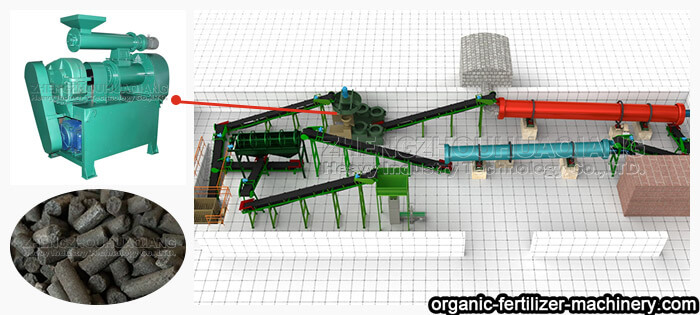
As the core component of a complete pellet fertilizer production line, a ring-die pellet machine operates in conjunction with other auxiliary equipment to form a comprehensive production process. Typical auxiliary equipment includes:
Crusher: Reduces large raw material chunks to a particle size suitable for pelletizing.
Mixer: Uniformly blends various raw materials according to the formula.
Cooler: Cools hot, freshly formed pellets to room temperature to prevent breakage.
Screener: Sorts finished pellets and separates out substandard ones.
Ball shaping machine: Polishes the pellet surface to improve visual quality.
Packaging machine: Automatically weighs and packages the finished pellets.
Conveyor: Transports material between different pieces of equipment.
Dust removal system: Collects dust generated during production to improve the working environment.
A complete ring-die pellet production line typically follows this process flow: Crushing ——Mixing ——Pelletizing ——Cooling——Screening——Packaging.
| Model | HP-450 | HP-650 |
| Capacity (t/h) | 2-5 | 4-8 |
| Pelleting Rate (%) | >95% | >95% |
| Motor Power(Kw) | 30+1.5 | 55+3 |
| Dimension(mm) | 2150*1350*2200 | 2500*1350*2535 |