Bio-organic fertilizer, with its environmental friendliness and long-lasting effects, has become an important support for the sustainable development of modern agriculture. However, its production process is susceptible to various factors, leading to various problems that affect both product quality and production efficiency. The following outlines common problems in the bio-organic fertilizer production process for industry professionals.
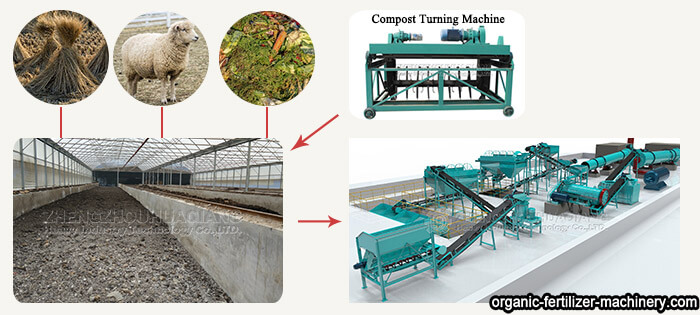
The fermentation stage is the core of production and also a high-risk area. The most common problem is that the compost pile does not heat up, and fermentation stagnates. This is often due to an imbalance in the carbon-nitrogen ratio or insufficient oxygen, resulting in low microbial activity and causing the material to remain dry and hard for a long time without rotting, or even mold and clump together. In addition, a pungent odor during fermentation is also a common problem, stemming from excessive high-nitrogen materials, which triggers anaerobic fermentation, releasing large amounts of ammonia gas, polluting the environment and causing material deterioration. In some production processes, incomplete fermentation also occurs; the material appears mature but actually contains undecomposed hard lumps, which can easily burn seedlings and attract pests when applied to the field.
Improper raw material processing also affects product quality. Some manufacturers neglect raw material screening, mixing in contaminants such as plastics and oil, or failing to adequately crush the raw materials, resulting in large pieces of material that are difficult to decompose and reduce fertilizer efficiency. Meanwhile, an imbalance in raw material ratios, with the carbon-to-nitrogen ratio deviating from the suitable range of 25:1 to 35:1, can lead to either slow fermentation or foul odors, increasing production costs.
Substandard product quality is a prominent issue. According to the Ministry of Agriculture and Rural Affairs' spot checks, insufficient organic matter content, excessive pH levels, and heavy metal residues are the main non-compliant items. Some products also have problems such as insufficient effective viable bacteria counts and excessive levels of miscellaneous bacteria. Furthermore, improper moisture control of the finished product is problematic; too high a moisture content can easily lead to clumping and mold, while too low a moisture content affects microbial activity and reduces the fertilizer's usability.
Improper equipment operation can also cause hidden dangers. Daily operation of bio-organic fertilizer equipment is particularly critical. For example, conveyor blockages and reduced crusher efficiency are often caused by unsuitable raw material moisture content, excessively rapid feeding, or untimely equipment maintenance. These are common practical problems in bio-organic fertilizer production lines. These problems not only affect production progress but can also damage equipment and increase maintenance costs.
Solving these problems requires controlling key aspects such as raw material selection, fermentation parameters, and equipment maintenance, following the laws of microbial growth, and strictly adhering to standards to produce high-quality bio-organic fertilizer and contribute to the green development of agriculture.
_800x600.jpg)
_800x600.jpg)