Fermentation and maturation are the core stages in the bio-organic fertilizer production line. Through the activity of aerobic microorganisms, organic raw materials are decomposed, pathogens and insect eggs are killed, achieving harmlessness and stabilization. The efficient completion of this process relies on suitable professional equipment, with different equipment corresponding to different fermentation modes and adapting to diverse production needs.
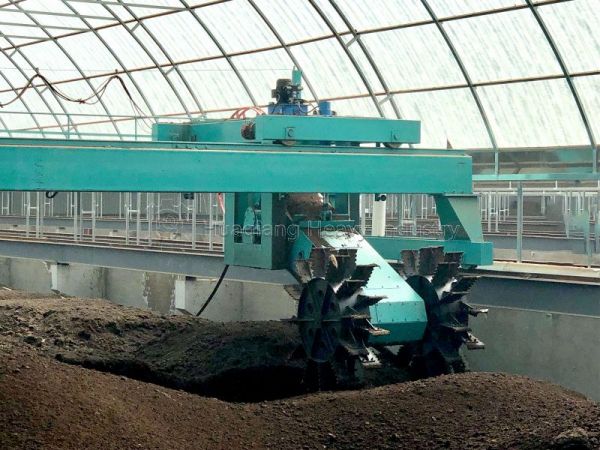
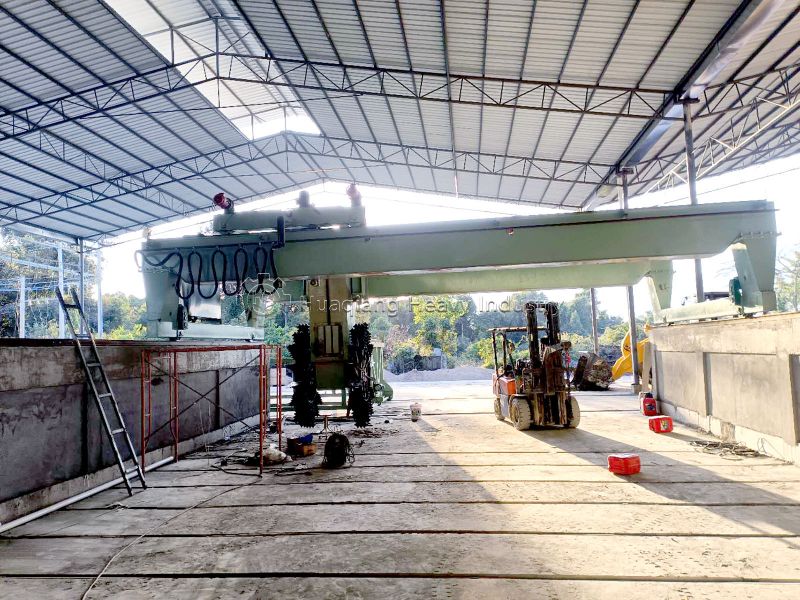
Turning equipment is the key to fermentation and maturation, directly determining fermentation efficiency and maturation quality. Windrow compost turning machines are suitable for open-air windrow fermentation. Their crawler design allows them to move flexibly between material piles, and the turning teeth penetrate the material layer, ensuring thorough material turning and oxygen supply while also lowering the pile temperature. They are suitable for windrows of conventional width and height, and ideal for small and medium-sized open-air production sites. Trough-type compost turning machines move along the fermentation trough track, and their spiral turning teeth achieve thorough material turning and displacement. Combined with a bottom ventilation system, they precisely control the fermentation temperature, making them suitable for large-scale production in workshops with higher space utilization. Large wheel compost turning machines focus on efficient and concentrated operation. With their extra-large diameter discs and dense turning teeth, they can quickly break up caked materials and loosen the material layer. They are suitable for wider open-air windrows, offering superior operating efficiency compared to ordinary crawler-type equipment, and are ideal for medium to large-scale open-air production bases, significantly shortening the fermentation cycle.
Closed fermentation tanks are the preferred equipment for large-scale, standardized production, addressing the drawbacks of traditional open-air fermentation, such as large land area requirements, strong odors, and susceptibility to weather conditions. The tank body features an anti-corrosion and insulation design, and incorporates five major systems: stirring and turning, aeration, temperature control, humidity adjustment, and exhaust gas treatment. This allows for rapid fermentation in a closed environment. The stirring and turning system operates automatically at regular intervals, ensuring uniform material mixing; the aeration system actively supplies air to maintain the oxygen concentration required for microbial activity; and the temperature control system maintains the temperature within the optimal range for microbial activity, effectively killing pathogens.
Auxiliary equipment provides support for fermentation and maturation. Fermentation troughs/ponds, as infrastructure, must have anti-seepage, drainage, and insulation properties, and are equipped with aeration pipes to enhance oxygen supply, making them essential for trough-type fermentation. The intelligent monitoring system collects temperature, humidity, and oxygen concentration data in real time through sensors, and automatically adjusts equipment operating parameters to improve production stability. The exhaust gas treatment system purifies ammonia, hydrogen sulfide, and other waste gases through a spray tower and activated carbon adsorption tower, ensuring that emissions meet environmental standards.
Companies need to select equipment scientifically based on production capacity, site conditions, and raw material characteristics to ensure efficient operation of the fermentation and maturation process, laying a solid foundation for the production of high-quality bio-organic fertilizers.
_800x600.jpg)
_800x600.jpg)