As the core equipment in the production of bulk-blended (BB) fertilizers, the BB fertilizer blender operates according to sound mechanical principles. Through the precise control of every stage, it uniformly blends granules of nitrogen, phosphorus, potassium, as well as secondary and trace elements in specific proportions, thereby providing modern agriculture with customized fertilizers tailored to the specific needs of the soil and crops. The operational workflow is a tightly integrated sequence; from the initial preparatory work to the final discharge of the product, every step directly impacts both fertilizer quality and production efficiency.
Pre-operational preparation serves as the foundation for the equipment's stable performance. Operators must first conduct a comprehensive inspection of the machinery to ensure that anchor bolts are secure, mixing blades show no signs of deformation or excessive wear, and the motors and speed reducers within the transmission system are adequately lubricated and functioning correctly. Additionally, the gates at both the feed inlet and discharge outlet must operate smoothly and maintain effective seals. Concurrently, raw materials require pre-treatment—specifically screening to remove impurities and crushing to break up any clumps—to ensure uniform particle size. Furthermore, materials must be weighed precisely according to the prescribed formula to prevent mis-dosing or incorrect mixing, which would compromise the final blend quality.
The material feeding stage adheres to the principle of "light before heavy, fine before coarse, and dry before wet." Once the equipment has been activated, materials are added at a steady, uniform rate. Fine-grained and lighter-weight materials are introduced first, forming a uniform base layer at the bottom of the mixing chamber. Subsequently, medium-grained core nutrient materials are added, followed finally by the coarse-grained and heavier materials. If trace elements are required, they should be added slowly only after all other materials have been introduced, ensuring their uniform dispersion throughout the mixture. The feeding rate must be carefully matched to the equipment's processing capacity to prevent overloading or blockages caused by dumping large quantities of material simultaneously.
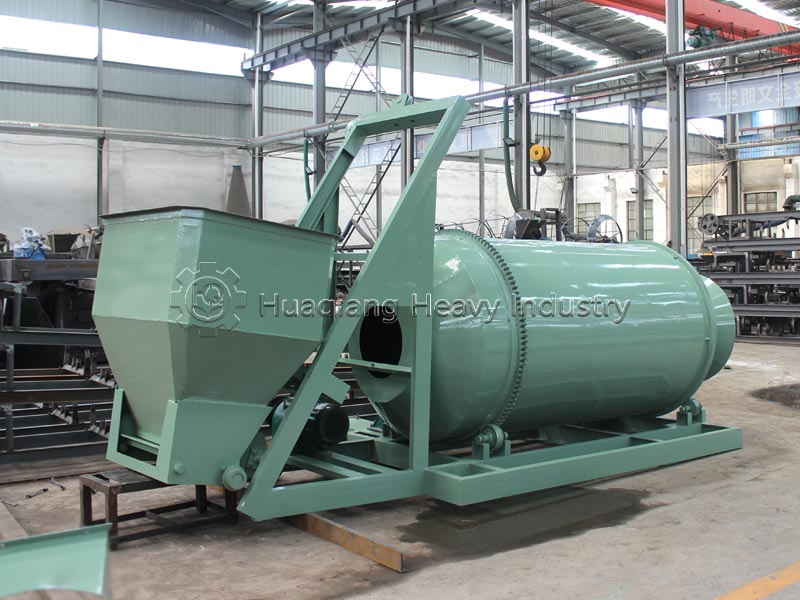
The mixing stage constitutes the core of the operation; different types of mixers achieve efficient blending through distinct mechanisms. Drum-type mixers utilize the rotation of a cylindrical drum; internal lifting flights scoop up the fertilizer granules and cascade them back down, creating a continuous mixing action. Twin-screw mixers, conversely, rely on two counter-rotating augers to drive the material in both lateral and longitudinal directions, thereby achieving a comprehensive three-dimensional blend. The mixing speed is typically maintained within a range of 20 to 40 revolutions per minute (r/min) to prevent granule breakage. The mixing duration is adjusted—typically ranging from 3 to 10 minutes—based on the specific types of raw materials being processed, ensuring that the uniformity of the blend meets industry standards and that the coefficient of variation for nutrient content remains below 5%. The discharge process requires strict adherence to operational protocols. Once uniform mixing is confirmed, the mixing motor must be switched off first; the discharge gate should only be opened after the mixing blades have come to a complete standstill. The material should be discharged at a steady rate, with the finished product collected and properly labeled in a timely manner. Upon completion of the discharge, the equipment should be run in idle mode to clear any residual material; if necessary, the mixing chamber should be manually cleaned. Concurrently, all equipment components should be inspected and lubricant replenished to ensure readiness for the next operational cycle.
The operation of the BB fertilizer blender represents a seamless integration of mechanical power and agricultural requirements. Through the scientific control of every minute detail, the system not only ensures the uniform distribution of fertilizer nutrients but also preserves the structural integrity of the raw material granules. This provides reliable equipment support for soil-testing and formula-based fertilization practices, thereby contributing to enhanced quality and efficiency in agricultural production.
_800x600.jpg)
_800x600.jpg)