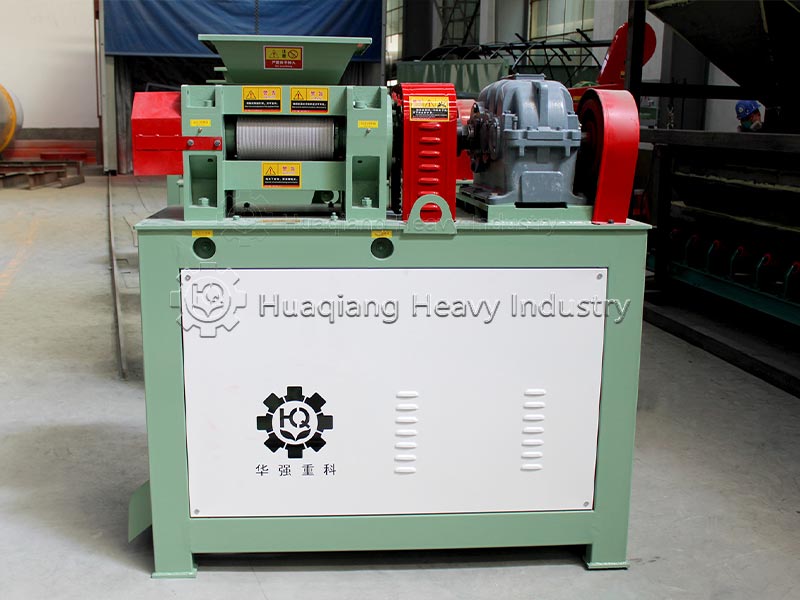
The double roller press granulator is a core piece of equipment in fertilizer production lines and granulation processes in mining and chemical industries. Its service life directly affects production efficiency and operating costs. Many users experience premature roller wear and motor failures due to improper operation and neglect of maintenance, increasing repair and replacement costs. In fact, by focusing on four key aspects—pre-treatment, standardized operation, daily maintenance, and early troubleshooting—the service life of the equipment can be effectively extended, reducing production costs.
Proper material pre-treatment reduces equipment wear at the source. The purity and moisture content of the material are the primary factors affecting equipment lifespan. If the material contains stones, metal, or other hard objects, it will directly wear down the extrusion rollers and damage the feeding device; improper moisture content will cause the material to stick to the inner wall of the extrusion chamber, increasing the equipment load. Therefore, before feeding, hard objects should be removed using screening and crushing equipment, and the material moisture content should be adjusted to a suitable range to prevent impurities from entering the extrusion chamber and reduce wear on core components.
Standardized operating procedures prevent human-caused damage to the equipment. Before starting the machine, a comprehensive inspection is required to ensure the extrusion roller gap is uniform, the bearings are adequately lubricated, and the electrical system is functioning properly. During operation, strictly control the feeding speed and extrusion pressure to avoid sudden changes in speed or pressure, preventing motor overload and uneven stress on the roller surface. After shutdown, all residual material in the chamber must be cleaned to prevent material from hardening and scratching the roller surface or increasing the starting load upon next startup, thus eliminating hidden damage caused by improper operation.
Adhere to daily maintenance and promptly identify potential hazards. Establish daily, weekly, and monthly maintenance lists. Check roller surface wear and lubrication levels daily, clean the feed inlet and screening device weekly, and perform comprehensive lubrication and maintenance on bearings and the transmission system monthly, replacing worn seals and lubricating oil promptly. Pay special attention to the maintenance of the extrusion rollers, regularly grinding the roller surface, and replacing any severely worn rollers immediately to prevent further wear from affecting other components. Address minor problems promptly and handle minor losses early.
Avoid overloading and scientifically adapt to production needs. Many users, in pursuit of increased production capacity, blindly increase feed rates and extrusion pressures, leading to prolonged overload operation of the equipment and accelerating the aging of the motor, extrusion rollers, and transmission system. Operating parameters should be set rationally based on the equipment's rated capacity and material characteristics to avoid prolonged overload operation. Allowing the equipment to operate under stable conditions ensures granulation quality and effectively extends its service life.
In summary, extending the service life of a double roller granulator does not require complex operations. Simply focusing on source control, standardized operation, daily maintenance, and load control can minimize component wear, improve equipment operational stability, continuously empower production, and achieve cost reduction and efficiency improvement.
_800x600.jpg)
_800x600.jpg)