Bio-organic fertilizer is an environmentally friendly fertilizer that balances soil improvement and crop nutrition. Its production uses organic waste as raw material, transforming it into highly efficient, harmless, and high-quality fertilizer through a series of processes including microbial fermentation. The entire process adheres to green and environmentally friendly principles, and its core stages are: raw material pretreatment, microbial fermentation, post-treatment, and finished product inspection.
Raw material pretreatment is the foundation of production and directly determines fertilizer quality. The main raw materials used are organic waste such as livestock and poultry manure, straw, fallen leaves and branches, and agricultural processing waste. First, impurities such as stones and plastics are removed through sorting, then the raw materials are crushed to a suitable particle size, increasing the contact area with microorganisms. Subsequently, the moisture content of the raw materials is adjusted to 55%-65%, and appropriate auxiliary materials are added to adjust the carbon-nitrogen ratio, creating suitable conditions for microbial fermentation and preventing incomplete fermentation or off-odors.
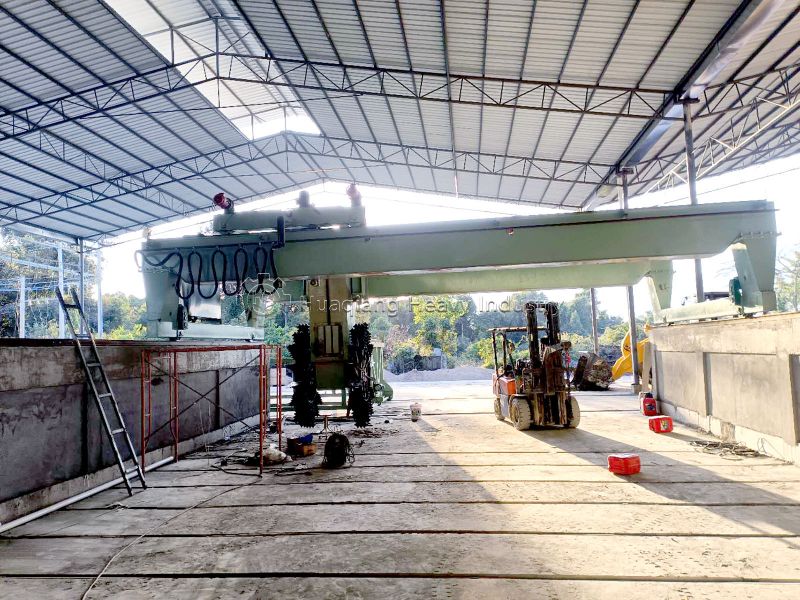
Microbial fermentation is the core stage of the bio-organic fertilizer production line and the key to fertilizer "activation." The pretreated raw materials are evenly mixed with specialized microbial inoculum and fed into a fermentation tank for aerobic fermentation. During fermentation, the mixture needs to be turned regularly to ensure sufficient oxygen, while maintaining a temperature of 55-65℃. This temperature kills pathogens, insect eggs, and weed seeds in the raw materials and promotes microbial reproduction. The fermentation cycle is typically 15-25 days. During this time, microorganisms decompose the organic matter in the raw materials, converting it into easily absorbed nutrients such as amino acids and humic acid, ultimately forming a fully decomposed material.
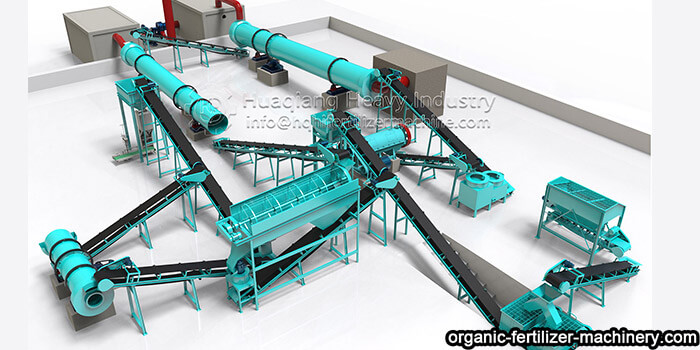
After fermentation, the material enters the post-processing stage. First, the decomposed material undergoes preliminary screening to remove incompletely decomposed impurities. Then, small amounts of micronutrients are added as needed to enhance the fertilizer's nutrient diversity. The crucial granulation stage then begins, commonly using disc granulation or extrusion granulation processes. The evenly mixed material is fed into the granulation equipment, where rotating discs or mechanical extrusion form uniformly sized particles. A binder can be added during granulation to enhance particle hardness and prevent clumping and breakage during transportation and storage. After granulation, a second screening process is required to select granules that meet the standards. Unqualified granules are crushed and re-granulated. The qualified granules are then dried to reduce the moisture content to below 20% to prevent mold growth during storage. Finally, cooling ensures the stability of the finished fertilizer, facilitating storage, transportation, and application.
Finished product inspection is the final step in ensuring fertilizer quality. Professional personnel test the nutrient content, pH, microbial activity, and heavy metal content of the finished product to ensure compliance with national bio-organic fertilizer standards. After passing inspection, the fertilizer is measured, packaged, and labeled before being released for use.
The entire production process relies on specialized bio-organic fertilizer equipment, achieving the resource utilization of organic waste. This reduces environmental pollution and produces green and efficient fertilizer, providing strong support for the development of ecological agriculture.
_800x600.jpg)
_800x600.jpg)