In modern agricultural fertilizer production lines, fertilizer granulators are far more than simple shaping equipment; they are the core hub connecting raw material pretreatment and finished product processing, directly determining fertilizer quality, production efficiency, and application effectiveness. They are crucial in the production of various fertilizers, including organic and compound fertilizers, laying a solid foundation for improving agricultural quality and efficiency.
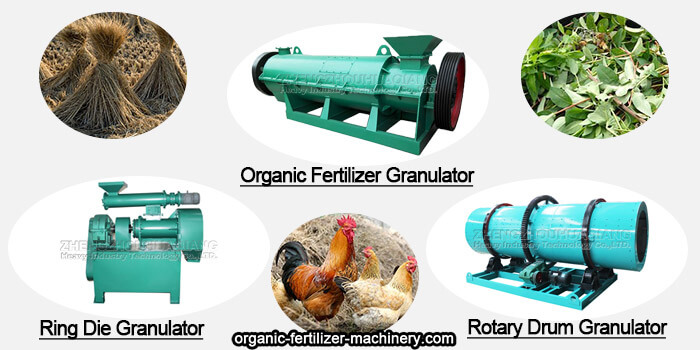
One of the core functions of granulators is to standardize the form of fertilizers, addressing the drawbacks of powdered fertilizers. Untreated powdered fertilizers are prone to clumping and dusting, resulting in significant losses during transportation. They are also easily dispersed by wind during application, making even distribution difficult and leading to wasted fertilizer. Granulators, through processes such as tumbling and binding, and extrusion molding, process powdered raw materials into uniform granules with moderate strength. This not only solves the problems of dusting and clumping but also makes fertilizers easier to store, transport, and apply mechanically, significantly reducing labor intensity and improving fertilization efficiency.
Ensuring balanced nutrient content and improving fertilizer utilization efficiency is another core value of granulators. In compound fertilizer production, granulators can precisely mix and shape nitrogen, phosphorus, potassium, and various trace elements, ensuring a consistent nutrient ratio in every granule and preventing uneven nutrient distribution during application. Simultaneously, the granulation process can incorporate binders to form a slow-release protective layer, allowing nutrients to be released gradually, reducing nutrient loss due to rainwater runoff, extending the fertilizer's effectiveness, and increasing fertilizer utilization by more than 30%.
Adapting to diverse raw materials and promoting the green and efficient development of the fertilizer industry highlights the core advantages of granulators. Whether it's organic fertilizer raw materials such as livestock manure and crop residues, or various inorganic fertilizer raw materials, granulators can achieve stable granulation through parameter adjustments without frequent equipment changes, reducing production costs. They can transform agricultural waste into high-quality granular organic fertilizer, turning waste into valuable resources. This not only solves the problem of waste pollution but also enriches the variety of fertilizers, aligning with the concept of green agriculture.
Furthermore, by precisely controlling granule size and strength, granulators can meet the fertilization needs of different crops and soils, contributing to the development of precision agriculture. As an indispensable core equipment in fertilizer production, granulation machines not only improve production efficiency and product competitiveness, but also build a bridge between raw material resources and agricultural applications, providing strong support for promoting agricultural modernization and achieving reduced and more efficient use of fertilizers.
_800x600.jpg)
_800x600.jpg)