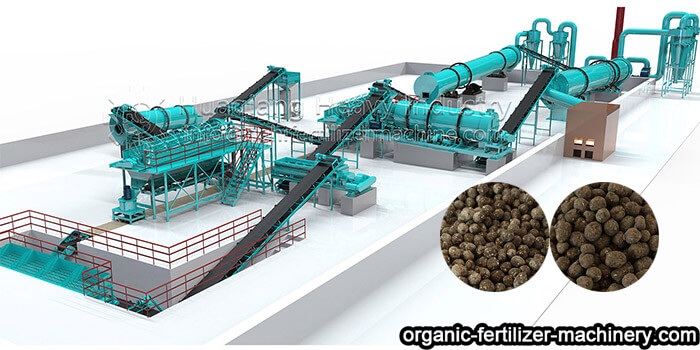
A bio-organic fertilizer granulation production line uses organic waste such as livestock and poultry manure and crop straw as raw materials, which are processed through harmless treatment and deep processing to produce granular fertilizer. The entire process requires the coordinated operation of various specialized equipment, with each type of bio-organic fertilizer equipment precisely matched to each stage of production. The production process can be clearly divided into four main stages: pre-treatment, fermentation, deep processing, and post-treatment. Each stage is supported by core equipment, which can be flexibly adapted to different production capacities and raw material characteristics, ensuring continuous and orderly production and achieving standardized processing from raw materials to finished products.
Pre-treatment equipment is the basic guarantee of production, and the core equipment includes crushers, screening machines, and mixers. The crusher can precisely crush raw materials such as straw and manure clumps into fine particles of 3-5mm, significantly improving subsequent fermentation efficiency. Hammer mill or wet material-specific models are commonly used to effectively prevent material sticking and clogging; the screening machine is responsible for screening out impurities such as stones and wood chips from the raw materials, and can be combined with a magnetic separator to further protect subsequent equipment from damage; the mixer uniformly mixes the crushed raw materials with fermentation agents and auxiliary materials, precisely adjusting the carbon-nitrogen ratio and moisture content, laying a solid foundation for efficient fermentation.
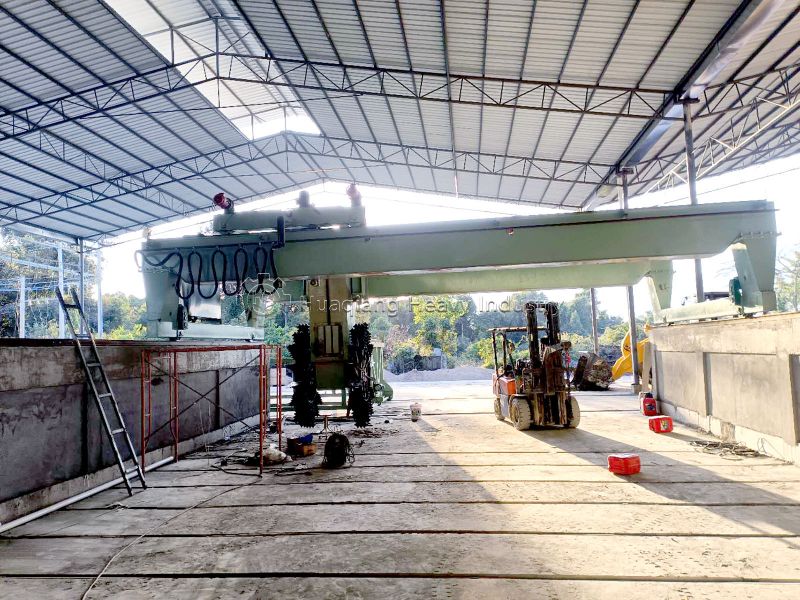
Fermentation equipment directly determines the composting effect of organic fertilizer and is a critical link in production. The main equipment includes compost turning machines and fermentation tanks. Turning machines come in various types, such as trough type and crawler type. By regularly turning the compost pile and supplying oxygen, the temperature of the material pile is stably controlled at 55-65℃, which can thoroughly kill pathogens and insect eggs and shorten the fermentation cycle. Small manufacturers can choose cost-effective trough-type machines, while large-scale production is more suited to efficient crawler-type machines; enclosed fermentation tanks are suitable for scenarios requiring high composting quality, allowing for precise control of temperature, humidity, and oxygen content, significantly improving composting uniformity and organic fertilizer quality.
Deep processing equipment is the core of granulation and directly affects the appearance of the finished product. The core equipment includes granulators, dryers, and coolers. Granulation machines come in various types, including disc, extrusion, and ring die models. Ring die machines offer high transmission efficiency and excellent granule formation rates, making them suitable for large-scale, mass production. The drying machine primarily uses a rotary drum type, which quickly reduces the moisture content of the granules to below 15%, effectively preventing mold during storage. The cooling machine uses a countercurrent principle to rapidly lower the temperature, preventing granule cracking due to thermal expansion and contraction, while also increasing granule hardness and ensuring product stability.
Post-processing equipment focuses on product uniformity and storage, mainly including screening machines and packaging machines. The grading screen removes unformed powder, and unqualified granules can be recycled for reprocessing; the packaging machine packages the product in 20-50kg bags.
In summary, each piece of equipment in the bio-organic fertilizer granulation production line performs its specific function and is closely integrated with the others. The selection and operation of each component directly impacts production efficiency and product quality. The entire system not only achieves the resource utilization of organic waste and reduces environmental pollution but also produces high-quality organic fertilizer, contributing to the improvement and sustainable development of ecological agriculture.
_800x600.jpg)
_800x600.jpg)