Under the dual guidance of agricultural green transformation and "dual carbon" goals, bio-organic fertilizers are replacing traditional chemical fertilizers and ordinary organic fertilizers, becoming an inevitable trend in industrial upgrading. The supporting bio-organic fertilizer production line is the core vehicle connecting resource recycling, ecological protection, and industrial profitability. Choosing a standardized and intelligent bio-organic fertilizer production line is not only a response to policy guidance but also a wise move for future agriculture, with its value reflected in ecological, economic, and industrial dimensions.
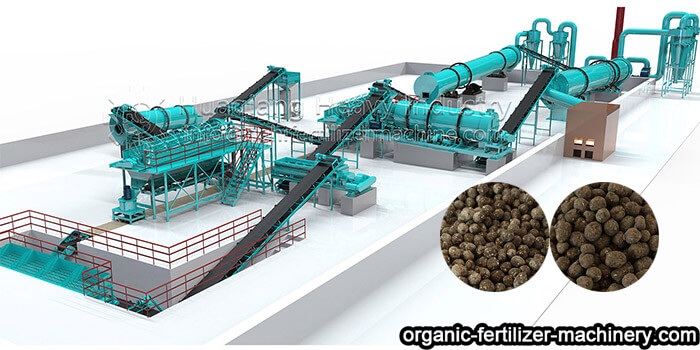
Choosing a bio-organic fertilizer production line is a key path to fulfilling ecological responsibilities and solving environmental problems. Currently, the treatment of livestock and poultry manure and crop straw presents significant challenges. Traditional composting methods have long cycles and cause serious pollution, while modern production lines can achieve resource utilization of waste. For example, the production line in Linze, Gansu, converts 300 tons of livestock and poultry manure into high-quality organic fertilizer daily, with a manure conversion rate of 98%, solving pollution problems and turning waste into valuable resources. At the same time, the environmental protection modules equipped in the production line can effectively treat exhaust gas and dust, with an ammonia removal rate of over 92%, meeting environmental emission requirements and contributing to the control of agricultural non-point source pollution.
Choosing a bio-organic fertilizer production line is an important support for seizing market opportunities and achieving profitability upgrades. With consumption upgrades, the demand for green organic agricultural products is surging, and bio-organic fertilizers, due to their specific functional bacteria and high organic matter content, are more competitive than ordinary organic fertilizers. The production line uses intelligent fermentation and granulation processes to compress the fermentation cycle from the traditional 6 months to 7 days, significantly improving production efficiency and reducing labor costs. Data shows that a production line with an annual output of 10,000 tons can achieve a gross profit margin of 40%-50%, and coupled with government tax reductions and production subsidies, the profit margin is further expanded. It can also drive increased revenue in related industries such as straw utilization and manure treatment.
Choosing a bio-organic fertilizer production line is an inevitable choice that aligns with policy guidance and promotes sustainable agricultural development. The government has explicitly promoted the replacement of chemical fertilizers with organic fertilizers, and many regions have introduced subsidy policies to support the construction of production lines. Compared to traditional production methods, standardized production lines can ensure that the effective number of live bacteria and organic matter content in the product meet standards, conforming to industry standards and helping to address agricultural challenges such as soil degradation and continuous cropping obstacles. Furthermore, the production line realizes a closed-loop cycle of "livestock farming - manure treatment - organic planting," reducing chemical fertilizer use by 0.3 tons for every ton of organic fertilizer produced, contributing to carbon emission reduction and achieving synergistic development of ecology and agriculture.
Looking at the present, the bio-organic fertilizer production line is a crucial tool for alleviating environmental pressure and revitalizing the industry; looking to the future, it is an essential support for the high-quality development of agriculture. Choosing a high-quality production line allows companies to fulfill their ecological responsibilities, seize market opportunities, and achieve a win-win situation of environmental protection and profitability, injecting lasting momentum into the development of green agriculture.
_800x600.jpg)
_800x600.jpg)