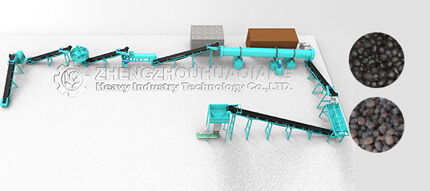
Bio-organic fertilizer is made from livestock and poultry manure, straw, and kitchen waste as raw materials, through harmless treatment and composting. Its production process requires the coordinated operation of various specialized bio-organic fertilizer equipment to ensure both production efficiency and fertilizer quality standards. A complete production line can be divided into three main stages: raw material processing, fermentation, and processing into finished products. Each stage has its own core equipment.
The raw material pretreatment stage is fundamental, with core equipment including crushing, mixing, and screening equipment. Crusheres are mainly used to process coarse fiber raw materials such as straw and twigs, crushing them to a suitable particle size for subsequent fermentation and composting. Common types include hammer mills and vertical mills, which are both highly efficient and energy-saving. Mixing equipment is used to uniformly mix livestock and poultry manure, crushed straw, and biological agents, ensuring sufficient contact between the inoculum and materials during fermentation. Horizontal mixers are commonly used, offering high mixing uniformity and suitable for batch production. Screening machines remove impurities such as stones and metals from the raw materials to prevent damage to subsequent equipment and improve raw material purity.
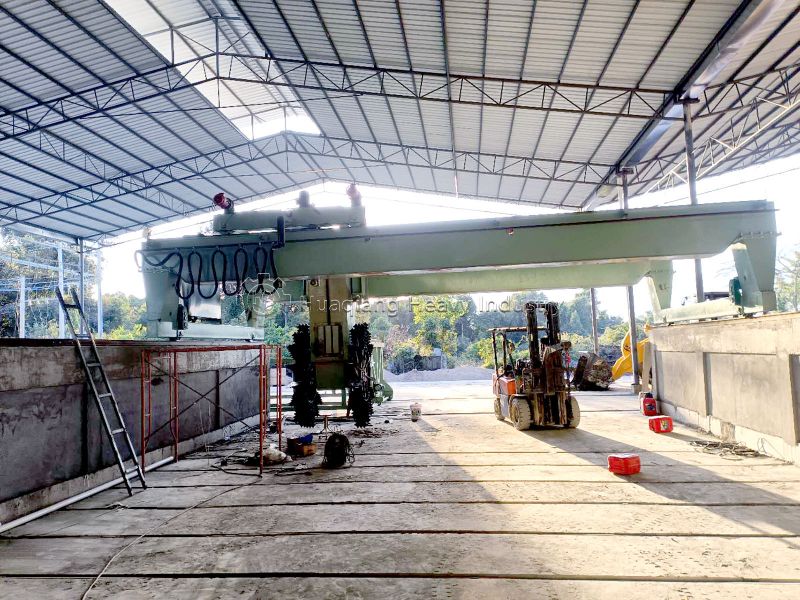
The fermentation stage is crucial in the production of bio-organic fertilizer, with the core equipment being the compost turning machine and fermentation tank. The compost turner is responsible for periodically turning the fermentation material, breaking up clumps, adding oxygen, expelling harmful gases produced during fermentation, regulating material temperature and humidity, and promoting the reproduction of beneficial microorganisms. Commonly used track-type turners are suitable for large-scale production lines, offering convenient operation and uniform turning depth. Smaller production lines can use fermentation tanks, employing a closed fermentation system that allows for precise control of parameters such as temperature and humidity, shortening the fermentation cycle, reducing odor diffusion, and improving fermentation efficiency.
The processing and shaping stage primarily improves the fertilizer's appearance and facilitates storage and transportation. Core equipment includes granulators, dryers, coolers, and packaging machines. Granulators turn the pre-treated fermented material into granules, reducing dust pollution during transportation and improving fertilizer utilization. Common fertilizer granulator machines are simple to operate and produce good shaping results. After granulation, drying is required. Dryers remove excess moisture from the granulated fertilizer, ensuring the moisture content meets national standards and preventing mold growth during storage. Commonly used drum dryers offer fast drying speeds and low energy consumption. The dried granules are at a high temperature, which is quickly cooled to room temperature by a cooling machine to prevent clumping and spoilage, ensuring the fertilizer's appearance and storage stability. Finally, a packaging machine quantitatively packages and seals the cooled finished fertilizer, achieving standardized production. Fully automatic packaging machines integrate metering, packaging, and labeling, significantly improving production efficiency.
These devices work together to form a complete bio-organic fertilizer production line, realizing the resource utilization of waste and ensuring high-quality, efficient fertilizer production, providing strong support for the green and sustainable development of agriculture.
_800x600.jpg)
_800x600.jpg)